What's inside
As an Amazon Associate I earn from qualifying purchases. This post may contain affiliate links at no extra cost to you.
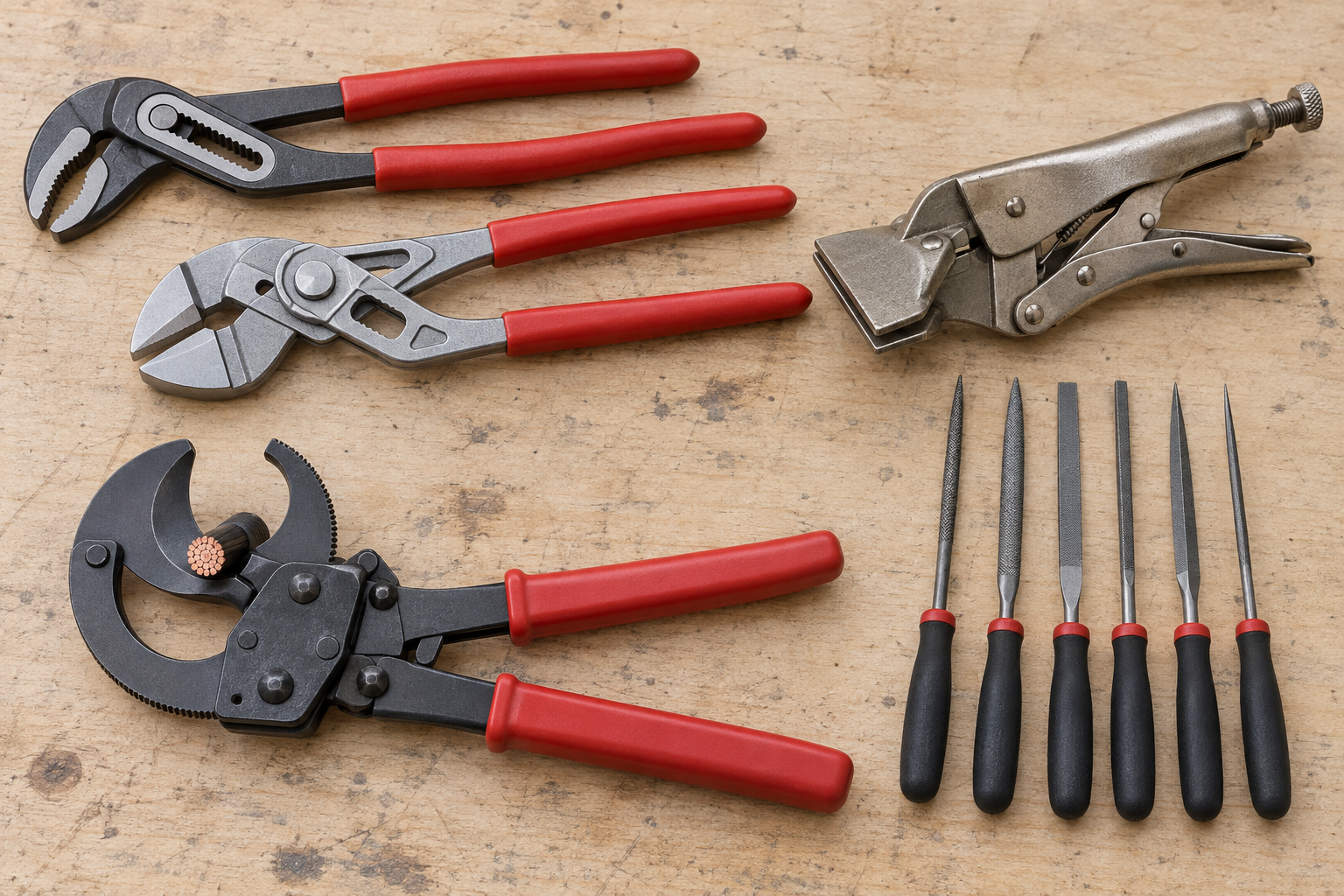
Thin sheet metal is easy to move, twist, and dent while you drill it. A regular pair of pliers may hold the edge, but it rarely applies pressure evenly enough to stop the workpiece from vibrating. The best locking pliers for this job are usually C-clamp-style tools with broad pads, followed by dedicated sheet-metal locking clamps when access is limited.
As an Amazon Associate we earn from qualifying purchases at no extra cost to you.



Our Top Picks
 IRWIN Vise-Grip Original Locking Pliers with Wire CutterOne Size0.9 x 5.9 x 9.8 inches1 PoundsCheck on Amazon


What matters most when clamping sheet metal
Look for three things: a wide contact area, controlled locking pressure, and enough throat depth to reach the drilling point. Thin steel and aluminum do not need extreme clamping force. They need stable, distributed pressure.
A narrow jaw can leave a deep crescent-shaped mark or bend the panel around the clamp. This is especially likely with material thinner than 20 gauge steel, roughly 0.036 inch, or thin aluminum below about 0.050 inch. Broad pads spread the load and reduce distortion.
Adjustability is also important. A clamp that locks before the jaws fully contact the work is poorly suited to sheet metal. You should be able to close the handles with firm hand pressure, then make a small adjustment at the screw until the panel is secure without visibly bowing.
Best locking plier types for drilling
| Type | Best use | Main advantage | Main drawback |
|---|---|---|---|
| C-clamp locking pliers | General drilling and overlapping panels | Broad, stable grip with useful throat depth | Bulky around tight edges |
| Sheet-metal locking clamps | Joining flanges and panel seams | Designed to hold flat material without crushing it | Less versatile for general shop work |
| Long-nose locking pliers | Small edges and restricted access | Reach into narrow spaces | Narrow jaws can dent thin stock |
| Locking pliers with swivel pads | Uneven, angled, or slightly curved parts | Pads align to the work and reduce point loading | Usually cost more and may have less reach |
For most drilling jobs, start with C-clamp locking pliers with swivel pads. The C shape leaves more room around the drill and gives better support than standard straight-jaw pliers.
Best overall: C-clamp locking pliers
A medium C-clamp locking plier is the most useful all-round choice for drilling thin sheet. A throat depth in the 2- to 3-inch range works for many brackets, ductwork, automotive panels, and small fabrication jobs. Choose a tool with jaws roughly 2 inches wide or more when the panel surface allows it.
Swivel pads are preferable because sheet metal is often not perfectly flat. They also help keep the clamp from rocking as you tighten it. Fixed flat jaws are fine for a straight flange, and they are often cheaper. If you mainly drill flat overlapping pieces on a bench, the cheaper fixed-jaw version is adequate.
Do not automatically choose the largest clamp. Large locking pliers can apply more force than the panel can tolerate, and their weight can pull an unsupported sheet out of alignment. A smaller tool gives better control for thin stock.
Best for seams: sheet-metal locking clamps
Dedicated sheet-metal clamps are shaped to hold two panels or flanges flush. They are particularly useful when drilling a line of holes for rivets, screws, or plug welds. Their broad, low-profile jaws keep the edges aligned while leaving a clear path for the drill.
These clamps are worth buying if you regularly assemble ducting, body panels, flashing, or rectangular tubing. A set is more practical than one clamp because holes are often spaced 4 to 8 inches apart. For an occasional repair, ordinary C-clamp locking pliers do nearly the same job at lower cost.
Search for sheet-metal locking clamps when the primary task is keeping seams aligned rather than holding a single workpiece to a bench.
When long-nose locking pliers make sense
Long-nose locking pliers are useful when a C-clamp cannot fit around an edge or inside a narrow channel. They can hold a small tab, corner, or backing nut while you drill. They are also handy for reaching behind a panel.
The trade-off is pressure concentration. The narrow tips can dent a panel, twist a flange, or leave marks that remain visible after painting. Use thin plywood, hardwood, or a scrap of aluminum between the jaws and the work when possible. Keep the nose close to the edge; clamping far from the edge can flex the entire panel instead of stabilizing it.
A long-nose locking plier is a useful secondary tool, but it is not the best primary clamp for broad sheet metal.
How to clamp and drill without distortion
First, support the sheet on a solid surface. A sacrificial plywood board prevents the panel from bouncing and gives the drill bit somewhere to exit. If two pieces overlap, clamp within about 1 inch of the hole when possible. For holes larger than 1/4 inch, add a second clamp or move the first clamp closer before enlarging the hole.
Set the clamp so its jaws are parallel to the sheet. Tighten only until the material cannot slide by hand. If the sheet bows, the clamp is too tight or the contact pads are too small. A bow of even 1/16 inch can pull a hole off location when the drill breaks through.
Center-punch the location, use a sharp bit, and start at moderate speed. A pilot hole around 1/8 inch is useful in steel, while a step bit often produces a cleaner result in thin sheet. Keep the drill perpendicular and let the bit cut rather than forcing it. Excessive feed pressure can lift the sheet against the clamp and deform the hole.
Buying advice and common failure modes
Check the adjustment screw, handle clearance, and jaw alignment before buying. The jaws should meet squarely and remain aligned when pressure is applied. Avoid tools with visibly loose pivots or pads that wobble sideways.
For occasional home repairs, a basic 5- or 7-inch C-clamp locking plier is usually enough. Spend more for swivel pads, better jaw alignment, and smoother adjustment if you drill sheet metal weekly. A basic 5-inch C-clamp locking plier is the sensible low-cost option for light work.
The most common mistakes are over-tightening, clamping too far from the hole, and drilling without backing the sheet. Choose broad pads first, then enough reach for the job. That combination prevents movement without turning a simple drilling task into a panel-straightening task.