What's inside
As an Amazon Associate I earn from qualifying purchases. This post may contain affiliate links at no extra cost to you.
Our Top Picks
 DEWALT DWACM1802 Metal Cut Carbide Holesaw SetOne Size11.45 x 1.65 x 11 inches1.7 PoundsCheck on Amazon


The short answer
For most holes in thin aluminum sheet, a bi-metal hole saw is the sensible buy. It costs less, cuts cleanly when sharp and properly lubricated, and is more forgiving if you occasionally use it on wood or plastic. A carbide-tipped hole saw is worth the extra cost when you make many holes, need longer service life in abrasive or coated material, or are cutting thicker aluminum where tooth wear is a recurring problem.
Neither type is a substitute for a drill press, firm workholding, or a slow, controlled cut. Aluminum is soft, but it can grab a hole saw abruptly. The sheet can spin, wrinkle, or lift if it is not clamped flat.
As an Amazon Associate we earn from qualifying purchases at no extra cost to you.


How the teeth differ
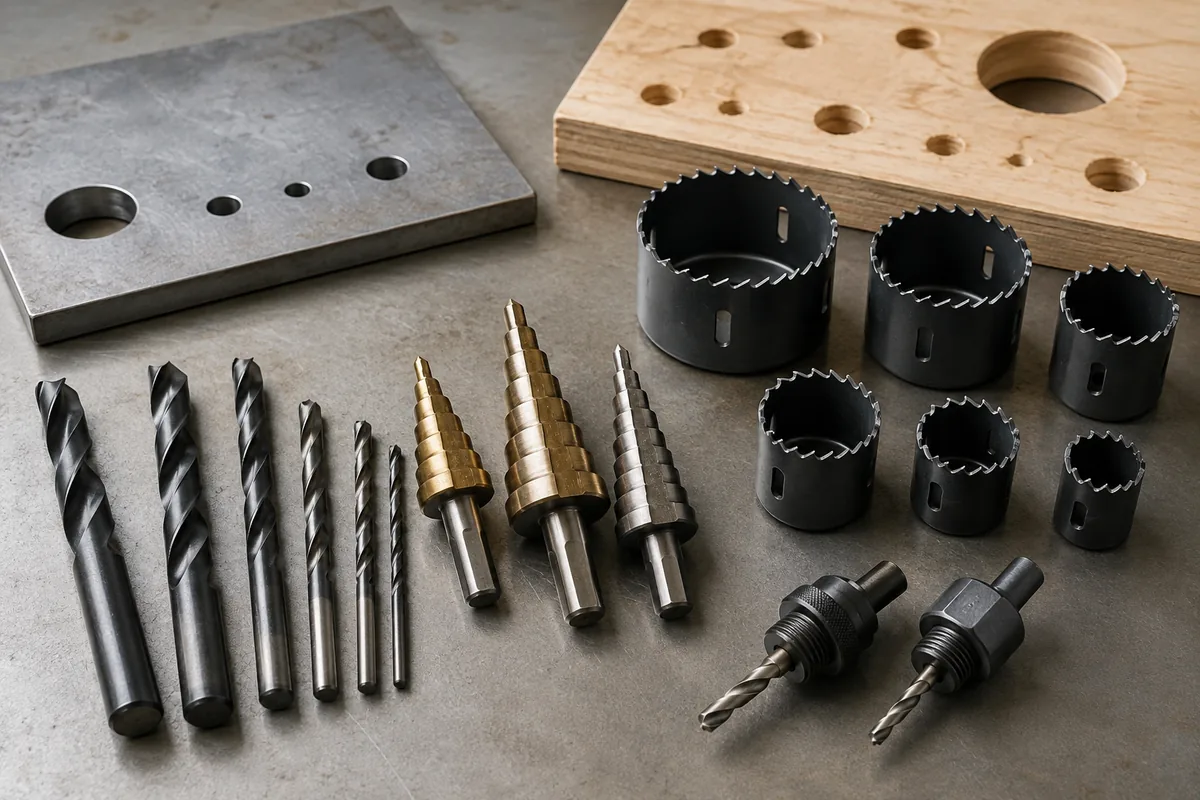
A bi-metal hole saw has a high-speed-steel cutting edge bonded to a tougher steel body. Its teeth are relatively fine, which suits thin sheet and gives a smooth, controlled cut. The body can flex a little under ordinary use, but that flexibility does not make it safe to cut an unsecured panel.
A carbide-tipped hole saw uses hard carbide cutting tips attached to the rim. Carbide resists wear better than high-speed steel, so it can keep cutting longer in abrasive materials and during repeated production work. The tips are also more brittle. A hard knock, a tilted cut, or chatter from a loose setup can chip them; a chipped tooth usually means replacing the saw rather than sharpening it.
Side-by-side comparison
| Factor | Bi-metal | Carbide-tipped |
|---|---|---|
| Best fit | Occasional holes in thin aluminum sheet | Repeated work or thicker, abrasive, or coated material |
| Upfront cost | Usually lower | Usually higher |
| Wear resistance | Good for light and intermittent use | Better when many cuts would wear out steel teeth |
| Impact tolerance | More forgiving of minor mishandling | Carbide tips can chip from impact or chatter |
| Cut quality | Fine teeth can leave a neat edge in thin sheet | Can cut quickly, but setup and feed control matter |
| Mixed materials | Often a practical choice for aluminum plus wood or plastic | Choose only if its tooth design is suitable for the other material |
Which one should you buy?
Choose a bi-metal hole saw for aluminum if you are making a few holes for a vent, cable pass-through, or enclosure fitting. It is generally the better value for a homeowner or occasional fabricator. For sheet around 0.8–1.5 mm thick, a sharp bi-metal saw is normally enough; the cut is short, so carbide’s wear advantage may not repay the price.
Consider a carbide-tipped hole saw for metal if you have a run of dozens or hundreds of holes, or if steel teeth dull quickly in your material. It can also make sense for thicker aluminum plate, but check the saw’s stated material range and cutting depth. “Carbide” alone does not guarantee the right tooth geometry for aluminum.
For only one or two holes, compare the saw price with a step drill or a sheet-metal punch. A step drill is often easier to control for holes up to roughly 25–32 mm in thin sheet, while a knockout punch can give a clean, round opening without rotating teeth. For larger diameters, a hole saw is usually the practical choice.
Set up the cut to avoid grabbing
Clamp the sheet firmly to a sacrificial plywood backer, with the intended hole clear of clamps and supports. The backer supports the metal as the saw exits and helps prevent a ragged underside. Do not hold a loose sheet by hand. A hole saw can catch the edge of the opening and twist the workpiece or the drill.
Use a drill press when possible. For a handheld drill, use the auxiliary handle and keep the saw square to the sheet. A variable-speed drill with a side handle gives better control than a small, high-speed cordless drill. If the sheet is thin, a pilot bit can break through before the saw teeth engage; backing the sheet and feeding gently reduces the chance that the pilot suddenly pulls the cutter into the work.
Use a moderate speed and steady pressure rather than forcing the saw. For a 25 mm (1 in) hole saw in aluminum, roughly 500–1,000 rpm is a reasonable starting range, then adjust to the manufacturer’s guidance and how the cut behaves. Larger diameters generally call for lower speed. If the saw squeals, chatters, or produces hot, powdery chips, stop and check the speed, sharpness, alignment, and lubrication.
Apply a small amount of cutting fluid or aluminum-compatible lubricant. This reduces friction and helps keep chips from welding to the teeth. Clear packed chips when needed, especially in thicker stock. Wear eye protection, keep hands away from the rotating cup, and let the cut stop completely before removing the saw or clearing chips.
Common failure modes
Aluminum can smear onto a dull tooth, making the saw rub instead of cut. The result is heat, a rough edge, and a cutter that may bind. Clean the teeth, use lubricant, and replace a worn saw rather than increasing pressure. Excessive speed can also overheat the cutting edge; too little speed with heavy pressure can cause grabbing and chatter.
Carbide tips fail differently: a chipped tooth may leave a repeating notch pattern around the hole and make the saw vibrate. Stop using it if a tip is missing or visibly damaged. With either type, a burr is normal. Deburr both faces with a hand deburring tool or a fine file, taking care not to enlarge or distort the opening.
A practical buying rule
Buy bi-metal for occasional holes in thin aluminum sheet, and put the savings toward clamps, a backer, and lubricant. Buy carbide-tipped when your workload is high enough that longer tooth life matters, or when a suitable carbide saw is specified for the material and thickness. In either case, a sharp cutter, secure workholding, and controlled speed matter more to the result than the label on the package.