What's inside
As an Amazon Associate I earn from qualifying purchases. This post may contain affiliate links at no extra cost to you.
When ripping a narrow strip on a table saw, the push tool is not a minor accessory. It determines how close your hand gets to the blade, whether the work stays against the fence, and what happens if the cut starts to bind. A table saw push block and a push stick both move stock past the blade, but they do it in different ways.
For most narrow ripping, a well-designed push stick is the better basic choice. A push block becomes more useful when the workpiece is short, low, difficult to control, or needs downward pressure as well as forward pressure. Neither tool makes a bad setup safe. Use a riving knife or splitter, keep the fence parallel to the blade, and do not rip stock that is twisted, bowed, or likely to pinch.
As an Amazon Associate we earn from qualifying purchases at no extra cost to you.


Our Top Picks
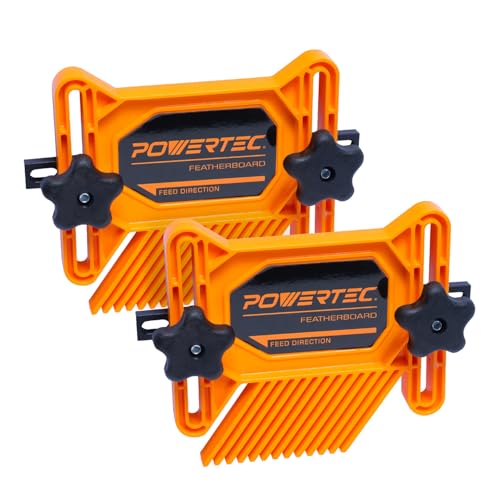 POWERTEC Universal Tandem Featherboards for Table SawFeatherboards (2PCs)10.63 x 7.5 x 2.5 inchesCheck on Amazon


What a push stick does
A push stick applies forward pressure to the trailing end of the board. Its notch or hooked end catches the back edge of the workpiece while your hand stays to the side of the blade. Most are narrow and long enough to keep your fingers several inches away from the cut.
That long handle is valuable when ripping strips from longer boards. You can stand behind the stock, keep your body out of the blade’s potential kickback path, and maintain forward pressure until the work clears the blade. A push stick also gives you a clear view of the cut and usually costs very little. A simple 3/4-inch plywood version works well if the hook is cut cleanly and the handle is comfortable.
The weakness is control from above. A conventional stick does not press the board firmly down onto the table, and it gives limited lateral control against the fence. If the strip is only 1/2 inch wide, light, or flexible, it can lift, wander, or twist as it passes the blade. A stick can also slip off if its notch is too shallow or the trailing edge is damaged.
What a push block does
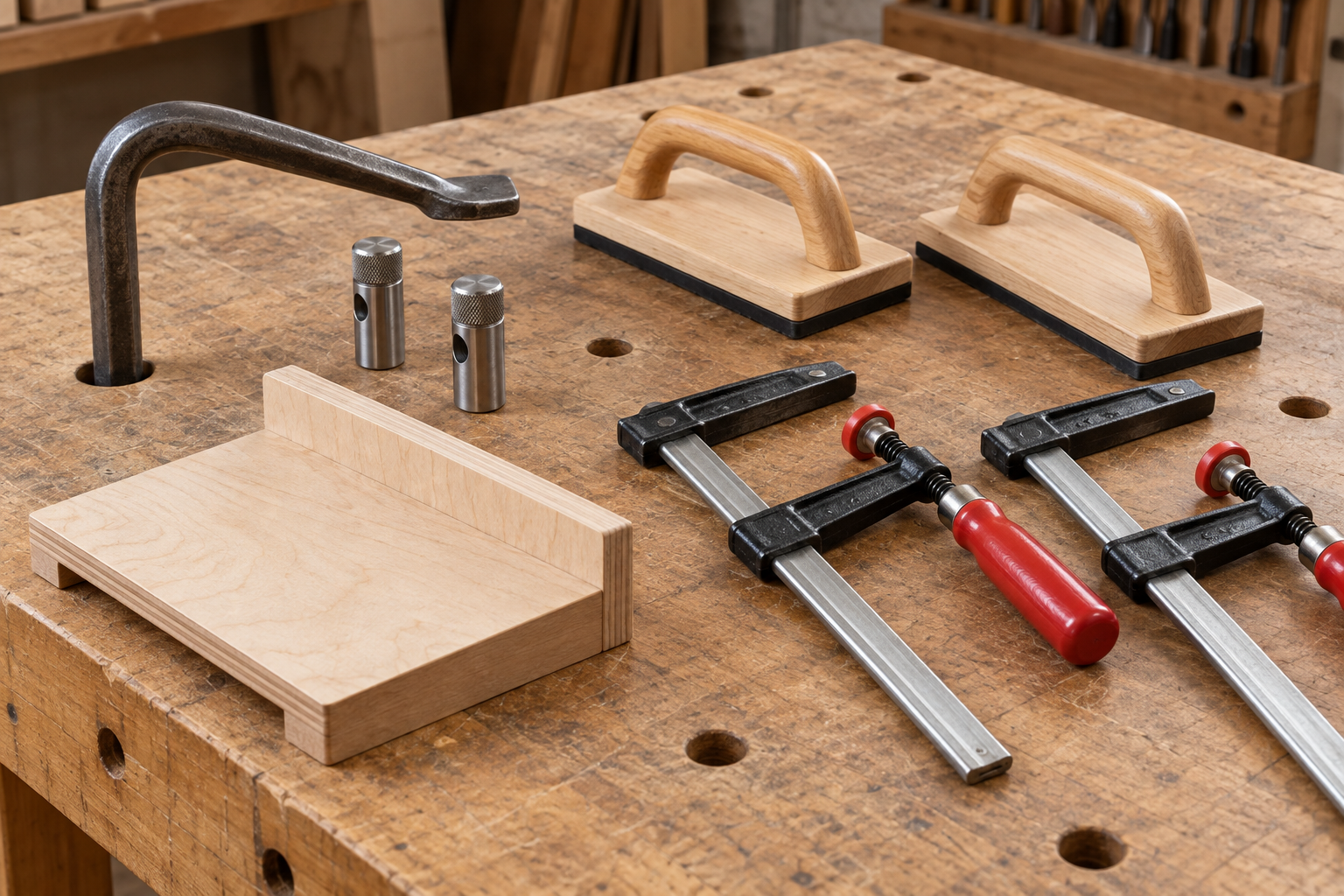
A push block usually has a broad base or sole and a rear hook, heel, or grippy contact surface. It can push the stock forward while pressing it down. Many designs also provide a side handle, making it easier to keep a narrow workpiece against the fence.
That three-direction control—forward, down, and sometimes sideways—is the main advantage. It matters when ripping short pieces, thin strips, or material that wants to chatter. A block is often more comfortable during repeated cuts because your palm stays on top and away from the blade rather than gripping a slender handle.
Its disadvantages are just as practical. A bulky block can obstruct your view of the blade and fence. If the sole is too wide, it may contact the fence or bridge over the workpiece. Some blocks also require you to reach farther forward, which is a poor trade if the design puts your hand directly over the blade. The contact heel can catch the board and lift it if you pull upward instead of pushing straight ahead.
Push block vs. push stick: the useful differences
| Feature | Push stick | Push block |
|---|---|---|
| Best use | Long boards and ordinary narrow ripping | Short, thin, or hard-to-control stock |
| Hand position | Behind and to the side of the work | Above the work, with a broad grip |
| Forward control | Very good with a sound rear edge | Very good with a positive heel |
| Downward pressure | Limited | Strong advantage |
| Fence control | Moderate unless paired with another aid | Usually better, if the side grip is stable |
| Visibility | Usually excellent | Can be reduced by a wide body |
| Cost and simplicity | Cheapest and easiest to make | More expensive and design-dependent |
Which one should you use for narrow strips?
For strips around 1 inch wide or wider, cut from a board at least several feet long, start with a push stick. It provides distance, visibility, and enough leverage for a controlled feed. A stick is also the sensible choice when the board is long enough to remain stable on the table and the fence supports the stock throughout the cut.
For strips under about 1 inch wide, especially from short pieces, a push block gives better downward and sideways control. However, the safest setup often uses more than one aid: a featherboard before the blade to hold the stock against the fence, plus a push stick or low-profile block to feed it. A table saw featherboard reduces the amount of sideways pressure your hand must provide.
For very narrow cuts—roughly 1/4 inch or less—do not assume a premium push block solves the problem. The offcut is small enough to fall into a gap, wedge between the blade and insert, or get trapped against the fence. Use a suitable zero-clearance insert, keep the riving knife installed where compatible, and consider cutting a wider blank before resawing or trimming it with another method. If the setup leaves your hand hovering over the blade, stop and change the process.
Safe setup and technique
Set the blade only slightly higher than the material—about 1/8 to 1/4 inch above the top is generally enough for ordinary ripping. Check that the fence is parallel to the blade and that the board’s edge is straight. Measure the finished strip at the blade, not only at the front of the fence; a fence that narrows toward the blade can pinch the work.
Stand slightly to the side, not directly behind the board. Start the cut with both hands clear, then use the push tool before your fingers approach the blade. Push at a steady rate without forcing the stock. Never pull a partially cut board backward through a spinning blade. If the cut binds, the motor pitch changes, or the board begins to lift, switch off the saw and wait for the blade to stop before investigating.
A push stick with a long handle and heel is the best inexpensive upgrade for many users. If you want maximum control for short stock, choose a low-profile push block that lets you see the blade, clears the fence, and has replaceable or sacrificial contact material.
Buying verdict
Buy a push stick first if you mostly rip long boards and want a cheap, versatile safety tool. It is fine for the majority of ordinary narrow-strip cuts. Buy a push block when you regularly handle short or thin stock and need better downward control. The best workshop setup has both, along with a featherboard and an appropriate insert. The tool is only one part of the decision: stock condition, fence alignment, blade height, and your position matter just as much.