What's inside
- Top Picks at a Glance
- Comparison Table
- 1. WAGO 221 Lever Nuts, 28-Piece Assortment: Best Overall Splice Connector
- 2. Crweety 350-Piece Wire Connector Assortment: Best Budget Connectors
- 3. Klein Tools 11061 8-Inch Self-Adjusting Wire Stripper/Cutter: Best Wire Stripper
- 4. Klein Tools MM325 Digital Manual-Ranging Multimeter: Best Multimeter for Homeowners
- 5. Fluke 1AC II VoltAlert: Best Pocket Voltage Detector
- 6. KAIWEETS Electrical Test Kit: Best Starter Test Bundle
- 7. Bionso 25-Piece Multimeter Leads Kit: Best Test Lead Upgrade
- Also Consider
- How We Chose
- Buying Guide
- Common Mistakes to Avoid
- Frequently Asked Questions
- Which One Should You Buy?
- Sources
As an Amazon Associate I earn from qualifying purchases. This post may contain affiliate links at no extra cost to you.
The best electrician tools and wire connectors for a home kit start with a lever-style splice assortment, a basic twist-on connector box, a self-adjusting wire stripper, a non-contact voltage tester and a multimeter with good leads. If you only buy two things first, make them the WAGO 221 lever nut assortment for fast, inspectable splices and the Fluke 1AC II VoltAlert for the “is this wire dead?” check you should make before every job. The Klein MM325 multimeter is the runner-up for anyone who wants to move beyond a simple live/dead answer and read voltage, continuity and resistance.
This guide is research-based. We did not personally use these products; the specs below come from the listing details and the manufacturers’ published information, and anything we could not confirm is marked “not listed”. It is general information for homeowners and DIYers, not a substitute for local electrical code or a licensed electrician. Turn off the breaker, verify the circuit is dead, and call a professional for panel work, new circuits or anything you are unsure about.
As an Amazon Associate we earn from qualifying purchases at no extra cost to you.


Our Top Picks
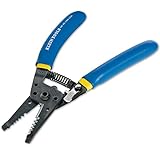
 Klein Tools 11061 8-Inch Self-Adjusting Wire Stripper/Cutterone size8.25 x 4 x 1.3 inches0.8 PoundsCheck on Amazon
 Klein Tools 11063W 7-Inch Heavy-Duty Automatic Wire Cutter/StripperPack of 16.62 x 5.25 x 5.25 inches0.75 PoundsCheck on Amazon
Top Picks at a Glance
- Best Overall Splice Connector: WAGO 221 Lever Nuts 28-piece assortment with case
- Best Budget Connectors: Crweety 350-piece twist-on wire connector assortment
- Best Wire Stripper: Klein Tools 11061 8-inch self-adjusting stripper/cutter
- Best Multimeter for Homeowners: Klein Tools MM325 digital manual-ranging multimeter
- Best Pocket Voltage Detector: Fluke 1AC II VoltAlert
- Best Starter Test Bundle: KAIWEETS 3-piece electrical test kit
- Best Test Lead Upgrade: Bionso 25-piece multimeter leads kit
Comparison Table
| Product | Best for | Key specs (as listed) | Watch for | Price tier |
|---|---|---|---|---|
| WAGO 221 Lever Nuts, 28 pc | Splices you may need to redo | Compact lever connectors, case included, mixed 2/3/5-conductor sizes | Cost per connector is higher than twist-ons | Mid-range |
| Crweety 350 pc Wire Connectors | Stocking a toolbox cheaply | 5 color-coded sizes, insulated twist-on caps | Individual size ranges not listed in the short title; check the box chart | Budget |
| Klein 11061 Wire Stripper | Daily stripping and cutting | 8 in, self-adjusting, 10-20 AWG solid, 12-22 AWG stranded | Not a crimper for large lugs | Budget to mid-range |
| Klein MM325 Multimeter | Voltage, continuity, resistance | 600V AC/DC, manual ranging, battery and current tests | Manual ranging takes a little learning | Mid-range |
| Fluke 1AC II VoltAlert | Quick live/dead check | 90-1000V AC, audible beeper, CAT IV rating, pocket size | Higher 90V low threshold than some pens | Mid-range |
| KAIWEETS Electrical Test Kit | One purchase for beginners | Digital multimeter, non-contact tester, GFCI outlet tester | Individual meter specs not listed in the short title | Mid-range |
| Bionso 25-pc Test Lead Kit | Replacing worn leads | Replaceable gold-plated probes, set of leads and accessories | Check your meter’s jack style and rating | Budget to mid-range |
1. WAGO 221 Lever Nuts, 28-Piece Assortment: Best Overall Splice Connector
- Compact lever-actuated splicing connectors in an organizer case
- Assortment includes the 221-2401, 221-412 and 221-413 style sizes, plus larger 5-conductor parts (full list not shown in the short title)
- Designed for solid and stranded conductors; exact AWG range is on the maker’s data sheet, not listed here
- Clear housing lets you see that the conductor reached the stop
- 28 pieces is enough for a handful of fixtures and a few junction boxes
Best for: homeowners swapping light fixtures, ceiling fans and receptacles who want to see the splice is seated. Skip if: you are wiring a whole house and need hundreds of connectors cheaply.
Lever connectors answer a very specific complaint about twist-on caps: you cannot tell by looking whether a twist-on has gripped every conductor, and a loose connection in a box is a classic cause of flickering lights and heat. A transparent lever connector lets you check conductor depth at a glance, and the lever lets you open the splice again without cutting and re-stripping. That reusability is the main reason many DIYers keep a small assortment on hand for troubleshooting.
The trade-off is cost and size. A lever connector takes up a little more volume than a small twist-on, which matters in a crowded box, and the unit cost is higher. The compact housings are designed to fit better than older lever styles, but always count box fill against the box’s marked volume. The case in this assortment is useful for keeping the sizes sorted, which is half the battle in a toolbox.
Pros: visible conductor seating; reusable; handles mixed wire types per the maker; organized case. Cons: higher cost per splice; bulkier in tight boxes; assortment only has 28 pieces.
2. Crweety 350-Piece Wire Connector Assortment: Best Budget Connectors
- 350 insulated twist-on wire nuts (wire caps)
- 5 color-coded sizes in one box
- Screw-on design suitable for common household splices
- Listed price tier is among the lowest of any kit in this guide
- Per-size wire ranges and temperature rating: not listed in the short title
Best for: filling a toolbox, hobby projects, low-voltage and general repairs. Skip if: you want to verify a listed safety certification before using them in permanent household circuits; check the box markings and your local code.
A big assortment solves the practical problem that you never have the right color when you need it. Twist-on connectors are color-coded by size, and a five-color kit usually covers the small, medium and larger splices that come up in lighting and receptacle work. The sheer count here means you can practice stripping and twisting without worrying about waste, which is the best way to learn how many half-turns a good splice needs.
The weak point of any bulk kit is that the packaging may not list certification marks or per-size conductor ranges in the same detail as an electrical-brand box. Before using any connector in a permanent household circuit, read the marking on the box or the product page for its rated voltage, temperature rating and the number and gauge of conductors for each color. If the numbers are missing, treat the kit as a general-purpose supply and buy a name-brand box for the wiring inside your walls.
Pros: very low cost per piece; five sizes; plenty for practice. Cons: detailed ratings not listed in the short title; twist-on style hides the splice; no case-organizer details listed.

3. Klein Tools 11061 8-Inch Self-Adjusting Wire Stripper/Cutter: Best Wire Stripper
- 8-inch self-adjusting stripper and cutter
- Strips 10-20 AWG solid and 12-22 AWG stranded wire (per the listing)
- Adjusts to the wire without a gauge setting
- Heavy-duty design with a built-in cutter
- Handle material and weight: not listed
Best for: anyone doing repeated outlet, switch and fixture work. Skip if: you need to strip very fine wire or crimp insulated lugs on a regular basis.
A self-adjusting stripper removes the guesswork that leads to nicked conductors. You close the handles, the jaws set to the wire, and the insulation pulls off cleanly. Nicked copper is more than cosmetic: a notch reduces the effective cross-section and is a common spot for a conductor to break after repeated bending. The listed range of 10-20 AWG solid covers the common household range, which includes 14 AWG (typically 15-amp circuits) and 12 AWG (typically 20-amp circuits) cable.
The 8-inch size gives good leverage for cutting and a comfortable reach into a box. One caution: self-adjusting strippers work best on standard-thickness insulation. Very thick or very thin jackets can be inconsistent, so keep a cheap manual stripper on hand to confirm strip length against the strip gauge molded on the connector or device. Strip length on a lever connector is usually shown on the housing; match it exactly.
Pros: clean strips without setting a gauge; covers common household gauges; cuts as well; trusted tool brand. Cons: not a crimper for heavy lugs; can struggle with unusual insulation; fine-gauge wire is outside its range.
4. Klein Tools MM325 Digital Manual-Ranging Multimeter: Best Multimeter for Homeowners
- Digital manual-ranging multimeter
- 600V AC/DC voltage measurement
- Tests batteries, current and resistance (per the listing)
- Also includes continuity and diode functions per the maker’s product description; confirm on the data sheet
- Safety category rating: not listed in the short title
Best for: confirming voltage, checking continuity of a cord or switch, and troubleshooting a dead receptacle. Skip if: you want auto-ranging and a large display with extras like temperature or capacitance.
A multimeter turns “something is wrong” into a measurement. With the circuit confirmed live, you can read line voltage at a receptacle to see if it is roughly what you expect, or with power off you can test continuity along a cord or across a switch. Manual ranging means you pick the range yourself; that is a small learning curve, but it also makes the reading predictable and the meter inexpensive.
The key safety rule is to always test the meter on a known live source before and after checking the circuit you think is dead, so a dead battery or blown fuse does not give you a false “zero”. Use the leads supplied or a compatible replacement set, keep your fingers behind the finger guards, and never measure resistance or continuity on a live circuit. Voltage and current jacks are different: leaving the leads in the current jack while measuring voltage is the classic way to blow a fuse.
Pros: does what a homeowner needs; 600V AC/DC range; recognizable tool brand; straightforward controls. Cons: manual ranging; basic feature set; leads are standard, so you may want an upgrade.
5. Fluke 1AC II VoltAlert: Best Pocket Voltage Detector
- Pocket-sized non-contact voltage tester
- Detects 90-1000V AC
- Audible beeper (and indicator as described by the maker)
- CAT IV rating listed
- Battery type: not listed in the short title
Best for: the first quick check before you touch any wire in a box, switch or fixture. Skip if: you need to sense low-voltage circuits, since the 90V lower limit rules out 12V and 24V wiring.
A non-contact tester is a screening tool: hold the tip near a wire or the slot of an outlet, and it beeps if it senses an AC field. It is useful because it is fast, and because the pocket clip means it is always with you. Its limits are equally important: a quiet tester does not guarantee a wire is dead (shielded cable, a wire in a metal box, or a weak battery can all produce a false negative), so the standard practice is to confirm with a meter after the breaker is off.
The 90V lower threshold in this model is by design; it helps avoid false alarms from static or induced voltage on unused wires. If you work mostly with standard 120/240V household circuits, that threshold is appropriate. If you work with low-voltage lighting or doorbell wiring, you will want a different tool, and the Klein NCVT-style pens with a lower range are one alternative listed in the Also Consider section.
Pros: pocket size; simple one-hand use; high safety category rating; recognized brand. Cons: not for low-voltage circuits; can give false negatives; no display.
6. KAIWEETS Electrical Test Kit: Best Starter Test Bundle
- 3-piece kit: digital multimeter, non-contact voltage tester and a GFCI outlet tester
- Covers the three most common homeowner checks in one box
- Meter range, accuracy and safety category: not listed in the short title
- Outlet tester checks wiring status with indicator lights per the maker’s description
Best for: first-time buyers who want everything to diagnose a dead outlet. Skip if: you already own a quality multimeter and only need one extra tool.
The appeal of a bundle is simple: a receptacle tester tells you in seconds whether an outlet is wired correctly and whether the GFCI trips, the non-contact tester screens for voltage, and the meter confirms with a reading. For someone starting a house of rewiring chores or just trying to figure out why a plug is dead, that sequence covers a lot of ground for one price.
The weak point of any three-piece kit is that each part is a basic version. That is usually fine for homeowner work, but treat it as a diagnostic aid and not as the equipment for professional work. Check that the meter’s category rating suits the circuits you plan to measure, and replace the stock leads with a better set (see the next pick) if they feel stiff or the probe tips are loose.
Pros: three tools in one purchase; cost-effective start; GFCI check included. Cons: individual specs not listed; entry-level build; leads may need upgrading.
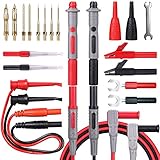
7. Bionso 25-Piece Multimeter Leads Kit: Best Test Lead Upgrade
- 25-piece set of test leads and accessories
- Replaceable gold-plated probes
- Marketed as “professional and upgraded” leads
- Includes accessory tips and clips as described by the seller; exact contents: check the listing
- Voltage and CAT rating: not listed in the short title
Best for: people whose stock meter leads are stiff, short or worn. Skip if: your meter uses recessed or proprietary jacks that standard banana plugs will not fit.
Stock leads are the part of a budget meter that wears out first. Insulation hardens, tips go dull, and a dull tip makes poor contact on a screw terminal. A kit with replaceable probes, alligator clips and different tip styles lets you reach awkward points: a clip hands-free on a terminal while you watch the display, a fine tip on a small connector, or a long lead across a room.
The most important detail is the safety rating. Leads are rated by category and voltage, and a lead rated lower than your meter limits the whole setup. Before using any aftermarket lead on household mains, confirm its voltage and category rating, which should be on the lead or the product details. If the rating is missing, restrict it to low-voltage and bench use.
Pros: many accessories; replaceable tips; improves reach and contact. Cons: rating details need checking; accessory quantity is more than most people use; jack compatibility is not guaranteed.
Also Consider
Kuject 120-Piece Heat Shrink Solder Seal Connectors
These listed 26-10 AWG waterproof connectors are for outdoor, marine and automotive splices where you need a sealed joint. They are not a substitute for in-box household connectors, but they are a good addition to a toolbox for low-voltage and vehicle wiring.
Klein Tools NCVT3P Dual-Range Voltage Tester
This pen-style tester is listed with a 12-1000V AC range and a flashlight. The lower 12V threshold makes it more suitable than a 90V tester for low-voltage lighting and thermostat wiring.
Neoteck Non-Contact Voltage Detector
A low-cost detector listed at 12-1000V AC with audible beeps. A reasonable backup tester to keep in a car or second toolbox, though a name-brand detector is a better first choice.
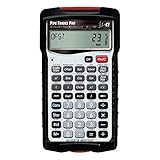
Calculated Industries 4095 Pipe Trades Pro Calculator
This is a specialty math calculator for pipefitters and steamfitters, covering layout and design calculations. It is not an electrician’s tool, so we did not rank it among the main picks, but it is the right purchase if your toolbox crosses into pipe work and you need offsets, rolling offsets and similar layout math.
How We Chose
We built this list by reading manufacturer pages and the detailed product listings for each item, then comparing the specs that matter in practice: conductor range, voltage range, safety category, included accessories and ease of seeing a good connection. We also looked at what independent electrical-trade publications and instruction guides say about lever connectors, twist-on connectors and non-contact testers, including the common cautions about false negatives and test-before-touch practice. We did not personally use these products, and this guide is research-based. Where a spec was not stated, we wrote “not listed” rather than guess.
We limited each brand to two products, put a premium on tools that make a dangerous mistake harder to make (a visible splice, a dedicated live/dead check), and kept budget kits in the guide when the price gap was large enough to matter for people who just need a full box of connectors.
Buying Guide
Choose the Connector Style for the Job
Twist-on wire nuts are the lowest cost and fit nearly every household splice, but they depend on correct technique: strip to the length printed on the connector, hold the conductors parallel, twist until the wires start to twist together, and tug each wire to test. Lever connectors skip the twisting, make a visible joint, and can be reopened. Heat-shrink butt and solder-seal connectors are for outdoor, marine and automotive splices where moisture is a concern. For a home kit, a twist-on assortment plus a small lever assortment covers nearly everything.
Match Connector Size to Wire Gauge and Count
Each connector is rated for a range of wire sizes and a maximum conductor count. Typical household wire is 14 AWG on 15-amp circuits and 12 AWG on 20-amp circuits, and 10 AWG is common for 30-amp circuits such as dryers. A connector that is too large lets the wires wiggle; too small, and the wires will not fit. Read the box chart, and never mix more wires than the connector allows.
Pick a Stripper That Matches the Gauge Range
Look for a stripper whose range includes 14 and 12 AWG solid and stranded wire. A self-adjusting model is faster and less likely to nick copper. Check that the cutter portion is clean enough to trim a lead flush; if you do a lot of crimping, add a separate crimper.
Understand Testers and Safety Categories
A non-contact tester screens for voltage but cannot prove a wire is dead. A multimeter lets you measure voltage, and measuring on a known live source before and after is the standard way to prove a test. Safety categories (CAT II, III, IV) describe the transient energy a meter or tester can withstand where it is used. CAT III is for distribution inside a building, and CAT IV is for the service entrance. For household work, choose a meter and leads rated for at least the category of the circuits you will measure, and make sure the leads match the meter.
Plan Your Kit in Layers
A practical starter kit is a stripper, a voltage tester, a multimeter, a mixed assortment of connectors, electrical tape and a flashlight. Add a lever connector assortment, a crimper and better test leads as your projects grow. Keep each item in a dedicated pouch so a tester is never buried at the bottom of a toolbox when you need it.
Common Mistakes to Avoid
- Trusting a non-contact tester alone. Confirm with a meter after the breaker is off.
- Skipping the step of checking your meter on a known live circuit on a known live circuit.
- Stripping too much or too little insulation, leaving bare copper outside the connector or too little under it.
- Using an undersized connector for several wires and forcing the cap on.
- Using household connectors outdoors without a rated, wet-location approach.
- Leaving meter leads in the current jack while measuring voltage.
Frequently Asked Questions
Are lever nuts better than wire nuts?
They are different, not strictly better. Lever connectors make a visible, reusable splice and are easier for beginners, while twist-on connectors cost less per splice and take less room. Both are used in homes when installed according to their instructions and local code.
What wire sizes do I need to strip for home wiring?
Most household work uses 14 AWG and 12 AWG, and sometimes 10 AWG for larger appliance circuits. A stripper rated at least 10-20 AWG solid, like the Klein 11061, covers those sizes.
Is a non-contact voltage tester enough to confirm power is off?
No. It is a screening tool and can miss voltage in shielded cables or with a weak battery. After switching off the breaker, confirm with a multimeter and test the meter on a known live circuit first.
Do I need a multimeter if I have a voltage detector?
If you only swap fixtures occasionally, a detector may be enough to start. A multimeter becomes essential once you need to check continuity, find a break in a cord, or measure a low-voltage supply.
Can I use the connector assortment outdoors?
Standard indoor connectors are not designed for wet locations. Use connectors that are listed for wet or direct-burial use, or sealed heat-shrink connectors, and follow the manufacturer’s instructions and your local code.
What safety category should my meter have?
For typical household circuits, a CAT III rated meter and leads are the usual recommendation. A CAT II meter is only for outlets and appliances at the end of a branch circuit, and a CAT IV rating is for the service entrance. Check the markings on both the meter and the leads.
Is a pipe trades calculator useful for electrical work?
Not for electrical work. It is designed for pipe layout math such as offsets and fittings, so it is the right tool if you also work with piping but not a substitute for electrical references.
Which One Should You Buy?
If you are putting together a first kit, start with a lever connector assortment, a Klein 11061 stripper, the Fluke VoltAlert and a multimeter, either the Klein MM325 on its own or the KAIWEETS bundle if you also want the outlet tester. Add the Crweety twist-on assortment as a stock of general connectors, and upgrade to the Bionso leads when the stock leads wear. If you work on low-voltage circuits, add a 12V-range detector; if your jobs involve outdoor splices, add sealed heat-shrink connectors. And when a job involves the panel, new circuits or uncertainty, hire a licensed electrician.
Sources
- Klein Tools product pages and spec sheets (wire strippers, multimeters, voltage testers)
- Fluke product information for the VoltAlert non-contact voltage tester
- WAGO product literature for 221 series lever connectors
- Manufacturer and seller listing details for the Crweety, KAIWEETS, Bionso, Kuject and Neoteck products
- Electrical safety guidance from the National Fire Protection Association and the National Electrical Code (general references)
Last updated: October 2026