What's inside
As an Amazon Associate I earn from qualifying purchases. This post may contain affiliate links at no extra cost to you.
For most cabinet work, a drill driver is the more practical first purchase. It drills shelf-pin and pilot holes, drives screws, and handles the occasional larger fastener. An installation driver is easier to control in tight spaces and gentler on small hardware, but it is a specialist: its compact body and interchangeable heads are valuable when access is difficult, not essential for every cabinet job.
The best choice depends on whether you are building or modifying cabinets, or mainly fitting them in place. Cabinet assembly and installation involve plenty of screw driving, but drilling accurate holes and handling varied fasteners are what make a regular drill driver useful across more tasks.
As an Amazon Associate we earn from qualifying purchases at no extra cost to you.


Our Top Picks
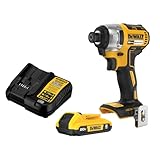
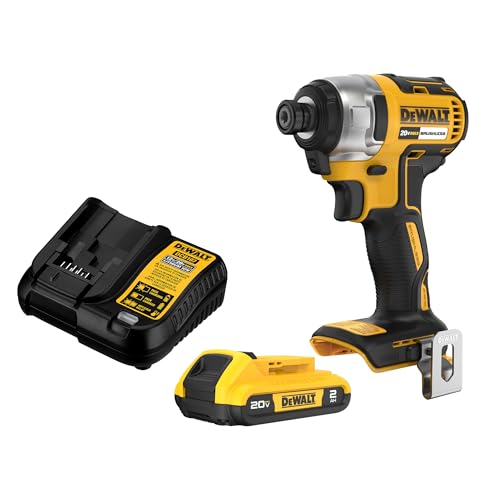
 DEWALT 20V MAX Cordless Drill and Impact DriverOne Size15.06 x 6.4 x 9.88 inches3.6 poundsCheck on Amazon
 Dewalt DCD794B 20V MAX ATOMIC COMPACT SERIES BrushlessOne Size6.61 x 3.32 x 8.39 Inches2.51 PoundsCheck on Amazon

What each tool does
A drill driver is a general-purpose cordless tool with a keyless chuck, typically accepting round-shank bits up to 3/8 or 1/2 inch. Its clutch lets you set a limit on screw-driving force. A common 18V or 20V platform has enough power for cabinet screws and ordinary drilling without being excessive for the work.
An installation driver is a compact driver built around offset, right-angle, and other interchangeable heads. Those heads can reach inside a cabinet or close to a wall where a conventional drill body will not fit. Many accept standard hex-shank bits, but their chuck arrangements may be less convenient for switching among drill bits, countersinks, and driver bits.
How they compare on cabinet work
| Task | Drill driver | Installation driver |
|---|---|---|
| Driving cabinet screws | Good control with the clutch set correctly | Very good in tight spots; light and easy to position |
| Drilling pilot holes | Best all-around choice; standard chuck holds many bit types | Good for small bits if compatible with the head and shank |
| Drilling shelf-pin holes | More practical with a guide or jig; chuck suits common bits | Can do it, but is less versatile for larger or specialty bits |
| Working inside a narrow cabinet | Bulky body can hit the side or face frame | Offset and right-angle heads can make the difference |
| General household use | Broadly useful for drilling and driving | More limited; heads are most valuable for access |
Drilling and accuracy
Cabinet work often calls for a 1/8-inch pilot hole for a small screw or a hole sized to the screw’s root diameter for a larger fastener. The precise size depends on the screw and material; in hardwood, a pilot hole that is too small can split an edge or snap a screw. A drill driver’s adjustable clutch helps prevent overdriving, while its chuck makes it easy to use brad-point bits, countersinks, and larger bits suited to a particular job.
For repeated shelf-pin holes, neither tool replaces a drilling guide. A 5mm bit and a shelf-pin jig help keep holes aligned and at a consistent depth; freehand drilling can leave pins crooked or shelves uneven. An installation driver may be compact, but that does not make it inherently more accurate. The jig, bit, depth stop, and steady setup matter more.
Tight spaces and fasteners
This is where an installation driver earns its keep. Imagine fitting a screw near the back of a cabinet with a side panel only a few inches away. A straight drill driver may not line up with the screw, and angling it risks cam-out, damaged screw heads, or a bit slipping across a finished surface. An offset head can keep the bit aligned while the tool body clears the obstruction.
That advantage is situational. If the cabinet is open at the front and the screw is easy to reach, a drill driver handles the work well. For face-frame screws, hinge adjustments, and small hardware, use the correct bit and a low clutch setting, then finish by hand if needed. Too much torque can strip a screw, crush particleboard, or pull a hinge out of position. Neither tool makes driving into cabinet material foolproof.
Which one should you buy?
Choose a cordless drill driver if you need one tool for drilling and screw driving, are assembling cabinets, or do occasional home repairs as well. A basic model is enough for most cabinet jobs; spend on a good clutch, a comfortable grip, and batteries you can use with other tools before paying extra for high torque.
Choose an installation driver if your work repeatedly involves confined cabinets, awkward corners, or installing hardware where a standard tool cannot line up. It is also a reasonable second driver for someone who already owns a drill and wants faster bit changes or better access. Check which heads are included and whether replacement heads or compatible bits add to the cost.
If cost matters and access is ordinary, the cheaper drill driver is fine. Buy a short bit holder or right-angle adapter only if you encounter a genuine clearance problem; adapters add length and may wobble under load, so they are not a perfect substitute for an offset head. If you fit kitchens regularly and keep meeting the same tight-space problem, the installation driver’s extra expense can save time and reduce slips against finished surfaces.
Get better results with either tool
Clamp cabinet parts before drilling or driving, and test the clutch on scrap of the same material. Keep the bit square to the work and use a depth stop or tape marker when holes must be consistent. For finished panels, start slowly and avoid forcing the bit: heat and wandering can damage laminate or veneer. For screws near an edge, drill the pilot hole rather than relying on extra torque.
In short, a drill driver covers more cabinet tasks and is the sensible first tool for most buyers. An installation driver is more practical when restricted access is a regular part of the job. Buy for the work you actually repeat, not just the tightest corner you might encounter once.