JIS Screwdriver Bit vs Phillips Bit: Which Fits Japanese Fasteners Better?
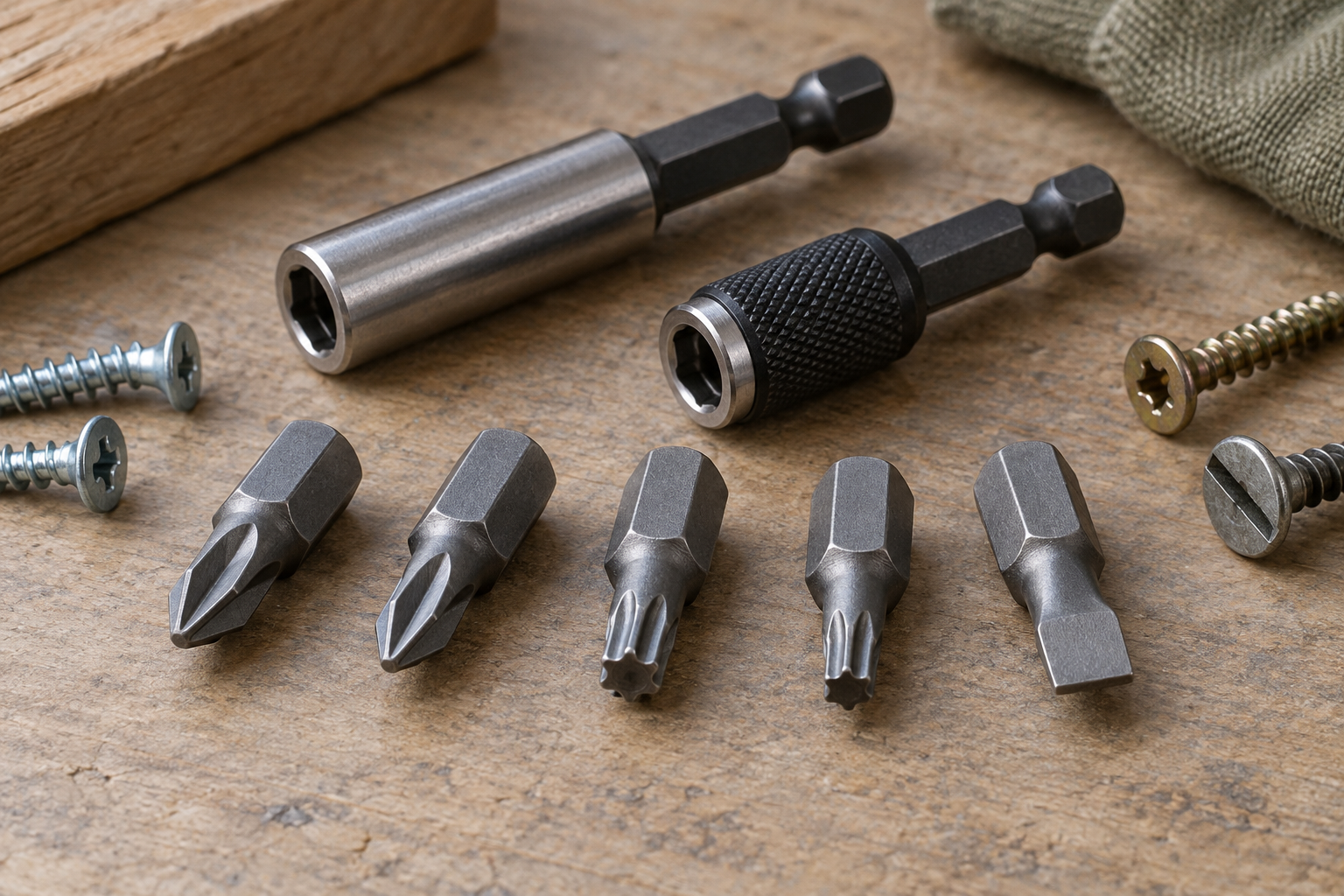
AI-generated editorial illustration of driver bits

Japanese fasteners are often described as “Phillips,” but that label is not always accurate. Many motorcycles, cameras, bicycles, appliances, and older Japanese cars use JIS (Japanese Industrial Standard) cross-head screws. A regular Phillips bit may fit well enough to turn one—or it may cam out, damage the recess, and leave you with a much harder … Read more
Best Magnetic Nut Driver Set for Installing Sheet-Metal Ductwork

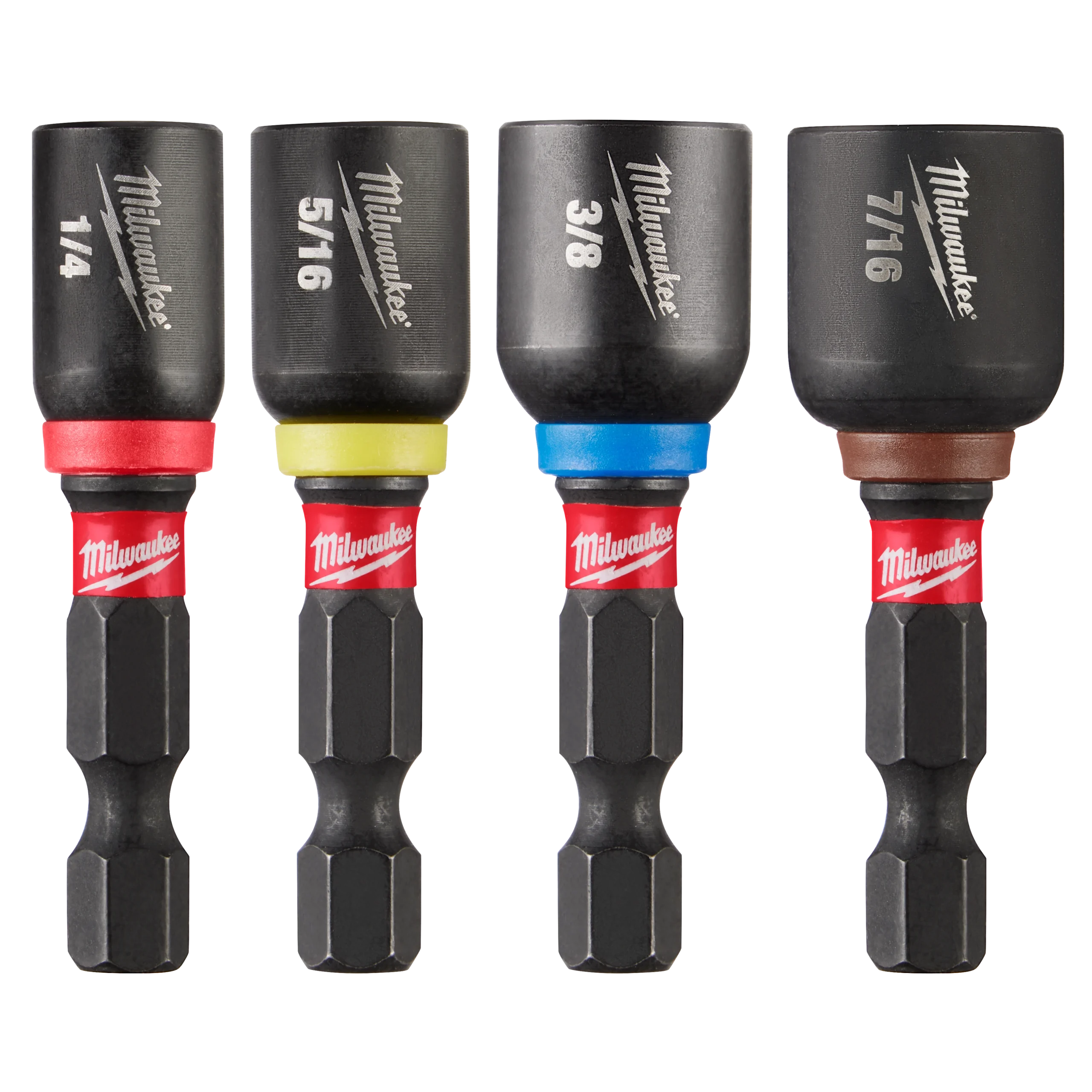
Four Milwaukee impact-rated hex-shank nut setters with marked SAE socket sizes

Installing sheet-metal ductwork is a repetitive fastening job, and the right nut driver set can make the difference between steady progress and dropped hardware. For most duct installers, a magnetic 1/4-inch hex-shank set with 1/4-, 5/16-, and 3/8-inch drivers covers the common self-drilling screws, hanger hardware, and connector fasteners. The best set is not necessarily … Read more

Best Screw Gun for Attaching Cement Board to Wood Framing

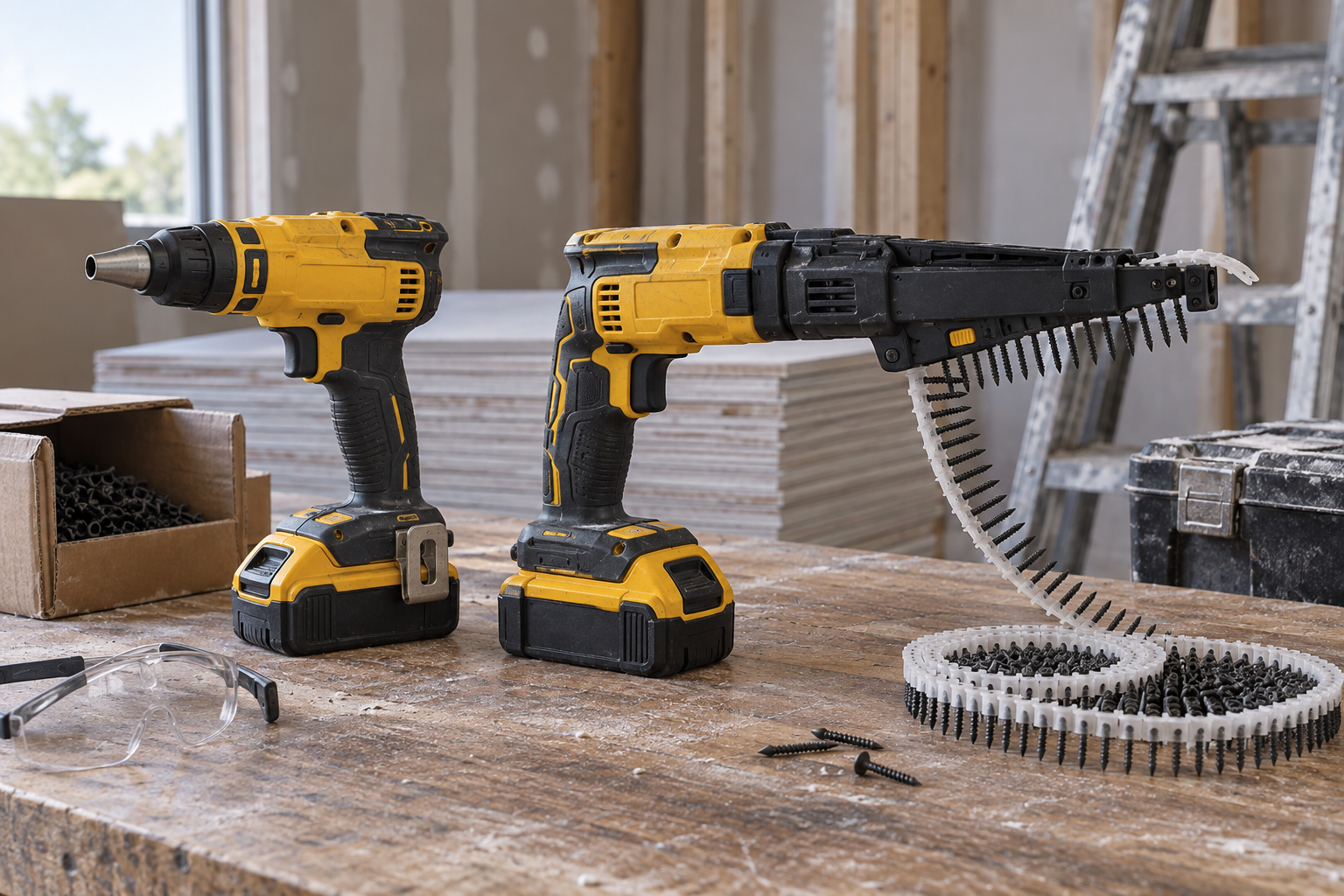
AI-generated editorial illustration of drywall screw guns

Attaching cement board to wood framing is not ordinary drywall work. The panels are abrasive, screws require more driving force, and a screw driven even slightly too deep can crush the board’s face or strip the framing’s holding power. The best tool for most jobs is a variable-speed, corded or cordless screw gun with a … Read more

How to Choose Drywall Screw Gun Clutch Settings for Paper-Faced Board

AI-generated editorial illustration of drywall screw guns

Why Clutch Setting Matters on Paper-Faced Board A drywall screw gun clutch controls how far a screw travels before the drive disengages. On paper-faced gypsum board, the correct setting leaves the screw head slightly below the paper without tearing it. That small difference determines whether the panel stays firmly attached and whether the joint compound … Read more

Order backlinks