Best Scroll Saw Blade for Intricate Cuts in Thin Plywood
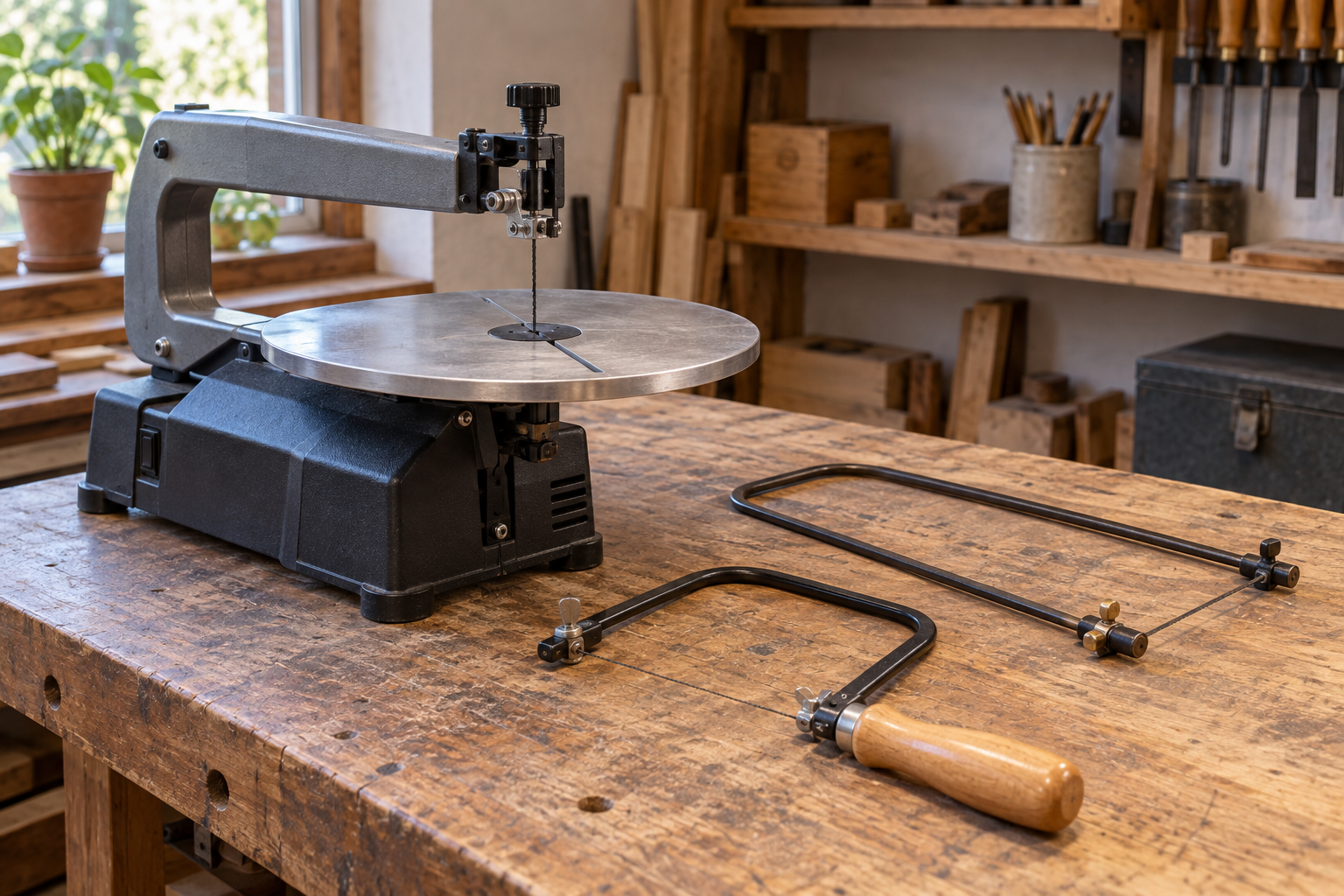
AI-generated editorial illustration of scroll saw and coping saw

The best blade type for thin plywood For intricate cuts in thin plywood, a fine-tooth skip-tooth blade is the best starting point. It removes sawdust efficiently, turns more easily than a standard blade, and leaves enough control for small inside corners. A reverse-tooth blade is useful when the top face must stay clean, but it … Read more
Orbital-Action vs Straight-Cut Reciprocating Saw for Pruning Roots

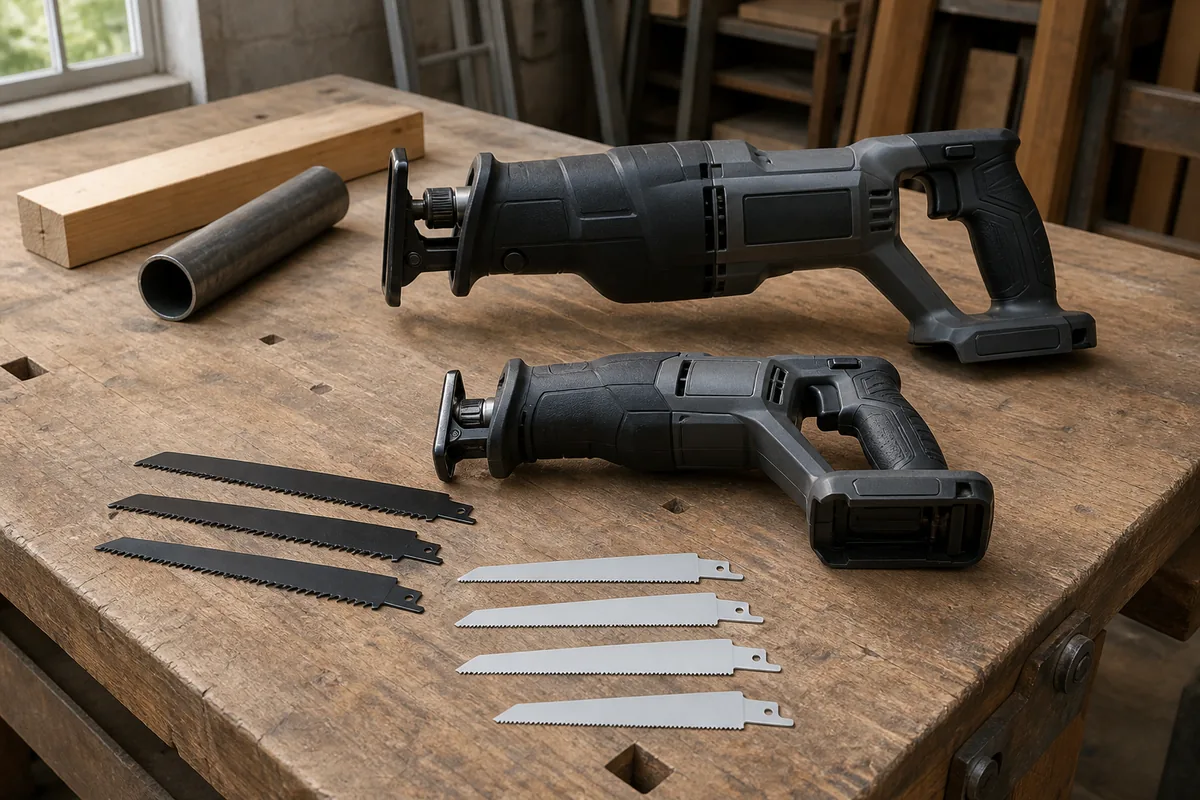
Editorial illustration: reciprocating saws with an assortment of straight blades.

When a root is in the wrong place, a reciprocating saw can remove it without digging an entire trench. The choice between orbital-action and straight-cutting modes matters, though. Orbital action can cut large, woody roots faster, while straight cutting gives better control in tight spaces and is less likely to grab, bind, or throw debris. … Read more

Best Compact Reciprocating Saw for Working Between Wall Studs

Editorial illustration: reciprocating saws with an assortment of straight blades.

Working between wall studs is where a full-size reciprocating saw becomes awkward. The tool body hits the neighboring stud, the shoe cannot sit flat, and the blade may wander into wiring or plumbing. A compact reciprocating saw solves much of that problem by shortening the tool’s nose and reducing its overall height. The trade-off is … Read more

Deep-Cut Band Saw vs Compact Band Saw for Steel Pipe Fabrication

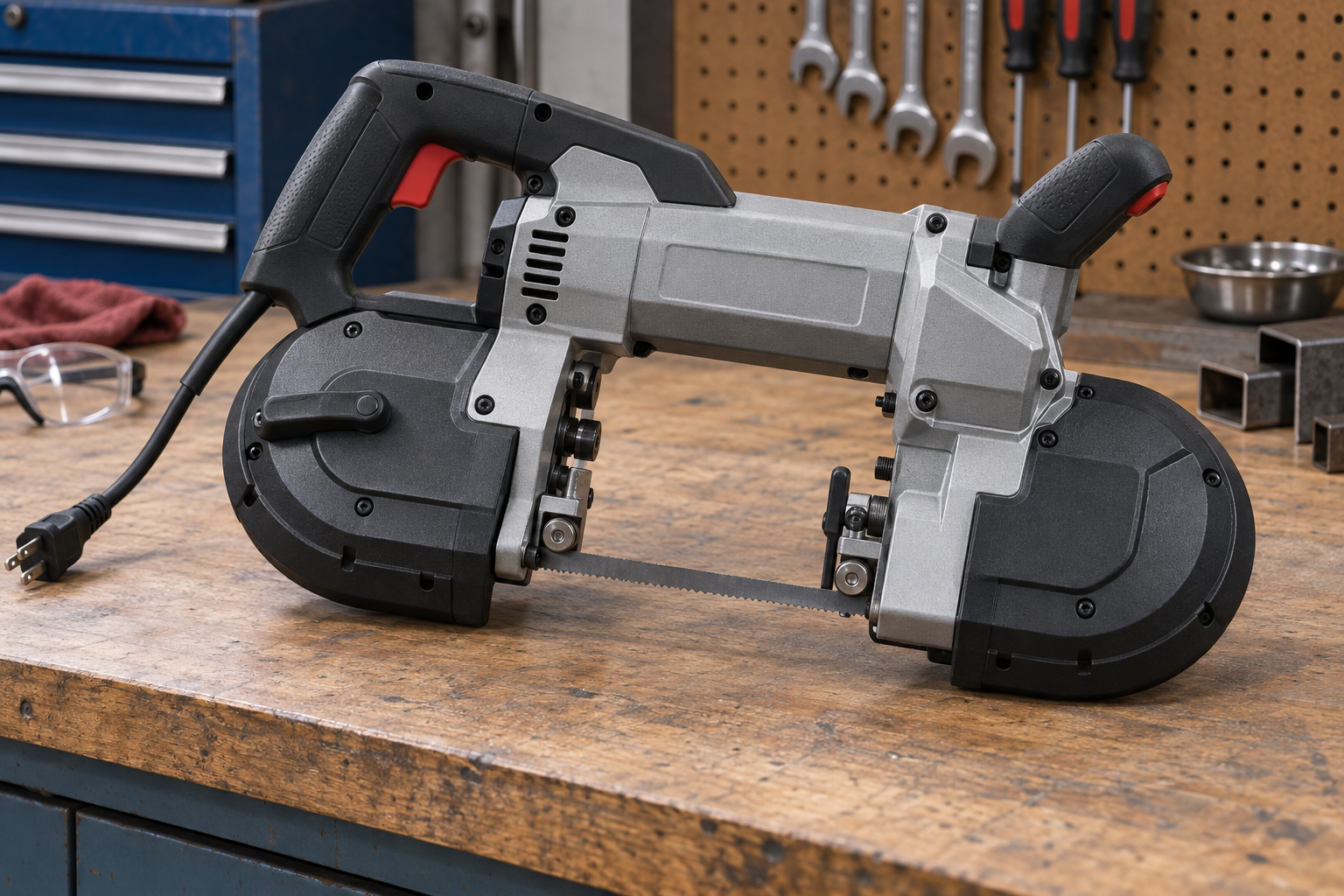
AI-generated editorial illustration of portable metal bandsaw

What “Deep-Cut” and “Compact” Usually Mean For steel pipe fabrication, the difference between a deep-cut band saw and a compact band saw is mainly capacity, not cutting principle. Both use a continuous toothed blade running around two wheels. The deep-cut saw simply has a larger throat and a taller cutting frame, usually with a maximum … Read more

Order backlinks