What's inside
- Top 3 Picks
- Quick Comparison
- How We Chose
- 1. GADFISH Sand Scoop – Best for All-Around Beach Detecting
- 2. Yaheeda Long Handle Sand Scoop – Best for First-Time Buyers on a Budget
- 3. WodGod Sand Scoop – Best for Premium Long-Handle Surf and Wet Sand
- 4. CKG Sand Scoop – Best for Underwater and Deep Wet Sand Hunting
- 5. PAMLIAPY Sand Scoop – Best for Budget Dry-Sand Sifting with a Long Handle
- 6. SCNKKL Long Handle Sand Scoop – Best for Tall Adults Wanting Inexpensive Reach
- How to Choose
- Stainless Steel vs Aluminum: What Actually Changes
As an Amazon Associate I earn from qualifying purchases. This post may contain affiliate links at no extra cost to you.
The best sand scoop for metal detecting overall is the GADFISH Sand Scoop for Metal Detecting — a mid-range stainless steel fast-sifter with a shovel-style shaft that suits the most common situation: a detectorist who splits a session between dry sand and shallow surf and wants one tool that drains wet sand quickly without flexing. If budget is the deciding factor, the Yaheeda Long Handle Sand Scoop does the same basic job at the entry end of the market, and if you hunt deep surf, heavy wet sand or want the most substantial build here, the WodGod Sand Scoop is the premium pick. Everything else comes down to three numbers you can check before you buy: hole diameter (8-12 mm is the beach sweet spot), handle length (36-48 inches to stand upright in wet sand), and basket material (stainless steel for wet sand, rocks and surf; aluminum only for dry, loose sand). Get those three right and the brand matters far less than the specification.
Our Top Picks
 Yaheeda Long Handle Sand Scoop with Shovel forCompact with Long Handle6.1 x 9.2 x 46 inches3.3 poundsCheck on Amazon


Top 3 Picks
Best overall: GADFISH Sand Scoop for Metal Detecting
The GADFISH scoop is the best all-round choice for a detectorist who works both dry sand and the wet strip, because its stainless steel sifter basket and fast-sifter hole pattern drain a load of wet sand in a few shakes rather than a few seconds of wrestling. It is priced in the middle of the market, which is where the value sits: you are paying for stainless steel and a shovel-style shaft rather than for a hand scoop you will outgrow in one season. If you only ever hunt dry sand, it is more scoop than you need — but it will not hold you back when you move into the surf line.
Best budget: Yaheeda Long Handle Sand Scoop
Yaheeda’s long-handle scoop with a shovel-style head is the entry point for anyone who wants a stainless scoop and a long shaft without paying mid-range money. It covers dry sand and damp sand comfortably, and it gives a first-season hunter the standing posture that a short hand scoop cannot. The trade-off is in refinement rather than function: expect a lighter-duty build than a premium scoop, and treat the handle joint and the basket edge as the parts to inspect regularly.
Best premium: WodGod Sand Scoop for Metal Detecting
WodGod’s heavy-duty stainless steel scoop with a long handle is the pick when you want the most substantial basket, the longest reach and a kit that arrives with a bundled metal accessory rather than a bare scoop. It is aimed at hunters who spend long sessions in wet sand and shallow surf, where leverage on the basket and weld quality are what decide whether a scoop lasts three seasons or eight. It costs more than the rest of this list, and for occasional dry-sand hunting that premium is hard to justify.
Quick Comparison
| Product | Best for | Key specs | Price tier |
|---|---|---|---|
| GADFISH Sand Scoop for Metal Detecting | All-round dry sand plus shallow surf | Stainless steel sifter basket, fast-sifter hole pattern, shovel-style shaft, long handle | Mid-range |
| Yaheeda Long Handle Sand Scoop | First scoop on a tight budget | Stainless steel scoop-and-shovel head, long handle, beach and dry sand use | Budget |
| WodGod Sand Scoop for Metal Detecting | Premium surf and heavy wet sand, kit buyers | Heavy-duty stainless steel basket, long handle, bundled metal accessory in the box | Premium |
| CKG Sand Scoop for Beach Metal Detecting | Underwater and deep wet sand hunting | Stainless steel beach and underwater sifter, treasure-hunting build, long handle | Premium |
| PAMLIAPY Sand Scoop for Metal Detecting | Budget dry-sand sifting with real reach | Stainless steel scoop, long steel handle, sifter basket | Budget |
| SCNKKL Long Handle Sand Scoop | Tall adults wanting cheap standing reach | Stainless steel shovel scoop, long handle, adult sizing | Budget |
Price tiers are used instead of figures because listings move up and down constantly. As a rough market guide: budget scoops generally sit at the entry end of the range, mid-range stainless scoops sit in the middle, and premium heavy-duty or underwater builds sit at the top. A scoop is a five-to-ten-year purchase if you buy stainless and rinse it, so the gap between tiers is usually smaller per year of use than it looks at checkout.
How We Chose
This roundup is built from published product listings and well-established facts about sand scoop construction, not from bench testing. Each scoop was assessed on four criteria. First, material and build class: whether the basket is stated as stainless steel, whether the shaft is a long shovel-style handle or a short grip, and how that combination matches the beach conditions the scoop is sold for. Second, basket geometry: hole size class and pattern, because hole diameter is the single biggest factor in how fast a scoop drains and how much small jewelry it loses. Third, use case fit: dry sand, damp sand, surf and underwater each demand different things from a scoop, and a tool that is excellent in one is often wrong for another. Fourth, upgrade path and price tier, so that a first-season buyer is not pushed into a premium underwater build and a serious surf hunter is not steered toward a light dry-sand scoop. Where a listing does not state an exact figure, we describe the specification class rather than inventing a number.
1. GADFISH Sand Scoop – Best for All-Around Beach Detecting
As an Amazon Associate we earn from qualifying purchases at no extra cost to you.

This is the scoop to buy if you want one tool for a typical beach session that starts on dry sand above the tide line and ends in the wet strip where the coins and rings collect. The GADFISH listing describes a stainless steel sand sifter with a fast-sifter basket and a shovel-style shaft, which places it squarely in the mid-range class of beach scoops: heavier and stiffer than the aluminum hand scoops sold for dry sand, but not as heavily built as the dedicated surf and underwater scoops further down this list. It suits the detectorist who hunts once or twice a month, works a mix of terrain, and does not want to carry two scoops to the beach.
Key specifications, as stated in the listing and by class:
- Basket material: stainless steel sifter basket, the class that resists bending in wet packed sand and pebbles
- Hole pattern: fast-sifter perforation, the mid-to-large hole class that drains a wet load in a few shakes
- Shaft: shovel-style handle, long-handle class, designed for standing recovery rather than kneeling
- Intended terrain: beach and sand, dry through shallow wet sand
- Weight class: long-handle stainless scoops of this type typically land in the 2.5-4 lb band, which is manageable for a two-hour session
- Price tier: mid-range
The strength of this scoop is balance. A stainless basket gives you the stiffness to push into damp sand and the durability to survive shell grit and small stones, while the fast-sifter pattern means you are not standing in the surf shaking a heavy load for five seconds at a time. That combination matters more than it sounds: a scoop that drains slowly costs you minutes per hour, and minutes per hour are targets. The shovel-style shaft also lets you recover standing up, which keeps your face out of the spray and your hands out of the water in cold conditions. Compared with the budget options here, the difference you feel first is in the basket — thinner-gauge scoops flex and drum when you shake them, and that flex is what eventually cracks a weld.
Pros
- Stainless steel basket that holds its shape in wet sand and light gravel
- Fast-sifter hole pattern for quick draining and less shaking time per target
- Long shovel-style handle for standing recovery, which suits surf edges and cold water
- Mid-range price with the durability of a stainless build rather than a disposable one
- Works as a single-scoop solution across dry sand and the wet strip
Cons
- Heavier to swing than an aluminum dry-sand scoop over a long session
- Larger holes will lose very small targets such as earring backs, thin chain links and tiny gold flakes
- More scoop than a dry-sand-only hunter needs
- Not a dedicated underwater build, so chest-deep work is outside its intended use
Against the nearest alternative in this list, the Yaheeda Long Handle Sand Scoop, the GADFISH is the better long-term buy. Both are stainless, long-handled and shovel-style, but the GADFISH sits a tier higher on build and finish, and its fast-sifter basket is the more efficient drainer for wet sand. The Yaheeda wins on price and is a sensible first scoop; the GADFISH wins on the second and third season, when a budget scoop’s welds and basket edge start showing the wear that a heavier build absorbs. If you already know you will hunt wet sand regularly, the mid-range spend here is the cheaper decision over five years.
2. Yaheeda Long Handle Sand Scoop – Best for First-Time Buyers on a Budget

The Yaheeda scoop is aimed at the hunter who has just bought a detector, plans to work beach and dry sand, and does not want to spend mid-range money on a tool before knowing whether the hobby sticks. The listing describes a heavy-duty stainless steel scoop with a long handle and a shovel-style head for beach detecting, which is the right shape for a beginner: the long shaft means you recover targets standing up instead of kneeling in the sand, and the stainless head means you are not fighting a flexing aluminum basket on your first wet-sand outing.
Key specifications, as stated in the listing and by class:
- Basket material: stainless steel, entry to mid gauge within the stainless class
- Head type: scoop and shovel combination, so it can both lift and sift
- Shaft: long handle, standing-recovery length class
- Intended terrain: beach and dry sand, with damp sand workable
- Weight class: long-handle stainless scoops of this type are typically in the 2-3.5 lb band
- Price tier: budget
What makes this a good first scoop is that it gets the ergonomics right before it gets the engineering right. Beginners lose more targets to poor recovery habits than to poor equipment — bending down, kneeling in the surf, digging a wide crater instead of a clean plug — and a long handle fixes most of that immediately. The stainless head also means the scoop will not fold the first time you push it into wet sand, which is the classic failure of cheap aluminum scoops. The compromise is refinement: expect a lighter gauge, a simpler handle joint and less attention to weld finishing than the premium scoops here. None of that stops it working; it just shortens the interval before you start thinking about an upgrade.
Pros
- Lowest entry cost of the long-handle stainless scoops in this roundup
- Long handle promotes standing recovery, which is easier on a beginner’s back and knees
- Stainless head handles damp sand without the flex of an aluminum basket
- Scoop-and-shovel head shape works for both lifting and sifting
- Good second-tool option: keep it as a spare or a loaner after you upgrade
Cons
- Lighter build than mid-range and premium scoops, so welds and the basket edge wear sooner
- Handle joint may need regular checking and tightening with use
- Hole pattern is not optimized for the fastest possible drain in heavy wet sand
- Not intended for deep surf or underwater work
Against the PAMLIAPY and SCNKKL scoops in this list, the Yaheeda is the most balanced budget choice, because it pairs a stainless head with a long handle rather than leaning on one or the other. Against the GADFISH, it is the value pick: you give up some build quality, some basket stiffness and some drain speed, and you save the difference between budget and mid-range money. For a first season on dry sand and the damp strip, that trade is reasonable. For someone already committed to wet-sand hunting two or three times a month, the GADFISH is the better buy.
3. WodGod Sand Scoop – Best for Premium Long-Handle Surf and Wet Sand
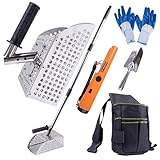
WodGod’s scoop is the premium pick here, and the listing describes it plainly: a heavy-duty stainless steel sand scoop with a long handle, sold with a bundled metal accessory rather than as a bare tool. That combination targets the committed beach hunter — someone who works wet sand and shallow surf for hours at a time, pushes the basket into packed sand and shell grit, and wants a scoop that will not need replacing in two seasons. It is also the pick for a buyer who prefers to get everything in one order rather than sourcing a scoop and accessories separately.
Key specifications, as stated in the listing and by class:
- Basket material: heavy-duty stainless steel, the top of the durability range in this roundup
- Shaft: long handle, surf-length class for standing recovery in the wash
- Bundled item: listing indicates an additional metal accessory included with the scoop
- Intended terrain: wet sand and shallow surf, with dry sand handled easily
- Weight class: heavy-duty long-handle stainless scoops typically run 3-4.5 lb
- Price tier: premium
The case for this scoop is leverage and fatigue resistance. In wet sand, every recovery puts a bending load on the basket-to-shaft junction, and that junction is where cheap scoops fail first. A heavy-duty stainless build distributes that load better, resists the slow oval deformation that turns a round basket into a paddle after a season of prying, and keeps its hole geometry intact — which matters, because elongated holes are how a scoop starts dropping small targets it used to hold. The long handle gives you the reach to work the wash without stepping into the surf line, and the extra mass is an advantage when you are pushing through packed sand rather than swinging in dry dunes.
Pros
- Heavy-duty stainless basket built for repeated wet-sand and surf recovery
- Long handle keeps you out of the wash and upright during recovery
- Bundled metal accessory means fewer separate purchases
- Holds hole geometry better than lighter scoops, so target retention stays consistent
- The best long-term value in this list for high-frequency surf hunters
Cons
- Highest price tier here; hard to justify for occasional dry-sand hunting
- Heavier than mid-range scoops, which is noticeable over a long session
- Extra mass is a disadvantage in soft, loose dry sand where a light scoop swings faster
- Overkill for a beginner who has not yet settled on a hunting style
Against the CKG scoop, the other premium option here, the WodGod is the better all-purpose surf tool while the CKG leans toward underwater work. If your sessions are mostly standing in the wash and working the wet strip, the WodGod’s long handle and heavy basket are the right shape. If you plan to work with the coil submerged and the scoop fully underwater, the CKG’s underwater-oriented build is the more natural fit. Between the WodGod and the mid-range GADFISH, the difference is frequency of use: hunt twice a week and the premium build pays for itself in avoided replacements; hunt twice a season and it does not.
4. CKG Sand Scoop – Best for Underwater and Deep Wet Sand Hunting

The CKG scoop is the specialist in this roundup. Its listing positions it for beach metal detecting with an emphasis on underwater treasure hunting, which tells you who it is for: the detectorist who wades, works with the coil submerged, and needs a scoop that functions when the basket is completely under water rather than half in the air. It is a premium-priced stainless build, and it suits hunters who already know their beaches hold targets below the low-tide line and are willing to work for them.
Key specifications, as stated in the listing and by class:
- Basket material: stainless steel, premium class for saltwater exposure
- Intended use: beach and underwater detecting, sifting in submerged conditions
- Shaft: long handle, reach class for wading and surf work
- Hole pattern: drainage-oriented perforation, sized for submerged sifting
- Weight class: premium long-handle stainless scoops typically run 3-4.5 lb
- Price tier: premium
Underwater sifting changes the requirements. When the basket is submerged, water no longer drains out under gravity alone — it has to flow through the holes as you shake, and a scoop with undersized holes will hydro-lock, holding a plug of sand that resists every shake. That is why underwater scoops generally use generous perforation and a basket that is stiff enough not to deform under the extra drag. Stainless is also the right material here for a practical reason: a scoop that lives in salt water and comes out only to be rinsed needs to resist pitting, and stainless steel is the material class that does that with basic care. The premium price buys the build quality that keeps a saltwater tool usable over years rather than seasons.
Pros
- Purpose-built for submerged and deep wet-sand recovery
- Stainless steel construction suited to repeated saltwater exposure with rinsing
- Generous perforation reduces hydro-locking when the basket is underwater
- Long handle gives reach for wading and working the low-tide line
- Strong long-term value if a large share of your hunting is underwater
Cons
- Premium price for a tool that is not at its best in loose dry sand
- Heavier than a dry-sand scoop and slower to swing above the tide line
- Larger drainage holes will pass small jewelry and thin chain fragments
- Requires a fresh-water rinse after every saltwater session to stay in condition
Against the WodGod scoop, the CKG is the more specialized tool: it is aimed at the underwater end of the spectrum, where drainage and salt resistance dominate, while the WodGod is the stronger all-round surf scoop with a bundled accessory. If your hunting is 70 percent wading and 30 percent dry sand, the CKG is the pick; if it is the reverse, the WodGod is. Against the budget scoops here, the CKG is a different category of purchase — it is bought once by someone who has already decided that underwater detecting is their main pursuit, not as a first scoop.
5. PAMLIAPY Sand Scoop – Best for Budget Dry-Sand Sifting with a Long Handle

PAMLIAPY’s listing is straightforward: a stainless steel sand scoop with a long steel handle, sold as a sifter for beach work. That combination puts it in the budget tier while still delivering the two features that matter most to a casual hunter — a stainless basket and enough handle length to work standing up. It suits the detectorist who mostly hunts dry sand above the tide line, hits the beach a few times a season, and wants a tool that stores easily and does not represent a serious investment.
Key specifications, as stated in the listing and by class:
- Basket material: stainless steel scoop head
- Shaft: long steel handle, standing-recovery length class
- Function: sand sifter for beach detecting
- Intended terrain: dry and damp sand; occasional shallow wet sand
- Weight class: budget long-handle scoops typically run 2-3.5 lb
- Price tier: budget
For dry sand, this scoop does what it needs to. Loose dry sand drains almost instantly through any reasonable perforation, so the fast-drain advantage of a premium basket is much less relevant here — what matters is that the head is stiff enough to scoop a full load without folding and that the handle saves you from bending over a hundred times an hour. The steel handle adds stiffness and a bit of weight, which is a fair trade at this price. Where a budget scoop like this shows its limits is at the wet strip: damp, packed sand puts a real bending load on the basket and the handle joint, and that is the moment you find out how well the welds were finished.
Pros
- Budget price with a stainless head rather than a plastic or thin aluminum basket
- Long steel handle makes dry-sand recovery a standing operation
- Simple, light build that is easy to carry and store
- Good choice as a first scoop or a travel spare
- Dry sand drains quickly, so hole size is rarely a limiting factor in its main use case
Cons
- Budget build class means the handle joint and basket edge are the first things to wear
- Less suited to heavy wet sand and surf than mid-range or premium scoops
- Hole pattern is not tuned for fast submerged drainage
- Steel handle adds weight without adding premium-grade stiffness
Against the SCNKKL Long Handle Sand Scoop, the PAMLIAPY is the more explicitly beach-and-sifter-oriented listing, while the SCNKKL is sold with adult sizing and standing reach as its headline. Functionally they occupy the same budget, long-handle, stainless class, and the decision between them comes down to which handle length and grip shape suits your height and hand. Against the Yaheeda, the PAMLIAPY is the more dry-sand-focused choice; the Yaheeda’s scoop-and-shovel head is a little more versatile once the sand gets damp. If your hunting is 90 percent dry sand, either budget scoop is enough — spend the savings on a pinpointer instead.
6. SCNKKL Long Handle Sand Scoop – Best for Tall Adults Wanting Inexpensive Reach

The SCNKKL scoop is marketed specifically for adults, with a long handle and a stainless steel shovel-style scoop head for beach and underwater treasure hunting. That “for adults” framing is more useful than it sounds: the most common complaint about cheap long-handle scoops is that the shaft is too short for a tall hunter, forcing a bend at the waist on every recovery. This listing puts reach and standing posture at the front of its pitch, which makes it a reasonable budget pick for taller detectorists who hunt dry and damp sand.
Key specifications, as stated in the listing and by class:
- Basket material: stainless steel shovel scoop head
- Shaft: long handle, adult-length class for standing recovery
- Function: beach sifting and shallow underwater recovery
- Intended terrain: dry sand, damp sand and shallow wet sand
- Weight class: budget long-handle scoops typically run 2-3.5 lb
- Price tier: budget
The practical value here is posture. If you are over about six feet tall, a short-handled scoop means a hundred partial squats per session, and that is the fastest way to end a hunt early. A budget scoop with a genuinely long shaft solves the biggest ergonomic problem in beach detecting for a fraction of premium money. What it does not solve is wet-sand leverage: pushing a budget-gauge basket into packed sand puts stress on the weld line, so use it as a scoop rather than a pry bar, lift with your legs, and rinse the joint after saltwater sessions. Treated that way, it will handle a couple of seasons of casual hunting comfortably.
Pros
- Long handle sized with adult users in mind, which suits taller hunters
- Stainless steel head rather than plastic or thin aluminum
- Lowest-commitment way to try long-handle recovery
- Shovel-style head works for lifting a plug as well as sifting it
- Light enough to carry alongside a detector for a full session
Cons
- Budget gauge and finishing, so wet-sand leverage should be kept modest
- Handle joint is a wear point that needs periodic checking
- Not a substitute for a premium underwater scoop in deep surf
- Hole pattern is general-purpose rather than optimized for target retention or fast submerged drainage
Against the PAMLIAPY scoop, the SCNKKL is the better choice for a taller hunter because its listing is built around adult sizing and reach, while the PAMLIAPY is a general-purpose budget sifter. Against the Yaheeda, the SCNKKL is the cheaper, more posture-focused option, while the Yaheeda offers a slightly more versatile head shape for damp sand. If you are on the shorter side, either budget scoop will feel long enough; if you are tall, this is the one to look at first. All three are first-scoop purchases, and all three will be outperformed by the mid-range GADFISH the first time you work packed wet sand for two hours.
How to Choose
The right sand scoop is determined by where you hunt, not by brand. Work through the criteria below in order and the shortlist builds itself.
Start with the sand, not the scoop
Dry sand above the tide line is loose, drains instantly and puts almost no load on a basket. Almost anything works there, including a small hand scoop. Damp sand at the tide line is heavier and sticks together, so it needs a stiffer basket and better drainage. Wet sand below the waterline is heavy, packed and often full of shell and pebbles, which is where stainless steel and a solid weld earn their price. Submerged sand adds buoyancy and drag, which is where hole size stops being a convenience and becomes a requirement. Decide which of those four zones you spend most of your time in before you look at any product.
Match the material to the load
Stainless steel is the default for anything from damp sand downward. It is roughly three times stiffer than aluminum for the same geometry, which is why stainless baskets resist the slow oval deformation that turns a round scoop into a paddle. Aluminum is lighter and cheaper and perfectly adequate for dry sand, but it dents at the leading edge, bends at the handle junction and is harder to repair cleanly. If you hunt wet sand more than a few times a season, buy stainless. If you hunt only dry sand, aluminum will do — but the weight saving is smaller than most buyers expect.
Pick hole size from the targets you chase
Hole diameter is the single most consequential specification. A disc-shaped target can only pass through a round hole if the hole is at least as wide as the target’s widest dimension, so an ordinary coin will not fall through an 8 mm, 10 mm or 12 mm hole no matter how hard you shake. Small irregular items are different: earring backs, thin chain links, broken foil and small gold flakes a few millimetres across will drop straight through anything wider than themselves. If your beaches produce fine jewelry, accept slower draining and choose the smaller end of the range. If you are chasing coins and rings, larger holes cost you nothing in retention and save you time.
Size the handle to your height and posture
Handle length decides how many times per session you bend at the waist. As a general guide, a hunter around 5’6″ is well served by a 36-40 inch scoop, someone around 5’10” to 6’0″ by 40-44 inches, and someone over 6’2″ by 44-48 inches. The test is simple: standing with the scoop vertical beside you, the top of the handle should sit somewhere between your waist and lower ribs so you can push the basket into sand without stooping. Two-piece shafts travel better but introduce a threaded joint that loosens with vibration — check it every session and consider wrapping the threads with plumber’s tape.
Weigh basket capacity against swing fatigue
A larger basket moves more sand per scoop but takes longer to drain and is heavier to lift. For dry sand, a moderate basket is fine because the load empties instantly. For wet sand, a slightly smaller basket that drains fast usually beats a large one that holds water. If you find yourself shaking for more than about four seconds per scoop, the basket is too big, the holes are too small, or both.
Budget tiers and the upgrade path
Budget scoops are the right first purchase if you are still deciding how often you will hunt. Mid-range stainless scoops are the right purchase for a hunter who already knows they will be on the beach regularly, because they typically outlast two budget scoops. Premium heavy-duty and underwater builds are for high-frequency hunters, people who work packed wet sand and surf, and anyone whose sessions run long enough that fatigue and durability both matter. The sensible upgrade path is hand scoop or budget long handle, then mid-range stainless, then premium heavy-duty or underwater if your hunting moves below the waterline.
Fit, grip and transport
Grip shape matters more than most buyers expect. A T-handle or D-handle gives a secure push point for driving the basket into sand; a straight foam grip is lighter and easier to swing but offers less leverage. Check that the shaft has drain holes, because a sealed tube fills with water and dribbles on you for the rest of the session. Finally, think about transport: a 44-inch one-piece scoop does not fit in a small car boot diagonally as easily as a two-piece shaft, and that alone pushes some buyers toward a jointed handle.
Decision matrix
| Your situation | Recommended scoop type | Why | Pick in this guide |
|---|---|---|---|
| First season, dry sand parks and beaches, tight budget | Budget long-handle stainless | Standing recovery and a stainless head for the lowest outlay | Yaheeda or SCNKKL |
| Mixed dry sand and shallow surf, one tool only | Mid-range stainless fast sifter | Balances drain speed, stiffness and weight | GADFISH |
| Frequent wet-sand and surf sessions | Premium heavy-duty stainless, long handle | Handles repeated leverage without deforming | WodGod |
| Wading and submerged recovery | Premium underwater-oriented stainless | Generous perforation prevents hydro-locking | CKG |
| Tall hunter, dry sand, minimal spend | Budget long-handle with adult sizing | Reach matters more than basket refinement in dry sand | SCNKKL |
| Fine jewelry and small gold are the main targets | Stainless with the smallest practical holes | Retention beats drain speed for micro targets | Any stainless scoop in the 8 mm hole class |
Stainless Steel vs Aluminum: What Actually Changes
The material debate is really a stiffness debate with a corrosion footnote. Steel is about three times stiffer than aluminum for the same shape and thickness, and roughly three times denser. That single fact explains almost everything you notice in the field: a stainless basket holds its shape under a wet load, while an aluminum basket of comparable weight flexes, drums when you shake it, and slowly bends at the