What's inside
- Best Deer Decoys at a Glance
- Best Overall Choice: A Realistic Doe Decoy
- Best for Bow Season: Full-Body Doe or Small Buck
- Best for Rifle Season: Lightweight Silhouette Decoys
- Best Buck Posture for Pre-Rut and Rut Hunting
- Decision Matrix: Which Decoy Fits Your Hunt?
- Realism Versus Weight: What Matters Most?
- Setup Details That Improve the Result
- Durability and Ownership Realities
- Final Buying Recommendation
As an Amazon Associate I earn from qualifying purchases. This post may contain affiliate links at no extra cost to you.
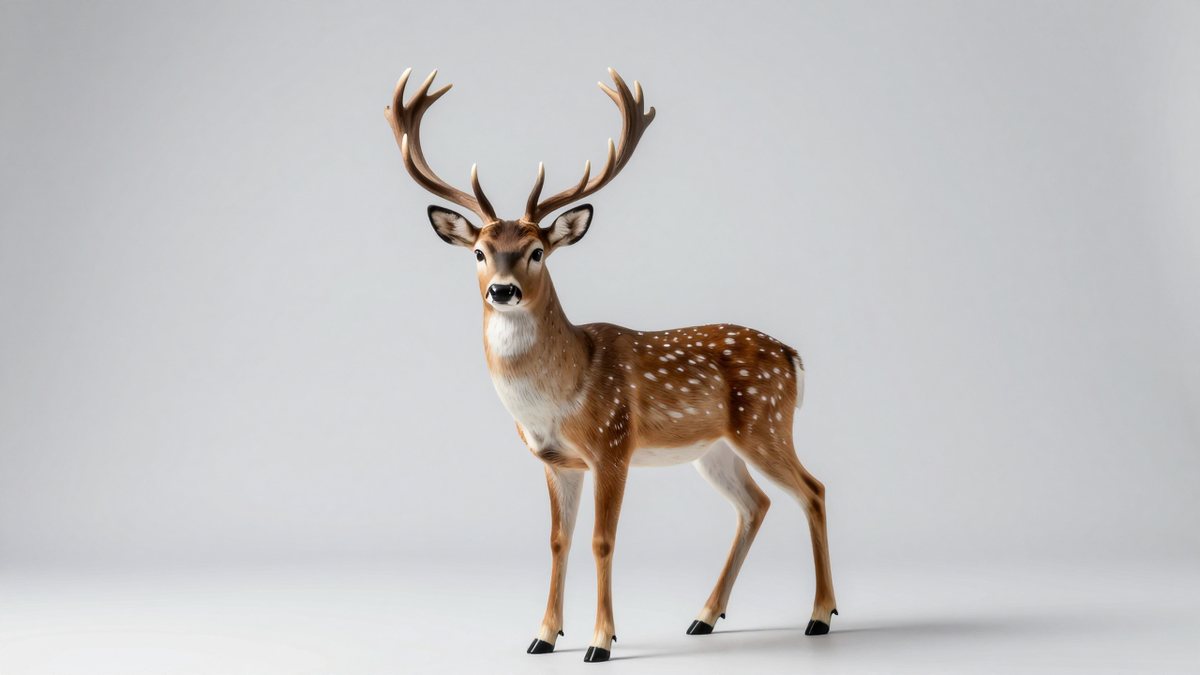
The best deer decoys are a lightweight, fold-flat doe or buck decoy matched to your season, hunting pressure, and usual shot distance: choose a realistic full-body model for close bowhunting, a compact silhouette for long pack-ins, and a mature-buck posture when you need to challenge a territorial deer.
As an Amazon Associate we earn from qualifying purchases at no extra cost to you.


Our Top Picks


Best Deer Decoys at a Glance
| Best for | Recommended decoy type | Typical weight | Typical setup time | Most useful posture | Practical distance |
|---|---|---|---|---|---|
| Bow season and close shots | Three-dimensional full-body doe | 8–16 lb | 3–8 minutes | Feeding or relaxed standing | 10–35 yards |
| Early rifle season | Fold-flat doe silhouette or lightweight 3D doe | 2–9 lb | 2–5 minutes | Feeding or alert doe | 40–120 yards |
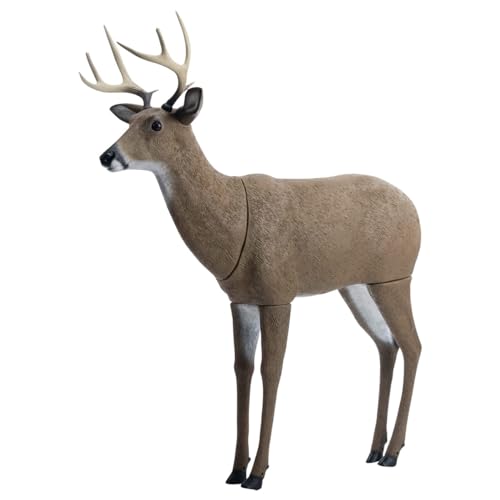
| Pre-rut buck hunting | Full-size buck with removable or fixed antlers | 10–20 lb | 5–10 minutes | Standing or lightly aggressive | 20–80 yards |
| Rut and calling setups | Compact buck decoy with antlers | 3–10 lb | 2–6 minutes | Challenging or quartering-away buck | 20–60 yards |
| Frequent mobile hunting | Foldable fabric or collapsible silhouette | 1.5–5 lb | 1–3 minutes | Feeding doe | 50–150 yards |
These figures are useful planning ranges rather than guarantees. Manufacturer dimensions and weights vary, and wind, cover, and local deer behavior matter as much as the decoy itself.
Best Overall Choice: A Realistic Doe Decoy
For one decoy that covers the widest range of situations, a full-body doe is usually the most versatile option. A doe posture looks natural during early season, remains useful during the rut, and does not automatically provoke a mature buck into stopping, circling, or departing.
Three-dimensional decoys from established makers such as Flambeau, Montana Decoy, and Dave Smith Decoys represent the main choices in this category. Flambeau’s molded decoys typically emphasize rigid realism and stable body shape. Montana Decoy is known for portable, fold-flat designs. Dave Smith Decoys focuses on highly realistic full-body forms, usually at a higher price and weight penalty.
For bowhunting, prioritize the side profile, leg position, and body width seen from your shooting lane. A decoy with a convincing silhouette at 20 yards is more valuable than extra facial detail that cannot be seen through brush. A relaxed or feeding doe also gives a buck a reason to approach without making the animal feel challenged.
Best for Bow Season: Full-Body Doe or Small Buck
Bowhunting places unusual demands on a decoy. At 10 to 30 yards, deer can notice seams, unnatural legs, shiny paint, and an incorrect scale. A rigid full-body decoy generally wins when you can carry it to a fixed setup and have enough cover to hide the stake or support.
- Choose a doe when you want a nonthreatening attractant or are hunting an area with mixed-age bucks.
- Choose a small or medium buck during the pre-rut when local bucks are checking rivals but are not yet committed to full aggression.
- Use a feeding posture when the decoy will remain in view for long periods.
- Use an alert posture when you need the decoy to look ready to leave and want to create urgency.
Keep the decoy 15 to 25 yards from the blind or tree when possible, and place it so an approaching deer must turn broadside or slightly quartering away before reaching it. Do not put the decoy directly between you and the expected approach if the deer can stare at it while also looking toward your position.
Best for Rifle Season: Lightweight Silhouette Decoys
Rifle hunters often benefit more from portability and visibility than from perfect three-dimensional detail. At 75 or 100 yards, a correctly sized silhouette with a strong shoulder, back, and leg outline can communicate “deer” effectively while saving several pounds on a steep walk.
A fold-flat fabric decoy or plastic silhouette is particularly useful when you are carrying a rifle, binoculars, clothing layers, and a larger pack. Montana Decoy-style packable designs are common in this category, while rigid plastic silhouettes provide more predictable shape but can be awkward to strap to a pack.
For longer shots, select a decoy with a realistic adult scale rather than an oversized shape. An unusually large doe or buck can look wrong when placed beside familiar trees. Place it in an opening with a contrasting background, but avoid skylining it on a ridge where wind movement and unnatural edges become obvious.
Best Buck Posture for Pre-Rut and Rut Hunting
A buck decoy is a specialized tool. It can draw a territorial buck, but it can also cause a cautious deer to hang up or leave. The right posture depends on how aggressive the local deer are and whether you are calling.
Standing buck
A standing buck with moderate antlers is the most adaptable buck posture. It suggests a rival without making an extreme threat. Use it during the pre-rut, especially near scrapes, staging areas, and travel routes.
Challenging buck
A head-up, forward-facing buck is more confrontational. It is most appropriate during the rut or when you are actively grunting and rattling. Face the decoy toward the expected approach so a real buck sees the antlers and chest first. This can produce a direct approach, but it can also lead to a deer stopping outside bow range while it assesses the challenge.
Bedded buck
A bedded buck is portable and subtle, but it presents less visible antler and body area. It can work near a known bedding edge when the goal is to suggest that another buck already occupies the area. It is less useful in a large open field where the profile disappears at distance.
Decision Matrix: Which Decoy Fits Your Hunt?
| Your situation | Best choice | Why | Main compromise |
|---|---|---|---|
| First-time buyer with a limited budget | Fold-flat doe silhouette | Low cost, easy transport, broad seasonal use | Less convincing at bow range |
| Bowhunter using one fixed tree stand | Full-body 3D doe | Best close-range volume and realism | Bulky and heavier to carry |
| Public-land hunter who moves daily | 1.5–5 lb collapsible decoy | Fast pack-in and pack-out | More dependent on favorable light and angle |
| Experienced rut hunter who calls | Compact buck with removable antlers | Supports aggressive buck setups and flexible transport | Can intimidate nonaggressive deer |
| Hunting open crop fields with a rifle | Large visible doe silhouette | Good profile at 75–150 yards | Needs careful concealment and wind management |
Realism Versus Weight: What Matters Most?
Realism is not a single feature. At close range, three-dimensional volume, natural legs, matte coloration, and correct proportions matter. At longer range, the strongest advantages are recognizable body outline, stable movement, and a believable angle to the hunter.
A useful way to compare portability is to estimate the total burden, not just the advertised decoy weight. Add the support poles, stakes, carry bag, and any motion device. For example, a 4-pound silhouette with 1.5 pounds of poles and stakes has a 5.5-pound field weight. If you hunt 20 times in a season, that is 110 pounds of decoy load carried over the season. A 12-pound full-body decoy used five times equals 60 pounds carried, so the heavier option may actually create less total seasonal effort if it stays at a nearby blind.
For mobile hunting, every pound matters because the decoy competes with water, safety equipment, clothing, and optics. For a permanent or semi-permanent setup, greater realism usually justifies the extra bulk.
Setup Details That Improve the Result
- Check the wind before placing the decoy. A decoy cannot compensate for a human scent trail crossing the approach route.
- Angle the body naturally. A broadside doe is easy to recognize, while a slightly quartered pose can provide a better shot opportunity if the animal stops.
- Hide the support system. Push stakes into existing grass or brush, and avoid exposing bright metal or freshly disturbed soil.
- Leave a clear shooting lane. Branches that touch or swing against the decoy can create unnatural motion and interfere with an ethical shot.
- Use motion sparingly. A small amount of movement can make fabric look alive, but constant twisting in the wind makes the decoy look artificial.
- Place the decoy where you can identify the target. Antler restrictions, hunting hours, and legal rules vary by location; never use a decoy arrangement that makes positive identification difficult.
Durability and Ownership Realities
The first parts to wear are usually the carry-bag zipper, stake attachment points, elastic connectors, and thin fabric around pole sleeves. Molded bodies can crack near leg supports or antler sockets if they are compressed in a vehicle. Antlers and removable ears are easy to lose, so store them in a labeled compartment rather than loose in the decoy bag.
After each hunt, brush off leaves and let the decoy dry fully before storage. Mud trapped in folds can stain fabric and create mildew, while moisture left inside a molded body can produce odors. Use mild soap and water only unless the manufacturer specifies another cleaner; strong solvents may remove paint or protective coatings. Store the decoy out of direct sunlight, since ultraviolet exposure gradually fades coloration and weakens fabric.
Common mistakes include placing a buck decoy too close to the hunter, using a large aggressive buck during an early-season hunt, and assuming a realistic decoy fixes poor concealment. Decoys work best when they support sound wind, cover, access, and shot-placement decisions.
Final Buying Recommendation
Buy a fold-flat doe decoy if you walk far, hunt with a rifle, or want the lowest ownership burden. Choose a full-body doe if bowhunting close cover is your priority. Add a buck decoy when you regularly hunt the pre-rut or rut, call aggressively, and understand that a challenging posture can attract some deer while stopping others. For most hunters purchasing one decoy in 2026, a realistic but portable doe with a stable support system offers the best balance of realism, weight, setup speed, and seasonal flexibility.