What's inside
As an Amazon Associate I earn from qualifying purchases. This post may contain affiliate links at no extra cost to you.
For a few holes in ordinary concrete block, a carbide masonry bit is usually the sensible buy. For a large opening, repeated holes, or block with a hard face that defeats ordinary bits, a diamond core bit can make a cleaner, faster cut—but it needs the right drill, setup, and usually water or careful dust control. These tools remove material in different ways, so the best choice depends on hole size, block construction, and how much cleanup you can tolerate.
As an Amazon Associate we earn from qualifying purchases at no extra cost to you.

Our Top Picks
 DYRECELVE 12-Piece Masonry Drill Bit Set and Concrete5.51 x 2.95 x 0.64 inches0.45 PoundsCheck on Amazon
How the two bits cut
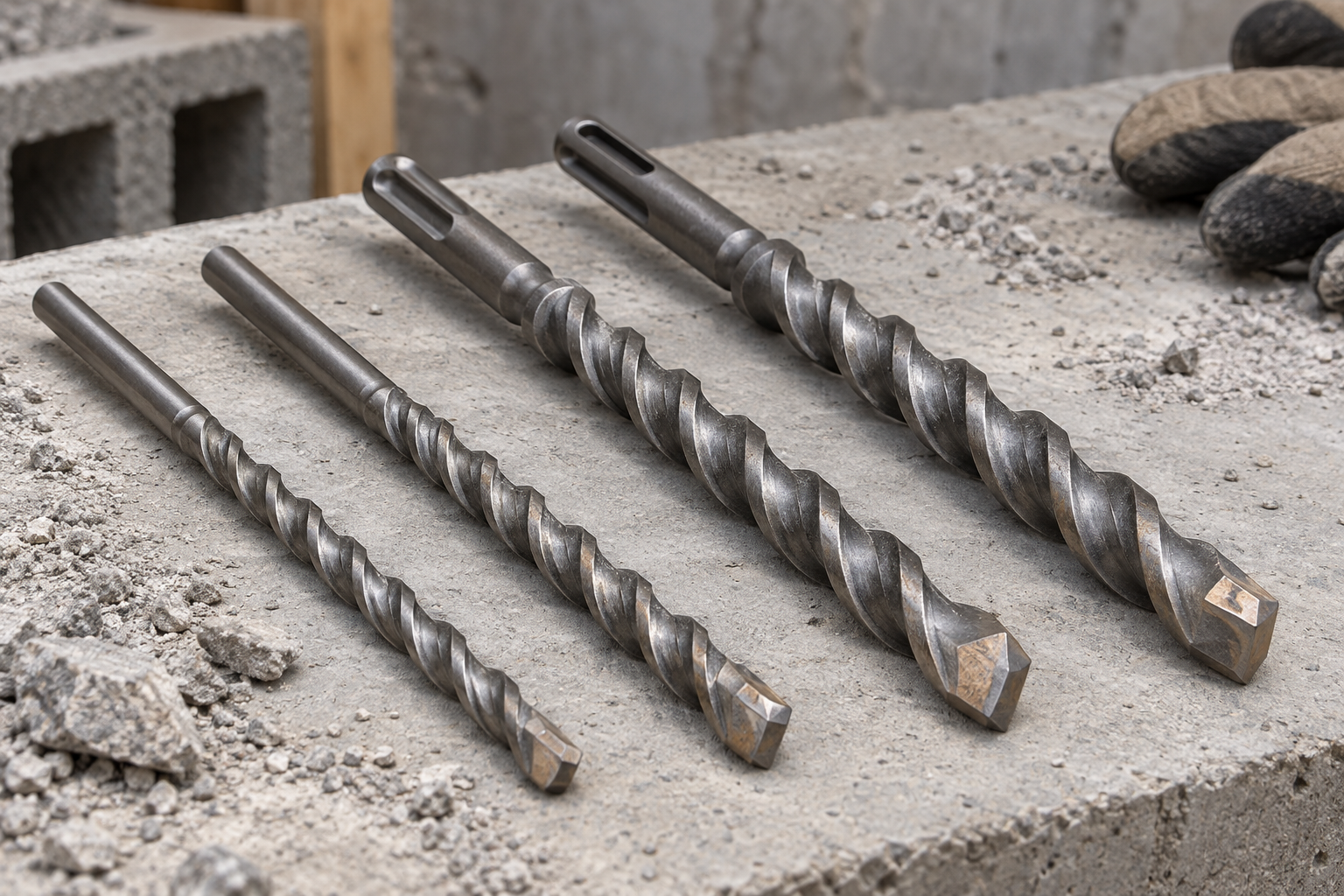
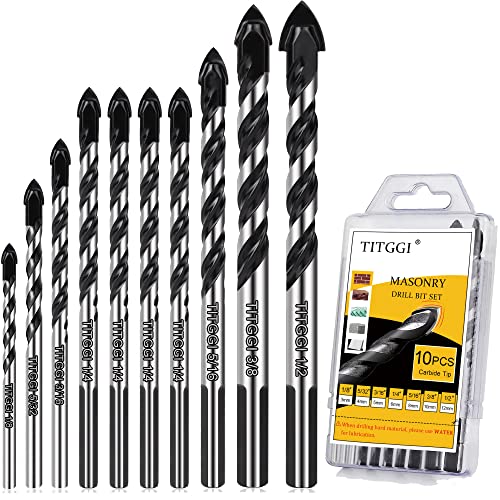
A carbide masonry bit has a steel body and a brazed carbide tip. The tip chips and grinds material ahead of the bit. A standard bit drills a full-diameter hole, pushing dust and fragments out through its flutes. It is suited to small holes for anchors, screws, and conduit fixings.
A diamond core bit has diamond grit on the rim of a hollow steel barrel. It cuts a circular kerf, leaving a central plug, or “core,” that you remove afterward. Because it cuts around the edge instead of grinding away the whole hole, it is useful for larger openings and can reduce breakout around the perimeter. Diamond grit is not automatically faster in every block: soft, abrasive masonry can wear a core’s rim quickly, while a hard, dense face may make a suitable core bit worthwhile.
At a glance
| Factor | Carbide masonry bit | Diamond core bit |
|---|---|---|
| Typical job | Small anchor and fixing holes | Larger service openings and repeated coring |
| Common hole sizes | About 1/8–1/2 inch, with larger sizes available | Often about 1–6 inches or more, depending on system |
| Drill mode | Hammer mode for many block jobs; rotation only for fragile hollow sections | Usually rotation only; follow the bit maker’s instructions |
| Cutting action | Grinds the full hole diameter | Cuts a ring and leaves a removable core |
| Setup | Simple and inexpensive | May require a compatible arbor, side handle, water supply, and firm control |
| Main risks | Blunted tip, wandering, chipped block face | Overheating, a stuck core, bit binding, water near electrical equipment |
Choose carbide for ordinary fixing holes
If you need several holes around 1/4 inch for masonry screws or anchors, a carbide bit is normally the practical choice. It is inexpensive, easy to replace, and does not leave a core to extract. For a handful of holes in standard block, the savings from a core bit are unlikely to justify the extra equipment and setup.
Match the bit diameter to the anchor maker’s specification, not just the screw’s outside diameter. A hole that is too wide can leave an anchor spinning; one that is too narrow can prevent it seating or crack the surrounding face. Drill to the specified depth, then clear dust from the hole before installing the anchor. Dust left at the bottom can stop an anchor reaching its intended depth.
Use a hammer drill or rotary hammer only if the bit and the block can handle percussion. Hollow concrete block has thin webs and faces; aggressive hammering close to an edge can break them. In that situation, start in rotation-only mode, use steady pressure, and switch to percussion only if the bit is not cutting effectively and the block remains intact. For a suitable replacement, shop for a carbide-tipped masonry bit set.
Choose diamond for larger openings or repeated work
For a 2-inch hole for a pipe, a core bit is generally a better match than trying to enlarge a small drilled hole with successively larger bits. It leaves a more regular opening and removes less material overall. It also avoids the pounding action of a hammer drill, which can be an advantage where impact might fracture a block face or loosen mortar.
Check what the core bit is designed to cut: dry or wet, handheld or rig-mounted, and which material. A bit intended for concrete may not suit every block, especially lightweight or highly abrasive block. Some dry cores use slots to shed heat and dust; wet cores use water to cool the rim and carry away slurry. Follow the manufacturer’s instructions rather than assuming water makes any bit suitable for wet use.
Use a drill with the required speed, arbor, and capacity. Do not put a large core bit in a small drill without checking its limits; the barrel can bind, and the drill can wrench hard enough to injure your wrist. A side handle is important. For larger diameters or through-holes, a fixed stand gives better control than freehand drilling. Search for a diamond core bit for concrete block that matches your drill and cutting method.
Technique, dust, and common failures
Before either cut, check both sides of the wall and locate wiring, plumbing, and other services. Confirm that the chosen spot does not cut a lintel, reinforced section, or critical block web. Mark the hole clearly. If drilling through a wall, make sure the exit side is clear and account for the bit breaking through.
With carbide, keep the bit straight, let the cutting edge work, and withdraw it periodically to clear flutes. Leaning hard on a blunt bit creates heat without improving progress. If a bit squeals, stops advancing, or comes out extremely hot, pause and inspect it; continuing can damage the tip or the drill. Replace a rounded or chipped carbide tip rather than forcing it.
With a core bit, start square and at low speed if the manufacturer allows it. Once the rim has established a track, maintain steady pressure without twisting the drill sideways. Stop if the bit stalls or grabs. A core can jam in the barrel or remain trapped in the block; do not reach into a spinning bit or try to free it while the drill is powered. On wet cuts, control slurry and keep water away from plugs, cords, and the drill motor. On dry cuts, use suitable dust extraction and respiratory protection: concrete and masonry dust can contain respirable crystalline silica.
Make the buying decision
For a few small holes in sound block, buy or use a carbide masonry bit in the correct diameter. A multi-size carbide masonry bit assortment is useful if you expect different anchor sizes, but a single quality bit is enough for one straightforward job.
Choose diamond when the hole is too large for a sensible twist-bit approach, when finish quality matters, or when you have enough repeated work to justify the core, arbor, and setup. If the block is hollow, fragile, or unfamiliar, test in a discreet spot and use a less aggressive approach. The cheaper carbide option is not a compromise for small fixing holes; it is the right tool for that job.