Key takeaways
- A neutral, table-led comparison of the major cordless power tool brands so you can pick the battery platform that fits your work, not the loudest marketing.
What's inside
As an Amazon Associate I earn from qualifying purchases. This post may contain affiliate links at no extra cost to you.
Asking “which power tool brand should I buy” is really asking which battery platform you want to be married to for the next decade. The tools themselves are increasingly similar: brushless motors, electronic clutches, decent LED work lights. The lock-in is the battery, the charger, and the shape of the lineup you can grow into. Buy a bare-tool bargain from the wrong platform and you have bought a paperweight plus a $99 battery problem.
So the useful comparison is not torque numbers from a marketing deck. It is design philosophy, how deep the range goes, warranty terms, how easy the brand is to actually buy in the US, and how the pricing behaves through the year. Below is the honest shape of the market, followed by who each brand genuinely suits.
As an Amazon Associate we earn from qualifying purchases at no extra cost to you. Product prices and availability are accurate as of the date shown and are subject to change.




| Brand | Design philosophy | Range depth | Typical warranty | Where to buy | Price behavior |
|---|
| Brand | Design philosophy | Range depth | Typical warranty | Where to buy | Price behavior | |
|---|---|---|---|---|---|---|
| DeWalt (20V MAX / XR / FLEXVOLT) | Jobsite durability, huge kit selection | Very deep, strong in construction trades | 3-year limited on most bare tools | Home Depot, Lowe’ | s, Amazon, Acme | Heavy holiday and spring promos, frequent free-battery kits |
| Milwaukee (M18 / FUEL / M12) | Trade-specialist tools, aggressive electronics | Deepest overall, especially plumbing, electrical, mechanic | 5-year limited on many M18/M12 tools | Home Depot, Acme, Ohio Power Tool | Firmer pricing, best value comes via kit bundles | |
| Makita (18V LXT / 40V XGT) | Ergonomics, low vibration, long tool life | Very deep, exceptional in woodworking and OPE | 3-year limited on many LXT tools | Amazon, Acme, Toolbarn, some Home Depot | Steady, fewer deep discounts, strong bare-tool prices | |
| Ryobi (ONE+ 18V) | Value and breadth for homeowners, backward compatible | Enormous for DIY, thin for heavy trade use | 3-year limited (homeowner grade) | Home Depot almost exclusively | Very aggressive promos, frequent free-tool-with-battery deals | |
| Bosch (18V Profactor / 12V) | Engineering-led, compact tools, excellent rotary hammers | Moderate in US, deeper in Europe | 1-3 years depending on registration | Amazon, Lowe’ | s, specialty dealers | Stable, occasional sharp clearance |
| Craftsman (V20) | Budget-friendly, entry cordless under a familiar name | Shallow to moderate, homeowner focused | 3-year limited | Lowe’ | s, Ace, Amazon | Low entry price, strong combo-kit discounting |
| Metabo HPT / Festool | Niche specialists (fasteners / dust and precision) | Narrow but excellent in their lane | 2-3 years, Festool longer with registration | Specialty dealers, Amazon | Metabo HPT discounts hard, Festool almost never |
Which Power Tool Brand Should I Buy For Your Actual Work?
Start by naming the three tools you will use most in the next two years. If that list is a drill, an impact driver and a circular saw, almost every brand here will serve you and the decision comes down to price and where you shop. If the list includes a rotary hammer, a band saw, a right-angle drill or a press tool, the platform choice suddenly matters a great deal because only two or three brands build those in cordless form.
Homeowner and light DIY. Ryobi ONE+ and Craftsman V20 exist for exactly this. You get a working tool for meaningfully less money, the batteries are cheap enough to buy spares, and the range covers everything from a leaf blower to a glue gun. The trade-off is duty cycle: these tools are built for weekend use, not eight hours a day.
Woodworking and shop use. Makita LXT is the traditional answer because of balance, vibration control and a very complete lineup of track saws, sanders and trim routers. DeWalt is close behind and easier to buy at big-box stores. Festool is a separate conversation: exceptional dust collection and system integration, priced accordingly, and worth it mainly if you work in finished spaces.
Trades and daily abuse. Milwaukee M18 FUEL and DeWalt 20V MAX XR are the two dominant jobsite platforms, and both are defensible. Milwaukee tends to win on specialty tools and warranty length; DeWalt tends to win on availability, accessory ecosystem and promotional pricing.
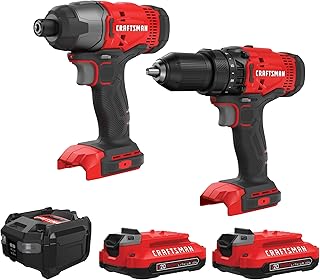
Cordless drill and impact driver combo kits
Whatever brand you choose, a brushless two-piece combo kit with two batteries and a charger is the cheapest way onto a platform. Buying the drill alone then adding an impact driver later almost always costs more, and you end up with only one battery. Compare kits across brands on the same day, because promo cycles swing these prices more than any spec difference between them.
Battery Platforms And The Real Cost Of Switching
Batteries are typically 30 to 50 percent of what you will spend on a mature tool collection. That is why platform loyalty is rational even when brand loyalty is not. A few structural points worth knowing before you commit:
Ryobi has kept ONE+ backward compatible for a remarkably long time, which is a genuine consumer win. DeWalt’s FLEXVOLT batteries run on 20V MAX tools and step up for high-draw tools, so the platform scales without a second charger family. Milwaukee runs two deliberate lines, M12 for compact and overhead work and M18 for everything else, and many pros end up owning both. Makita’s 18V LXT is enormous and mature, while the newer 40V XGT is a separate battery family, so check which one a tool uses before you buy. Bosch’s US 18V line is coherent but narrower than what the same brand offers in Europe.
Third-party batteries and adapters exist. They are cheaper, they usually void the tool warranty, and cell quality is inconsistent. For a leaf blower, the risk is minor. For a tool you rely on for income, it is a poor trade.
- ✔ One platform means fewer chargers, interchangeable spares and lower long-run cost
- ✔ Bare-tool prices are far cheaper than kits once you own batteries
- ✔ Big platforms hold resale value better on the used market
- ✘ Switching brands later means re-buying batteries and chargers, not just tools
- ✘ Sale-driven impulse buys across two platforms fragment your battery pool
- ✘ Newer voltage lines from the same brand are not always cross-compatible
Warranty, Service And Availability
Warranty length varies by brand and by individual tool, so treat the numbers in the table as the common case and read the specific product page before you buy. What matters more in practice is service friction. Brands sold through big-box retailers give you an easy in-person return path for early failures. Brands sold mainly through specialty dealers often give better technical support but require shipping a tool out for repair.
Availability is an underrated tiebreaker. If you can walk into a store 10 minutes away and buy a replacement battery on a Saturday morning, that is worth real money on a deadline. Ryobi is effectively a Home Depot brand, Craftsman leans Lowe’s, DeWalt and Milwaukee are broadly stocked, and Makita depends heavily on your region and on online dealers.
Extra platform batteries and chargers
Batteries are the one item worth stockpiling during promotional periods. Look for higher-capacity packs for saws and grinders and compact packs for drills and drivers, and buy from the brand or an authorized seller so the warranty holds. A multi-port or rapid charger is the second-best upgrade most people never make.
Price Behavior: When To Buy And When To Wait
Cordless tool pricing in the US is strongly seasonal rather than random. Spring brings outdoor power equipment and general tool promotions, Father’s Day drives combo-kit deals, and the stretch from Black Friday through late December is the deepest discounting window of the year, particularly for kits that bundle a free battery or bonus tool. Prime-style sale events add another spike mid-year.
Practical approach: decide your platform first, calmly, then buy into it during a promotional window. Do not let a good sale on the wrong platform make the decision for you. If you need a tool immediately, buy the kit rather than the bare tool unless you already own batteries, and check the bare-tool price against the kit price, because bundles occasionally cost less than the tool alone.
Verdict By Buyer Type
Occasional homeowner: Ryobi ONE+ or Craftsman V20. Lowest entry cost, wide range, adequate for household work.
Serious DIYer and remodeler: DeWalt 20V MAX with XR tools. Best balance of durability, availability and discounting.
Full-time tradesperson: Milwaukee M18 FUEL, plus M12 if you work in tight or overhead spaces. Deepest specialty range and long warranty coverage on many tools.
Woodworker: Makita 18V LXT for feel and lineup, or Festool if dust control in occupied homes is the priority.
Concrete, masonry and compact-tool fans: Bosch, which remains hard to beat on rotary hammers and 12V precision tools.
Frequently Asked Questions
Is it bad to own tools from two different brands? Not inherently. Many pros run one main platform plus a second for a specific gap, such as a compact 12V line or a niche saw. The mistake is spreading across three or four platforms and owning four chargers and no spare batteries where you need them.
Are cheap store-brand or unknown cordless tools worth it? For a tool you will use twice a year, sometimes yes. The recurring problems are battery availability in two years, no local service, and accessories that do not fit standard sizes. Established platforms cost more up front and less over time.
Should I buy corded tools at all anymore? Yes, in a few places. Corded or benchtop tools still make sense for high-duty stationary work such as table saws, miter saws and larger sanders, and for anything you run continuously. Cordless has genuinely won for drills, drivers, circular saws and most jobsite tasks.
Pick the platform that matches the tools you will own in three years, not the one with the best sticker price today. Once that choice is made, everything else is just waiting for the right promotional window.
Check prices on Amazon →