What's inside
As an Amazon Associate I earn from qualifying purchases. This post may contain affiliate links at no extra cost to you.
Our Top Picks
 Makita RJ03Z 12V Max CXT Lithium-Ion Cordless Recipro03.1 x 16.6 x 5.9 Inches2.79 poundsCheck on Amazon

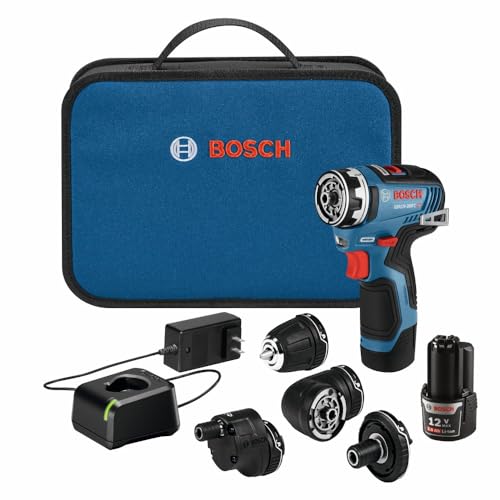
Bosch GSR12V-300 vs Makita FD07R1: At a Glance
For cabinet hardware, hinges, drawer slides, electrical boxes, and other light installation work, a 12-volt drill is often easier to control than a full-size 18-volt model. The Bosch GSR12V-300 and Makita FD07R1 are both compact, brushless drill-drivers with enough power for common fastening and small drilling jobs. The differences are mainly in speed, grip, battery setup, and how each drill behaves near the limit of its capacity.
| Feature | Bosch GSR12V-300 | Makita FD07R1 |
|---|---|---|
| Voltage class | 12V Max | 12V Max CXT |
| Motor | Brushless | Brushless |
| Chuck | 3/8-inch keyless | 3/8-inch keyless |
| Speed range | 0–460 and 0–1,750 rpm | 0–500 and 0–1,700 rpm |
| Maximum torque | 300 inch-pounds | 250 inch-pounds |
| Tool length | About 6.0 inches | About 6.5 inches |
| Best fit | Very tight spaces and controlled fastening | General installation and a broad CXT battery system |
Size and Handling
The Bosch has the clear advantage when working inside cabinets or between closely spaced framing members. Its roughly 6-inch length keeps the chuck farther from the operator’s wrist, which matters when installing hinges in a narrow cabinet or driving screws near a side panel. It also has a short, compact body that feels more like a precision driver than a shrunken full-size drill.
As an Amazon Associate we earn from qualifying purchases at no extra cost to you.



The Makita is still genuinely compact, but it is approximately half an inch longer. That difference is not important in an open room or when assembling furniture on a bench. It can matter when the drill must be held straight in a 10-inch-deep cabinet or when a neighboring component blocks the rear of the tool.
Both drills use a conventional 3/8-inch keyless chuck. That is useful for switching between small drill bits, countersinks, and driver bits without carrying a separate adapter. A hex-impact-driver-style collet would be faster for repeated bit changes, but these drills are more versatile for drilling small holes.
Power, Speed, and Control
Bosch rates the GSR12V-300 at 300 inch-pounds of maximum torque, compared with 250 inch-pounds for the Makita. Maximum torque is not a direct measure of everyday performance, but the Bosch does have more reserve for long screws, larger self-tapping screws, and occasional drilling in hardwood.
In real installation work, clutch control matters more than the headline torque number. Both drills provide a two-speed gearbox and a mechanical clutch. Use the low range for driving screws or drilling larger holes, and the high range for small bits. Start with a low clutch setting and increase it only when the screw will not seat fully. This reduces stripped screw heads, crushed plastic anchors, and overdriven cabinet screws.
The Bosch’s higher top speed is useful with bits around 1/8 to 1/4 inch. The Makita’s 1,700-rpm high range is still plenty for pilot holes, hinge screws, and most hardware installation. Neither tool should be treated as a substitute for a larger drill when boring repeated 1/2-inch or larger holes through framing lumber. They will do it, but the small batteries drain quickly and the motors can heat up.
Which Drill Works Better for Hardware Installation?
For cabinet hinges and drawer slides, the Bosch is the easier tool to place accurately. Its shorter body helps keep the bit square, and its extra torque gives it more margin when a screw encounters a hard spot. That does not mean more torque is always better. A clutch set too high can still strip a brass or zinc-plated screw, especially in particleboard.
The Makita is an excellent choice for assembling furniture, mounting light fixtures, installing handles, and drilling pilot holes in softwood. Its trigger has the fine low-speed control needed to start a screw without walking across a metal bracket. If you already own Makita 12V CXT tools, the FD07R1 makes particular sense because its batteries can be shared with other CXT equipment.
For occasional home projects, the cheaper drill is fine if the price difference is substantial. A 12-volt drill used for 20 cabinet screws does not need maximum torque. It needs a smooth trigger, a clutch that repeats reasonably well, and a battery that does not quit halfway through the job.
Batteries, Kits, and Runtime
The FD07R1 kit commonly includes a 2.0Ah battery, charger, and tool. A 2.0Ah pack keeps the drill light and is sufficient for several dozen pilot holes and screws. Bosch kits vary, so check whether the package includes one battery or two before comparing prices. Some Bosch kits include two compact batteries and a charger, which can make the apparent tool-price difference misleading.
For a single installation project, one 2.0Ah battery is usually adequate. Buy a second pack if you will be working overhead, installing a full kitchen, or using the drill for repeated drilling rather than just fastening. Compact packs are easier to maneuver, while larger-capacity packs add runtime but make these small drills less balanced.
If you need a replacement or second battery, compare the complete kit rather than buying the bare tool automatically. A 12V compact drill-driver kit can cost less than a bare drill plus battery and charger.
Common Failure Modes and Limits
The most common mistake with either drill is using the high-speed setting to drive screws. This can cause the clutch to chatter, overheat the screw head, or drive the fastener below the surface. Another problem is chuck slippage: tighten the chuck firmly by hand around smooth-shank bits, and avoid using oversized bits beyond the drill’s practical capacity.
When drilling metal, use cutting fluid and moderate pressure. When drilling wood, let the bit cut instead of forcing it until the motor stalls. Repeated stalls generate heat and can shorten battery life. For masonry, use a proper hammer drill; neither of these compact drill-drivers is designed for regular concrete drilling.
Which One Should You Buy?
Choose the Bosch GSR12V-300 if the smallest possible package, extra torque, and cabinet-friendly handling are priorities. It is the better pick for tight installations and users who frequently work with hard wood or longer screws.
Choose the Makita FD07R1 if you already use Makita CXT batteries, prefer its grip and trigger feel, or find the kit at a clearly lower price. For ordinary hardware installation, its lower torque rating is rarely a practical disadvantage.
Either drill is a sensible upgrade over a bulky 18-volt model for light work. The deciding factors should be access, included batteries, and the tool ecosystem you plan to keep using—not a small difference in advertised torque.