What's inside
As an Amazon Associate I earn from qualifying purchases. This post may contain affiliate links at no extra cost to you.
Our Top Picks
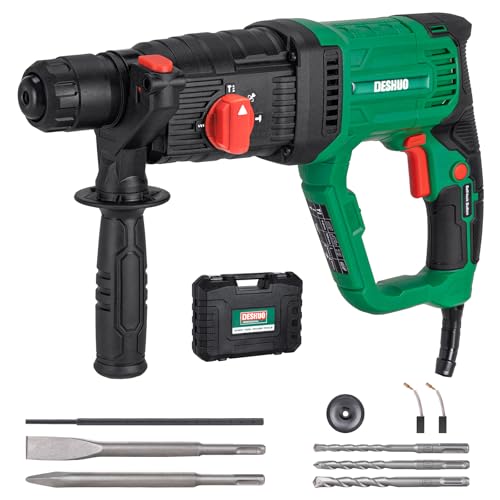 Deshuo 1" SDS-Plus Lightweight Rotary Hammer Drill forSmall15.15 x 8.85 x 3.93 inches7.19 PoundsCheck on Amazon


Quick verdict
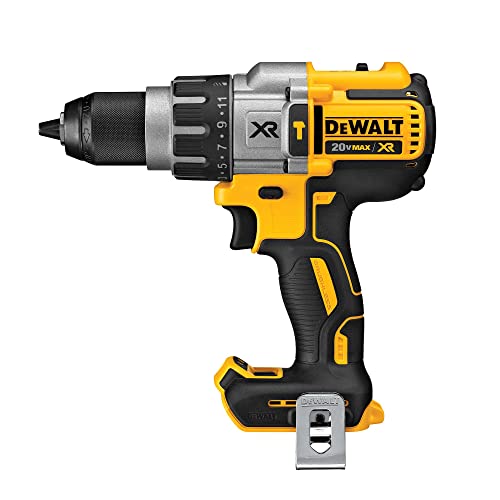
For drilling concrete-anchor holes, the DeWalt DCD999 and Bosch GSB18V-1330C are both high-output 18V hammer drills, but neither is a substitute for an SDS-plus rotary hammer when the job means repeated, large-diameter holes in hard concrete. The DCD999 is the more straightforward choice if you already own DeWalt 20V MAX batteries and want a drill with a mechanical clutch and three-speed gearbox. Bosch’s GSB18V-1330C is a capable alternative for users in its 18V system, with electronic controls and connected-tool features.
For occasional holes around 1/4 to 3/8 inch, either can work with a sharp masonry bit, sensible pressure and a fully charged battery. If you’re setting dozens of anchors, drilling 1/2-inch holes or working in hard, reinforced concrete, buy or rent an SDS-plus rotary hammer instead. It uses a different hammering mechanism built for that work, so it generally drills faster with less strain on your wrists and the tool.
As an Amazon Associate we earn from qualifying purchases at no extra cost to you.

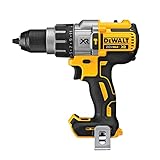

Specs and controls that matter
Both drills are 18V-class tools with a 1/2-inch chuck and selectable hammer-drill mode. DeWalt rates the DCD999 for up to 38,250 beats per minute in its top speed setting and up to 2,250 rpm; it has a three-speed gearbox, a 1/2-inch ratcheting chuck and a side handle. Bosch rates the GSB18V-1330C at up to 31,500 beats per minute and 2,200 rpm, with a 1/2-inch chuck, electronic controls and a side handle.
Those maximum figures don’t predict concrete drilling speed on their own. Bit condition, concrete hardness, aggregate, hole depth and battery state matter more than a small difference in published speed or impact rate. A worn masonry bit can make either drill feel weak; forcing it harder raises heat and can stall the tool without improving the hole.
The DeWalt has a conventional mechanical clutch for screwdriving and three selectable gear ranges. Bosch offers electronic settings and connectivity through its tool platform. These are useful differences for general work, but they don’t change the basic limitation of a chuck-mounted hammer drill: its impacts are less effective for sustained concrete drilling than the blows from an SDS rotary hammer.
Side-by-side comparison
| Feature | DeWalt DCD999 | Bosch GSB18V-1330C |
|---|---|---|
| Battery platform | 20V MAX (18V nominal) | Bosch 18V |
| Chuck | 1/2-inch ratcheting | 1/2-inch |
| Maximum no-load speed | Up to 2,250 rpm | Up to 2,200 rpm |
| Maximum impact rate | Up to 38,250 bpm | Up to 31,500 bpm |
| Speed selection | Three-speed gearbox | Electronic control settings |
| Best reason to choose | Existing DeWalt batteries; broad general-purpose use | Existing Bosch batteries; connected-tool features |
Check the exact kit contents before comparing prices: bare tools, batteries and chargers are often sold separately or bundled differently. A larger battery may help maintain performance during demanding work, but it also adds weight. For overhead drilling, that extra weight can be a bigger drawback than the runtime gain.
What to expect on anchor holes
For a few small holes in ordinary concrete, either drill can do the job. Use a masonry bit specified for the anchor, switch to hammer mode, keep the drill square to the surface and let the bit cut without leaning your body weight into it. Pull the bit out occasionally to clear dust, especially in deeper holes. Concrete dust packs into flutes, increases friction and can leave an undersized or shallow hole that prevents an anchor from seating properly.
As hole diameter and count increase, these drills become a less attractive choice. A 1/2-inch anchor hole may be possible, but expect slower progress and more heat than with an SDS-plus tool. In hard concrete, a drill may chatter, bog down or heat the bit and chuck. Hitting rebar can stop progress abruptly; don’t keep pushing or grind through steel with a masonry bit. Stop, check the location and follow the anchor or project requirements for moving the hole.
Use the side handle, maintain a firm two-handed grip and keep your stance out of the drill’s line of rotation. A snagged bit can twist a high-torque drill sharply enough to injure a wrist. If the bit repeatedly binds, reduce pressure, clear the hole and inspect the bit rather than trying to overpower the tool.
Which one should you buy?
Choose the DCD999 if you already have DeWalt 20V MAX batteries, want a three-speed drill for mixed work, and mainly need hammer mode for occasional small anchor holes. Its higher published impact rate is not a guarantee that it will beat the Bosch through every slab, but the controls are familiar and practical for a general-purpose drill.
Choose the Bosch if you’re already invested in Bosch 18V batteries or value its electronic settings and connected-tool options. There’s little reason to switch battery platforms solely for occasional concrete holes. Compare the actual tool-and-battery price, weight and warranty terms, not just the bare-tool listing.
If you don’t own either battery system, first decide whether you need a hammer drill or a rotary hammer. For regular anchor installation, an SDS-plus rotary hammer is the better category to shop. For only a handful of small holes, a less expensive 18V cordless hammer drill may be enough; paying for either flagship makes more sense if you’ll also use it for demanding drilling and driving.
Set up for a clean, reliable hole
Match the bit diameter and hole depth to the anchor maker’s instructions; don’t guess from the anchor’s outside diameter. Mark the depth on the bit or use a depth stop, and keep dust out of the hole. For adhesive anchors, follow the specified cleaning process carefully: dust left in the hole can reduce bond strength. Wear eye protection and suitable respiratory protection, and use dust collection where practical.
Let the tool cool if the housing, chuck or battery gets unusually hot, and stop if the drill repeatedly stalls or the bit is damaged. A good hammer drill is versatile, but for a concrete-anchor job the right tool is the one that makes the required hole cleanly without being forced.