What's inside
As an Amazon Associate I earn from qualifying purchases. This post may contain affiliate links at no extra cost to you.
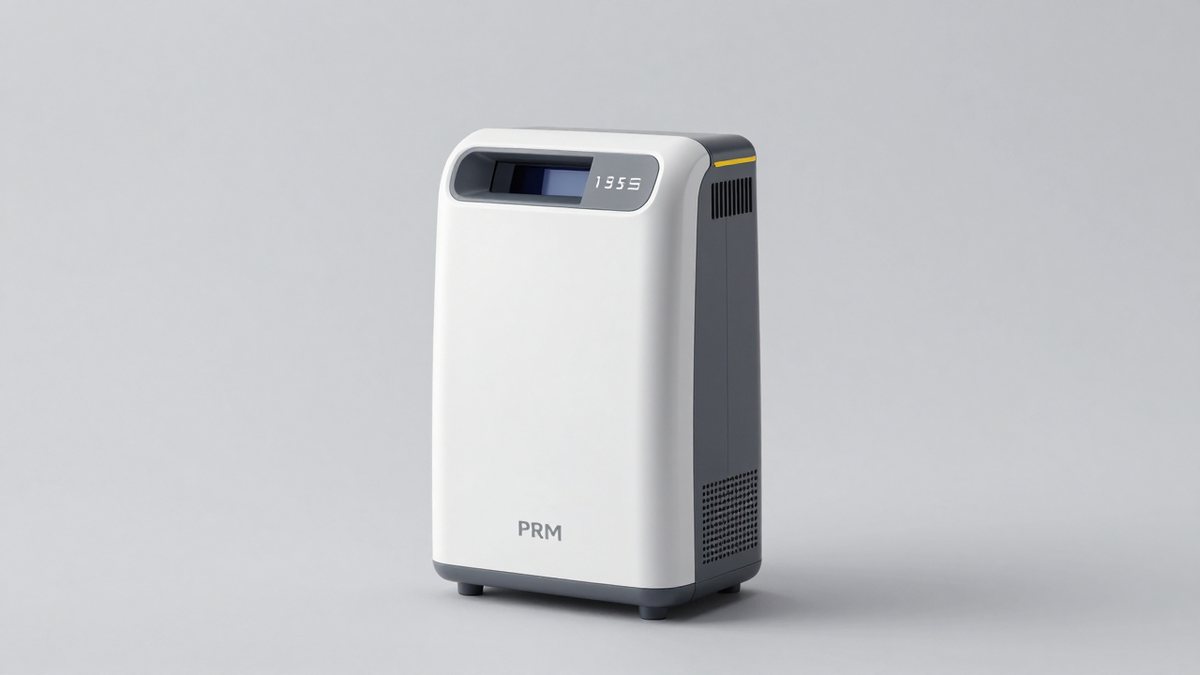
The best portable oxygen concentrators for travel are the Inogen Rove 6 for the lightest all-around airline option, the CAIRE Freestyle Comfort for comfort during frequent walking, the Philips Respironics SimplyGo Mini for a compact pulse-dose unit, and the CAIRE SeQual Eclipse 5 when continuous flow matters more than size.
Your prescription should decide the required oxygen mode and setting before weight or price. Portable oxygen concentrators (POCs) are prescription medical devices, and a setting number is not the same as liters per minute. Ask your clinician whether pulse-dose oxygen is suitable for you, especially during sleep, exertion, or air travel.
As an Amazon Associate we earn from qualifying purchases at no extra cost to you.


Our Top Picks

Best portable oxygen concentrators for travel: quick picks
- Best for plane travel: Inogen Rove 6, a compact pulse-dose unit with six settings and FAA approval for use aboard aircraft.
- Best for walking-heavy trips: CAIRE Freestyle Comfort, with a curved design intended to sit close to the body and pulse settings 1 through 5.
- Best compact budget-oriented choice: Philips Respironics SimplyGo Mini, provided its five pulse-dose settings match your prescription.
- Best when continuous flow is essential: CAIRE SeQual Eclipse 5. It offers continuous flow and pulse-dose operation, but its size and weight make it much less convenient for cabins and narrow cruise corridors.
- Best for car travel with flexible power: A larger continuous-flow-capable POC, such as the Eclipse 5, if your clinician has prescribed that mode and your vehicle can accommodate the equipment.
Head-to-head comparison
Published specifications can vary by battery, configuration, and measurement method. Confirm the exact package and current manual before buying or renting.
| Model | Approx. device weight | Flow settings | Typical battery range | Travel fit |
|---|---|---|---|---|
| Inogen Rove 6 | About 4.8 lb with standard battery | Pulse dose 1–6 | About 5–13 hours, depending on battery and setting | Strong airline and day-trip choice |
| CAIRE Freestyle Comfort | About 5 lb with standard battery | Pulse dose 1–5 | Up to about 8 hours with extended battery | Good for walking and sightseeing |
| Philips Respironics SimplyGo Mini | About 5 lb with standard battery | Pulse dose 1–5 | Up to about 4.5 hours with standard battery | Compact flights and short outings |
| CAIRE SeQual Eclipse 5 | About 18.4 lb without accessories | Continuous 0.5–3 LPM; pulse dose 1–9 | Up to about 5 hours, depending on mode and battery | Car travel or stationary use; cumbersome for planes |
Battery figures are best-case estimates. Higher pulse settings, continuous flow, cold weather, altitude, an aging battery, and carrying a battery that is not fully charged can reduce actual runtime.
Which unit fits your type of trip?
Airplane travel
Choose a lightweight pulse-dose model with a battery system that can cover the entire journey. FAA approval means the model is authorized for use on aircraft; it does not guarantee that every airline will accept it without advance notice. Contact the airline before departure, provide the manufacturer’s model information if requested, and carry the prescription and device documentation.
Many airlines require enough battery for the scheduled flight plus a reserve, commonly 50% beyond flight duration. For a six-hour itinerary, a practical target is at least nine hours of usable battery capacity, not merely the number printed on the package. Include connection time and delays in your calculation. Keep the concentrator and batteries accessible rather than checking them as baggage.
Car journeys and road trips
Car travel gives you more room for spare batteries, a charger, and a backup plan. A DC vehicle cable is particularly useful, but do not assume it will run every model at every setting. Some units can operate from the vehicle while charging; others may charge slowly or require a specific adapter.
For a road trip, a continuous-flow-capable model may be the better match if that is what your clinician prescribed. The tradeoff is substantial: an Eclipse 5 is several times heavier than a compact pulse-dose POC. Store it so ventilation openings remain clear, and secure it so it cannot become a projectile during sudden braking.
Cruise travel
Cruise lines often have their own medical-device forms, battery requirements, and restrictions on onboard oxygen arrangements. Notify the cruise operator well before sailing. A compact pulse-dose unit is easier to carry through terminals and corridors, but only if it meets your prescribed oxygen delivery method.
Plan for long periods away from outlets. Bring chargers for the cabin and shore excursions, plus enough batteries for a full day with reserve. Salt air, humidity, and crowded storage areas make a protective case and careful ventilation especially useful.
How to calculate the battery you really need
Use this simple planning method:
- Add the time spent traveling, waiting, transferring, and sightseeing. For example: 6 hours in transit, 2 hours of airport delays or connections, and 4 hours at your destination equals 12 hours.
- Multiply that total by 1.5 for a 50% reserve: 12 × 1.5 = 18 hours.
- Compare 18 hours with the manufacturer’s runtime at your prescribed setting, not its lowest-setting headline figure.
- If one battery does not cover the result, carry approved spare batteries or arrange reliable charging access.
Airline rules for spare lithium batteries can include limits on watt-hours, terminals needing protection, and where batteries may be packed. Check both the airline’s current policy and the battery label before departure.
Flow settings: why the numbers cannot be compared directly
Pulse-dose devices sense a breath and release a measured bolus. Their settings, such as 1 through 6, are manufacturer-specific and do not equal 1 through 6 liters per minute. Continuous-flow devices deliver oxygen at a stated rate, such as 2 LPM, but that does not make “2” equivalent to pulse setting 2.
A POC can also respond differently while you are walking, talking, breathing through your mouth, or sleeping. Never increase the setting because a travel schedule is tiring, and do not switch from continuous to pulse mode without professional guidance. A clinician or respiratory therapist can help determine whether the device’s delivery pattern fits your prescription.
Ownership details that matter after purchase
- Filters: Intake filters collect dust and eventually restrict airflow. Clean or replace them according to the manual; a clogged filter can increase noise and reduce performance.
- Nasal cannulas and tubing: These are consumables. Carry spares because tubing can kink, split, or become contaminated during travel.
- Battery aging: Lithium batteries gradually lose capacity. A unit that once lasted eight hours may no longer do so after repeated use, heat exposure, or several years of charging cycles.
- Ventilation: Do not place the concentrator under blankets, inside a tightly closed bag while operating, or against a car seat that blocks intake vents.
- Moisture and cleanliness: Keep the device dry and wipe exterior surfaces as directed. Do not use household disinfectants or immerse the unit unless the manufacturer specifically permits it.
- Backup planning: A POC is not an emergency oxygen supply. Ask your clinician and equipment provider what to do if the unit alarms, loses power, or fails.
What to verify before ordering
First, confirm whether you need pulse dose, continuous flow, or both. Next, check the device weight with the battery and carrying case included. Then verify runtime at your actual setting, charging options for your vehicle and destination, replacement-battery availability, warranty coverage, and local service support.
Finally, confirm current airline acceptance and cruise-line requirements directly. Policies change, and FAA approval alone does not replace an airline’s notification process. The lightest concentrator is only the best choice when it delivers the prescribed oxygen in the situations where you will use it.