What's inside
As an Amazon Associate I earn from qualifying purchases. This post may contain affiliate links at no extra cost to you.
Our Top Picks
 BOSTITCH BHT150C 1/4" Manual Hammer Tacker1 Count (Pack of 1)12 x 3.7 x 0 inches1 poundsCheck on Amazon


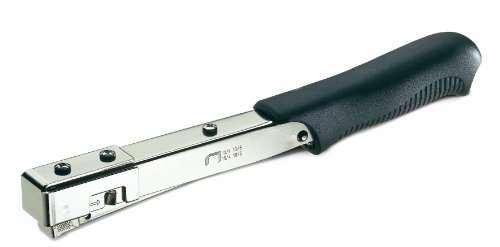
Best Hammer Tackers for Fast, Reliable Stapling
The best hammer tacker for most roofing and insulation work is a lightweight, top-loading model that accepts readily available 3/8-inch staples and opens easily for clearing jams; choose a heavier, higher-capacity tool only when long runs make frequent reloading a bigger concern than swing fatigue.
For a dependable starting point, consider the Arrow HT50: it weighs about 1.5 pounds, holds roughly 168 staples, and is designed for Arrow T50-type staples. For frequent roofing, the Stanley PHT150 is a familiar alternative with a larger magazine of about 200 staples, though it is heavier at roughly 2 pounds. Exact specifications can vary by model revision, so check the current manufacturer’s manual before buying.
As an Amazon Associate we earn from qualifying purchases at no extra cost to you.


Quick comparison
| Tool | Approx. weight | Magazine capacity | Staples | Best fit |
|---|---|---|---|---|
| Arrow HT50 | 1.5 lb | About 168 | Arrow T50, commonly 1/4–3/8 in. recommended; check manual for full range | General roofing, housewrap, and insulation |
| Stanley PHT150 | About 2 lb | About 200 | Stanley TRA700 or equivalent heavy-duty staples, typically 1/4–3/8 in. | Long runs where fewer reloads matter |
| Arrow HT55 | About 1.5 lb | About 168 | Arrow T50, commonly 1/4–3/8 in. | Lightweight use with a long-reach nose for access |
Weights and capacities above are approximate manufacturer specifications, not promises that every staple length or brand will feed equally well. These are manual tackers: there is no battery-runtime comparison. The important practical differences are balance, staple fit, reload frequency, and how quickly you can recover from a jam.
Choose by the job, not just by capacity
- Roofing and housewrap: Favor a sturdy, quick-loading tool that drives consistently with the staple size specified for the material. A lighter HT50-style tool is easier to swing repeatedly; a larger magazine can be worth the extra weight on broad, uninterrupted runs.
- Insulation: A lighter tacker is usually easier to control when working overhead or around framing. Use staples long enough to hold the facing without tearing it, and avoid striking so hard that the staple cuts through thin material.
- Upholstery: A hammer tacker is generally intended for rapid attachment to suitable framing, not precise trim work. Its impact can shift fabric or damage delicate surfaces. For visible, close-spaced upholstery staples, a conventional stapler designed for the material often gives better control.
- Tight corners or awkward reach: Compare the nose shape and handle clearance, not only the listed weight. A long-reach design such as the Arrow HT55 can help access recessed areas, but it does not replace a narrow-crown stapler for detailed work.
What the staple numbers mean
Compatibility is more specific than “heavy-duty staples.” The staple must match the tool’s series, crown width, and leg length. Arrow T50 and Stanley TRA700 staples are common families, but one family should not be assumed to fit every tacker. Confirm the exact series in the manual or on the tool’s label before purchasing.
Leg length determines how far the staple penetrates; it does not guarantee holding power on its own. A 3/8-inch staple may suit thin facing attached to soft framing, while denser material or thicker layers may call for a different approved length. Too-short legs can pull free; too-long legs can protrude or split thin stock. If a staple repeatedly bends, check that the material is supported and the tool is square to the surface before increasing impact force.
Capacity versus swing fatigue: a simple trade-off
At roughly 168 staples, an HT50-style magazine needs about six reloads to drive 1,000 staples: 1,000 ÷ 168 = 5.95, rounded up. A 200-staple magazine needs five: 1,000 ÷ 200 = 5. The larger magazine saves about one reload over that quantity, but a tool around half a pound heavier adds weight to every swing. For short jobs, the lighter tool is usually the more useful advantage; for large, steady runs, fewer reloads may matter more.
Loading and clearing jams without damaging the tool
- Confirm the staple series and leg length. Check the manual and use a fresh, straight strip. Mixed, bent, or incorrectly sized staples are common causes of feed problems.
- Open the magazine fully and load in the marked direction. Keep the staple strip seated in its track, then close and latch the magazine completely. A partly engaged latch can cause inconsistent feeding.
- Test on scrap of the same material. Hold the nose flat and strike with a controlled, square motion. Adjust your technique or staple length if staples crown, bend, or cut through the material.
- Stop at the first jam. Do not keep striking; that can deform the driver or jam more staples behind the obstruction. Open the magazine according to the manual, remove the strip, and clear the lodged staple with a suitable tool while keeping fingers clear of the nose.
- Inspect before reloading. Look for bent staples, debris, a damaged driver, or a magazine that will not latch. If the driver is visibly bent or the tool jams repeatedly with correct staples, stop using it and consult the manufacturer’s service guidance.
Ownership details that affect reliability
Hammer tackers are mechanically simple, but the driver blade and feed path take the wear. Dirt, roofing grit, adhesive residue, and damaged staples can interfere with feeding. Brush debris out of the magazine and nose periodically; use lubricant only if the manufacturer recommends it, since excess oil can attract grit or mark fabric and other finished surfaces.
Store the tool unloaded and dry, and avoid dropping it nose-first. A loose handle, cracked housing, damaged latch, or driver that does not return freely is a reason to stop and inspect the tool rather than compensate with harder blows. Staple cost is a recurring expense, so check local availability of the correct series and lengths before choosing a model—an inexpensive tacker is less useful if its compatible staples are difficult to source.
Bottom line
For a first hammer tacker or mixed roofing and insulation work, the Arrow HT50 is a sensible lightweight choice with broad staple availability. Pick the Stanley PHT150 when its larger magazine better suits long production runs and the extra weight is acceptable. Choose a long-reach model when access is the problem, and use a more controlled stapler for delicate upholstery. In every case, staple-series compatibility and a clean, accessible magazine matter more to reliable fastening than capacity alone.