Key takeaways
- One is built for daily professional abuse. The other gives a homeowner more tools per dollar than anything else. Neither is wrong.
What's inside
As an Amazon Associate I earn from qualifying purchases. This post may contain affiliate links at no extra cost to you.
Tool forums treat this as a status question. It is not. It is a duty-cycle question: how many hours will the tool actually run in its life?
Everything else follows from that one number: which platform makes sense, how many packs you end up buying, whether a repair is worth paying for, and whether the cheap kit is genuine value or a slow tax. Nobody in the store asks it, because a store is organised around price points and endcaps rather than around how you work. What follows is the comparison-desk view — what each company optimizes for, who gets punished by that choice, and how to weigh the trade-offs before committing to a battery mount you will live with for a decade.
As an Amazon Associate we earn from qualifying purchases at no extra cost to you. Product prices and availability are accurate as of the date shown and are subject to change.




| Aspect | DeWalt 20V MAX | Ryobi ONE+ |
|---|---|---|
| Target user | Trades, serious DIY | Homeowners, light DIY |
| Tool count | 350+ | 300+ (incl. outdoor) |
| Battery cost | Moderate | Lowest on the market |
| Build | Jobsite-rated | Lighter duty |
| Warranty | 3 years | 3 years |
| Outdoor equipment | Limited | Extensive |
| Price per tool | Higher | Much lower |
The Criteria That Decide This, Ranked
Duty cycle first. A tool that runs twenty minutes a month and a tool that runs four hours a day are different products even when they look identical on the shelf. At low hours a polymer gearcase never gets hot enough to matter and the battery ages on the calendar rather than on cycles. Push the same tool into daily work and every economy inside it surfaces at once: heat, power sag, grit in the trigger, a chuck that stops holding a bit straight.
Battery economics second, and they are larger than tool prices. Over a decade on a platform you buy more packs than tools, because packs are the part that wears out. Compare cost per amp-hour rather than kit price, and count how many packs the household needs to keep working on a busy weekend. This is where Ryobi’s advantage compounds and where the DeWalt premium is felt hardest.
Coverage of the tools you specifically need, third. Total tool count is marketing. Write down the six tools you expect to own in five years, then check that both platforms make all six and at what tier. A platform that covers five of your six beats one that lists three hundred you will never buy.
Service, parts and warranty, fourth. Both platforms carry three years, so the real differentiator is what happens afterwards. Search the brand plus “parts diagram” and see whether exploded views and orderable components come up for tools that are several years old. If your honest hours are low, criteria two and three decide the whole question. If they are high, criterion one overrides everything else, because one failure mid-job costs more than the entire price gap.
Where Ryobi genuinely wins
Cost per tool. Nothing comes close. For the price of a DeWalt drill and one battery, you can often get a Ryobi drill, impact driver and two batteries. The second half of that sentence is the part that changes your day: having a dedicated driver so you stop swapping bits does more for a project than owning a better version of a tool you already have.
Range breadth for a house. ONE+ covers string trimmers, blowers, mowers, inflators, glue guns, fans and dozens of other things a homeowner uses. That breadth is the real product. The alternative for most households is three separate ecosystems — shop tools, yard tools, oddments — each with its own charger and its own dead pack in a drawer.
Battery compatibility record. ONE+ has kept the same battery mount since 1996, which is remarkable and worth trusting. Being stranded on an abandoned mount is the genuine risk in cordless, not a few percent of torque, and a long unbroken mount history is the only evidence available on that question.
Ryobi ONE+ kits
One battery for shop and yard. For a house with a garden, this breadth beats any professional platform on cost.
Where DeWalt wins
Sustained work. Run both for six hours and the difference in heat, power sag and long-term durability is obvious. Duty cycle is the design brief here: bigger heat paths, more metal where load is carried, electronics that back off gradually instead of shutting the tool down at the worst moment.
Professional tools. Track saws, table saws, large rotary hammers, FlexVolt cutting tools — Ryobi does not compete here. If any of your six tools live in that group, the platform decision is already made for you, and the sensible move is to build around the tool you cannot substitute.
Availability of parts and service. Every US supply house carries DeWalt. That matters twice: a replacement pack or a spare tool is obtainable the same day when something dies mid-project, and a five-year-old tool is still worth repairing rather than replacing.
DeWalt 20V MAX kits
The right answer once the tool is used weekly or earns money. Wait for a sale — DeWalt discounts hard.
The honest test
Ask how many hours a year the tool runs. Under fifty: Ryobi, comfortably, and spend the savings on more tools. Over two hundred: DeWalt, and treat the premium as buying reliability rather than prestige.
In the middle band, look at the shape of the hours rather than the count. Fifty hours spread as ten minutes at a time is a different load from fifty hours spent framing a deck over two weekends, because concentrated heat is what kills light-duty tools. Then ask whether the tool earns money. Once downtime has a cost attached, the price difference stops being the deciding number.
Good pick versus bad pick at each price band
Entry band
A good entry kit is a current-generation tool with two usable packs and a charger that refills them in a reasonable time. A bad one funds its low price by shipping a single small pack and a trickle charger, and you discover that the tool was never the constraint — the charging was. Beware of kits built from a previous generation cleared out at a keen price on a mount you cannot grow into.
Mid band
This is where brushless motors appear on both platforms and where most buyers should shop. A good mid pick spends the extra money on the motor and on pack capacity. A bad one spends it on accessory count: bit sets, a bag and an extra plastic case are the cheapest things in the box and the first parts you replace anyway.
Top band
A good top-band purchase is the tool class its platform is genuinely best at, bought because you use it hard. A bad one is flagship money for something used twice a year, or for a tool whose real limitation is the consumable — the blade, the bit, the abrasive — rather than the motor behind it.
Common mistakes and how to avoid them
- Choosing a platform for one tool. The first purchase sets the mount for everything after it. Decide on the six-tool list, not on today’s deal.
- Pricing kits and ignoring packs. Add the batteries you will realistically own to both sides before comparing anything.
- Owning only one size of battery. Compact packs for overhead and cabinet work, high-capacity packs for saws and sustained runs. One size always means the wrong size half the time.
- Shopping torque figures. On most jobs the limit is bit quality, clutch control and technique, not the number printed on the housing.
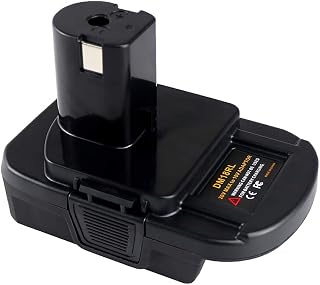
- Cross-platform adapters. They defeat the communication between pack and tool that protects both. Nothing is saved that is worth a cooked pack.
- Drifting into two ecosystems by accident. Gifts and sale bundles do this quietly. Decide on the split deliberately, or not at all.
Who should skip which
Skip Ryobi if the tool earns money, if you work daily, or if your list includes tools the platform does not make in a serious version. Buying light-duty gear for heavy-duty hours is how people end up paying twice.
Skip DeWalt if you have no yard equipment plan, run modest hours and would be paying for a duty cycle you never reach. That premium is real value under load and dead money under a light one.
The hybrid nobody admits to
The dogmatic single-platform answer is rarely what well-used garages actually contain, and the mixed setup is a legitimate strategy rather than a compromise.
- ✔ Many well-equipped garages run DeWalt for drills and saws and Ryobi for yard tools
- ✔ That combination is cheaper than going all-in on either
- ✔ Just keep chargers separate and labelled
- ✔ Do not split your primary drill/driver across platforms
The split works when the line follows the work: heavy, precise or paid tasks on one platform, seasonal and outdoor tasks on the other. It fails when the line runs through a single job, because then you are carrying two battery families and two chargers to the same task and losing the only advantage either platform had.
FAQ
Are Ryobi tools badly made? No — they are made to a lighter duty cycle. That is a design decision, not a defect. Judge the tool against the hours you will actually put through it.
Will Ryobi batteries fit DeWalt? No, and adapters are a bad idea. Plan on two chargers and clear labelling if you run both.
Which for a first-time homeowner? Ryobi, almost every time. Breadth and pack cost matter more in the first few years than a duty cycle you will not reach.
Is it worth waiting for a promotion? For kits, usually yes, since bundles are where the discounting lands and bare tools move far less. Do not wait if the project is already underway; a stalled job costs more than the saving.
Answer the hours question honestly, add up the packs, then buy the platform that matches the work rather than the one that matches the forum.
Compare current prices →