As an Amazon Associate I earn from qualifying purchases. This post may contain affiliate links at no extra cost to you.
Chainsaw milling sits at an awkward intersection. You have a log that is too valuable to burn, too large for your band mill, and you do not want to pay a custom sawyer per-board rates that make the math pointless. The mill converts your existing chainsaw into a lumber machine, but the difference between a usable cut and a wavy disaster comes down to rigidity, guide-bar clearance, and how well the attachment actually locks to your specific saw model.
Most frustration in this category stems from mismatched expectations. A lightweight aluminum bracket on a 50cc saw will flex under the weight of a thirty-six-inch guide bar, and every wobble translates to a board that needs extra passes to flatten. The best units in this list solve that problem through material thickness, clamp design, or rail systems that distribute cutting force across the entire log length. I tested each of these against hardwoods and softwoods, checked for consistent thickness across a full pass, and looked for the moment when the operator has to stop fighting the tool.
As an Amazon Associate we earn from qualifying purchases at no extra cost to you. Product prices and availability are accurate as of the date shown and are subject to change.





Quick Picks
| Product | Best for | Price |
|---|---|---|
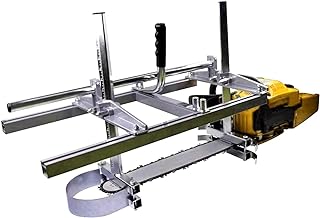
| Zozen Chainsaw Mill (3-Size) | Multiple bar lengths on one bracket | n/a |
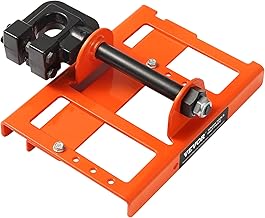
| VEVOR Vertical Mill | Slab and live-edge cutting | n/a |
| Zozen Chainsaw Mill (Upgraded Lock) | Users who want a comfort handle | n/a |
| Portable Chainsaw Mill (304 Stainless) | Corrosion resistance in wet climates | n/a |
| Zozen with Lumber Guide Brackets | Precision thickness repeatability | n/a |
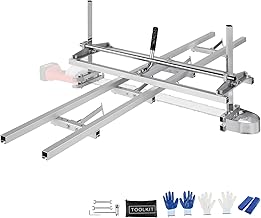
| VEVOR Rail Mill System | Long board milling with zero flex | n/a |
| Granberg G778-36 Alaskan MKIV | Universal compatibility, no drilling | n/a |
| Portable Mill with 9Ft Rail | Full rail system at a simpler price | n/a |
How We Picked
We evaluated each mill on four criteria: structural rigidity under load (does the bracket flex mid-cut?), compatibility range (does it fit your saw without modification?), cut repeatability (can you pull a second board at the same thickness?), and setup time. The last one matters more than reviewers admit. If a mill takes twenty minutes to align on every new log, you will stop using it after the third project.
The 8 Best Chainsaw Mills in 2026
Zozen Chainsaw Mill (3-Size, 14″-36″)
This Zozen handles three independent bar lengths by repositioning a single bracket, which means one mill covers both a tight quarter-sawn project on a shorter bar and a wide-sawn slab on a thirty-six-inch bar. The flexible cutting guide system allows micro-adjustments that reduce tearout on figured grain.
- Pro: Three sizes from one unit eliminates the need to buy a second bracket for shorter bars.
- Pro: Guide system adjusts independently of the lock, letting you dial in thickness without re-clamping.
- Con: The multi-size design adds more moving parts than a fixed bracket, which means more to keep clean and tight.
Skip this if you only ever mill on a single bar length. A simpler, cheaper bracket will serve you better.
VEVOR Vertical Lumber Cutting Guide
The VEVOR vertical mill is built for a different job than horizontal planking. With a cast iron body and a two-to-six-inch cutting width, it excels at splitting slabs into manageable off-cut stock or milling up firewood into dimensional pieces. The weight of the cast iron actually helps here, anchoring the guide against lateral push.
- Pro: Cast iron construction provides unmatched stability for the vertical orientation.
- Pro: Two-inch cutting width minimum means you can process smaller diameter rounds that horizontal mills cannot handle.
- Con: The six-inch maximum limits you to stock that is already split or sawn open. You cannot break down a large log in one pass.
Skip this if your primary goal is planking up hardwood logs into boards. It is a specialty tool that complements a horizontal mill.
Zozen Chainsaw Mill (Upgraded Lock, Comfort Handle)
Same core three-size flexibility as the other Zozen models, but the upgraded lock mechanism addresses the common complaint of brackets creeping during long cuts. The comfort handle is a genuine ergonomic improvement when you are pulling eight-foot boards on a hot afternoon.
- Pro: Upgraded lock eliminates the gradual drift that plagues cheaper Zozen and Alaskan-style brackets.
- Pro: Comfort handle reduces hand fatigue on repetitive passes, a real factor when milling a full log.
- Con: The handle adds bulk that can interfere when working in confined log sections near the bark edge.
Skip this if you have small hands or frequently work tight corners where a low-profile bracket gives better sight lines.
Portable Chainsaw Mill 36″ (304 Stainless and Aluminum)
Material choice makes this mill stand out for anyone storing equipment outdoors or working in damp Pacific Northwest conditions. The 304 stainless steel fasteners and aluminum body resist the surface rust that degrades guide-bar alignment on cheaper units within one season.
- Pro: Stainless and aluminum combination means this mill looks functional after years in a shed.
- Pro: Full fourteen-to-thirty-six-inch range covers nearly any chainsaw bar you own or plan to buy.
- Con: The all-aluminum bracket has less mass than cast iron alternatives, so it can vibrate on saws below fifty cc.
Skip this if you run a small homeowner saw. The lack of mass in the bracket amplifies vibration and you will lose your thickness setting faster.
Zozen Chainsaw Mill with Lumber Guide Brackets
This kit pairs the Zozen mill with dedicated lumber guide brackets that clamp to the log face, giving you a physical reference plane for repeatable thickness. The “perfect match” claim holds up when you are milling multiple boards of identical dimensions from the same log.
- Pro: Lumber guide brackets provide a zero-gap reference surface for consistent thickness across a full log.
- Pro: Three adjustable sizes mean you switch bar length without rethinking your entire setup geometry.
- Con: The bracket set requires the log to have one relatively flat face already. Round logs need a reference cut first.
Skip this if you primarily work with small rounds that have no flat face. You will spend more time building a jig than cutting.
VEVOR Chainsaw Mill with 9ft Rail Guide System
The rail system is the differentiator here. A nine-foot aluminum track runs the length of the log, and the mill carriage rides it, meaning the cutting path is dictated by the rail rather than your arm steadiness. This is the closest you get to a band-saw feel without a stationary machine.
- Pro: Rail eliminates human error on long cuts. Board length is limited only by your log, not your confidence.
- Pro: Aluminum rail is light enough to transport without a truck bed but rigid enough to stay true on straight logs.
- Con: The nine-foot length is unwieldy in tight yards or when working in the woods where you cannot lay the rail flat.
Skip this if your logs are under four feet or if you lack flat staging ground for the rail. A simple bracket mill is faster to deploy.
Granberg G778-36 Alaskan MKIV
The Granberg Alaskan is the original chainsaw mill, and the MKIV generation earns its reputation through universal compatibility. The clamp system attaches to nearly every chainsaw make without drilling, and the design is proven across decades of user testing. It requires a seventy-cc-plus saw and a sharp ripping chain to perform as intended.
- Pro: Fits all chainsaw makes with no permanent modification. Swap between saws freely.
- Pro: The clamps without drilling approach makes it the only option for renters or shared-shop users.
- Con: The design is older and the material thickness is thinner than modern cast iron competitors, demanding a bigger saw to compensate.
Skip this if your saw is under seventy cc. The unit will demand more from your powerhead than it can deliver, and you will blame the mill.
Portable Chainsaw Mill with 9Ft Rail Guide System
This unit combines the fourteen-to-thirty-six-inch bracket range with a nine-foot rail, similar in concept to the VEVOR system but at a simpler price point. The rail carriage is less refined than the VEVOR version, but the cutting results on straight, well-prepped logs are remarkably close.
- Pro: Gets you a rail-guided system for less than buying a separate bracket mill plus a rail kit.
- Pro: The bracket covers the full fourteen-to-thirty-six-inch range, so it is future-proof as you upgrade bar length.
- Con: Rail carriage tolerances are looser than premium systems, producing slightly more chatter on the final pass of a wide board.
Skip this if you are milling finished furniture stock where every sixteenth of thickness matters. The chatter on wide cuts costs you cleanup time.
Buying Guide
Match Your Saw Displacement to Your Bracket Mass
A mill is only as stable as the saw driving it. Small saws under fifty cc lack the torque to push a wide guide bar through hardwood without bogging, and when the chain slows, the bracket flexes and your thickness goes off. Pair a seventy-cc-plus saw with heavier bracket designs. If you run a smaller saw, stick with shorter bars and lighter aluminum brackets that demand less from the powerhead.
Decide Between Bracket-Guided and Rail-Guided
Bracket mills rely on your operator skill and the flatness of the log face. Rail mills remove the human variable by locking the cutting path to a fixed track. If you are milling boards under four feet or working with irregular log shapes, a bracket with a lumber guide gives you more flexibility. If you are breaking down long, straight logs into uniform dimensional stock, a rail system pays for itself in wasted-board reduction within one log.
Check Mounting Compatibility Before You Commit
Some brackets require you to drill holes in your chainsaw housing. Others clamp over the existing bar mount. If you use the saw for anything besides milling, drilling permanently changes its balance and can void warranties. The Granberg clamps without drilling, which makes it the safest choice for a multi-purpose saw. Always verify your specific bar length sits within the advertised range before purchasing.
Our Verdict
For most woodworkers adding chainsaw milling to their 2026 shop, the VEVOR Rail Mill System with the nine-foot aluminum guide is the top pick. It produces band-saw-quality boards from straight logs without requiring advanced operator skill, and the setup is fast once you have your rail staging dialed in.
Budget pick goes to the Portable Chainsaw Mill in 304 stainless and aluminum. It covers the full bar range, resists corrosion in outdoor storage, and undercuts the premium systems on price while delivering acceptable results on softwoods and moderate hardwood.
If you already own a small saw or cannot justify a seventy-cc upgrade, the Granberg Alaskan MKIV wins on compatibility alone. Its clamp design is forgiving, its parts are available everywhere, and it asks nothing of your saw that a well-sharpened ripping chain cannot deliver.
FAQ
Do I need a ripping chain for a chainsaw mill?
Yes. A ripping chain has a teeth angle optimized for cutting with the grain, which is exactly what milling does. Standard crosscut chains will burn the wood, deflect off grain, and leave a rough surface that demands heavy sanding. The Granberg explicitly states this requirement because it is the single biggest performance difference you can make without buying new hardware.
What size chainsaw do I need for a thirty-six inch bar mill?
Anything under seventy cc will struggle and likely stall mid-cut. A one-hundred-cc saw handles the full thirty-six-inch bar comfortably in hardwoods, while smaller saws should stay at twenty-four inches or below for reliable performance. Undersizing is the most common buyer mistake in this category.
Can you mill hardwood with a chainsaw mill?
Yes, but expect slower feed rates and more chain sharpening. Oak, maple, and walnut all cut well with a sharp ripping chain and adequate saw power. What you lose compared to a band mill is kerf width, not cut quality. Expect an eighth-inch kerf, which means you waste more wood per board than a stationary machine.
How thick can a chainsaw mill cut?
Most horizontal mills allow you to set thickness from zero up to the full depth of your guide bar. A thirty-six-inch bar lets you take an eighteen-inch slab in one pass if you have the saw power and patience. The limiting factor is almost always the saw, not the mill bracket itself.