What's inside
As an Amazon Associate I earn from qualifying purchases. This post may contain affiliate links at no extra cost to you.
Our Top Picks
 BOSCH GTS15-10 10 Inch Portable Jobsite Table Saw10 in28.1 x 27.8 x 13.53 inches102.95 poundsCheck on Amazon


Two portable saws with different priorities
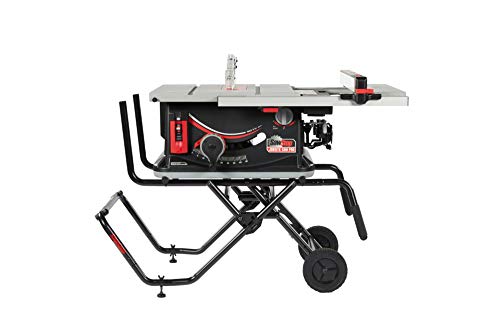
The SawStop Jobsite Saw Pro and Bosch 4100XC-10 are both 15-amp portable table saws, but they are not aimed at exactly the same buyer. The SawStop puts unusual emphasis on flesh-sensing safety and a compact, well-integrated guard system. The Bosch is a conventional 10-inch jobsite saw with a proven gravity-rise stand, large wheels, and a more familiar blade-guard layout.
That difference matters more than small variations in rip capacity. If the saw will be moved between jobs every day, the Bosch stand is a major advantage. If safety technology and a quick, reliable guard setup are your top concerns, the SawStop deserves the premium. For occasional framing, shelving, and remodeling work, the Bosch can be the better value.
As an Amazon Associate we earn from qualifying purchases at no extra cost to you.


Key differences at a glance
| Feature | SawStop Jobsite Saw Pro | Bosch 4100XC-10 |
|---|---|---|
| Blade size | 8-1/4 inches | 10 inches |
| Motor | 15 amps | 15 amps |
| Rip capacity | About 25-1/2 inches to the right | About 25 inches to the right |
| Safety system | Electronic flesh-sensing brake, riving knife, guard, and anti-kickback pawls | Riving knife, blade guard, anti-kickback pawls, and Bosch Smart Guard system |
| Stand and mobility | Folding jobsite stand with wheels | Gravity-rise stand with large wheels and adjustable legs |
| Best fit | Safety-focused users and compact transport | Frequent jobsite transport and conventional 10-inch blade capacity |
Both saws have enough power for sheet goods, dimensional lumber, and typical trim stock. Neither replaces a full-size cabinet saw for heavy hardwood production. A 15-amp circuit, a sharp blade, and a properly aligned fence matter more than small advertised motor differences.
Blade guard and safety comparison
The SawStop’s main advantage is its brake system. A small electrical signal detects contact with conductive skin and triggers a brake that stops the blade, usually causing a minor cut instead of a severe one. The brake also drops the blade below the table. It is not permission to bypass normal safety practices: wet wood, foil-backed material, and some treated or conductive stock can activate the system or require the safety mode to be changed.
Activation is expensive and inconvenient. The brake cartridge and blade generally need replacement, and the saw must be inspected before returning to work. That is a real operating cost, but it is a different kind of cost from an injury. The SawStop also has a bypass mode for material that would otherwise trigger the brake, though that removes the central safety feature while enabled.
The supplied SawStop guard is designed for quick removal and installation without making the operator dismantle the entire assembly. Its riving knife helps keep the kerf open behind the blade, reducing the chance that the work pinches the blade and kicks back. The clear guard provides a useful view of the cut, while the anti-kickback pawls are positioned to catch stock moving backward.
The Bosch uses its Smart Guard system rather than a flesh-sensing brake. The package includes a riving knife, clear blade guard, and anti-kickback pawls that can be installed or removed without tools. That is a sound conventional setup, but it only protects you when it is installed and used. A kickback can still occur if the fence is out of alignment, the stock is twisted, or the operator pushes sideways into the blade.
In practice, both guards can interfere with narrow crosscuts, dado-style work, and some jigs. The correct response is not to cut without protection by default. Use the manufacturer’s riving-knife configuration, make a purpose-built jig where appropriate, and keep hands away from the blade path. For replacement or upgraded table saw blade guards, verify compatibility carefully; guard mounting systems are not universal.
Which saw is easier to move?
The Bosch 4100XC-10 is the clear mobility choice for repeated setup and teardown. Its gravity-rise stand uses a levered frame that opens and closes with relatively little effort. The large wheels roll well across gravel, thresholds, and unfinished floors, and the stand’s wide footprint is stable once the legs are adjusted. It is still a substantial machine, but one person can move it in the way a jobsite saw is meant to be moved.
The SawStop Jobsite Saw Pro also folds into a wheeled package, and its stand is stable during cutting. Its compact design is useful in a truck or crowded garage, where a smaller footprint and integrated storage matter. However, the complete SawStop package is not light. Carrying it up stairs or loading it into a vehicle is more awkward than rolling the Bosch. Check the stand configuration before buying, because SawStop sells related jobsite packages and accessories with different transport arrangements.
For smooth concrete, either saw is manageable. On stairs, soft ground, or loose gravel, the Bosch’s larger wheels and gravity-rise geometry are more useful than a small difference in folded size. If you routinely work alone, consider a portable table saw loading cart or ramp rather than relying on lifting strength.
Cutting capacity and everyday use
The Bosch’s 10-inch blade gives it access to a broader range of common table-saw blades and more depth capacity. That is helpful when ripping thicker lumber or using readily available framing and finish blades. The SawStop’s 8-1/4-inch blade keeps the saw compact, but maximum depth is lower. For 3/4-inch plywood, flooring, shelving, and most trim work, that limitation rarely matters.
Both fences should be checked with a square before serious work. A portable saw can shift during transport, and a fence that is slightly closer to the blade at the rear can encourage pinching and kickback. Use a push stick for narrow rips, support long stock, and avoid forcing warped boards through the cut. A good table saw push-stick and featherboard set costs far less than either saw and improves control on both.
Which one should you buy?
Choose the SawStop Jobsite Saw Pro if its brake technology is the deciding factor, you value a compact integrated package, or the saw will be used by several people with different experience levels. The premium is easier to justify in a professional shop where injury downtime is costly.
Choose the Bosch 4100XC-10 if you need a 10-inch blade, move the saw frequently, or want to spend less on a capable conventional jobsite saw. It is not an unsafe saw when its guard, riving knife, and anti-kickback pawls are used correctly. The cheaper option is entirely reasonable for a careful DIY user who mainly cuts plywood and dimensional lumber and is willing to follow good table-saw technique.