What's inside
As an Amazon Associate I earn from qualifying purchases. This post may contain affiliate links at no extra cost to you.
For flattening a small hardwood panel by hand, the best all-around choice is a standard No. 5 jack plane with a reasonably thick iron, a 45-degree bed, and a mouth that can be adjusted or opened enough for heavier cuts. It is long enough to bridge ordinary high spots but short enough to control on a panel around 12 to 24 inches long.
A shorter No. 4 smoothing plane can work if the board is already close to flat. It is not the best first choice for correcting twist, removing saw marks, or bringing a panel down to a consistent thickness. A longer jointer plane is more accurate on long stock, but usually adds cost and weight without helping much on a small workpiece.
As an Amazon Associate we earn from qualifying purchases at no extra cost to you.


Our Top Picks
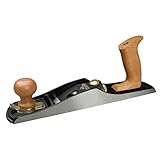
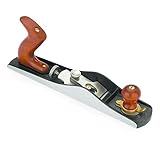
 Taytools #5 Premium Bedrock Style Flattop Jack PlaneOne Size Fits All0 x 0 x 0 Inches6.5 PoundsCheck on Amazon
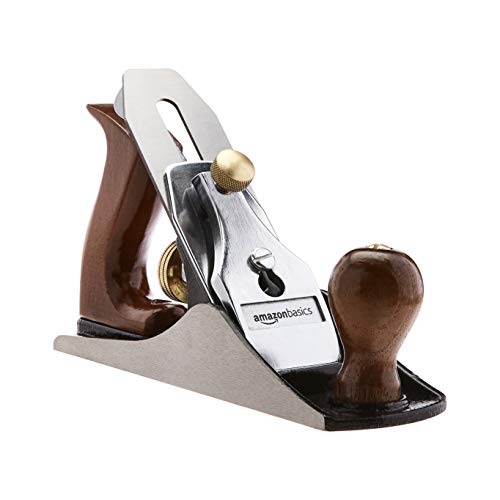 Amazon Basics No.4 Adjustable Precision Smoothing Bench Hand(Pack of 1)10 x 5.5 x 2.6 inches3.82 poundsCheck on Amazon
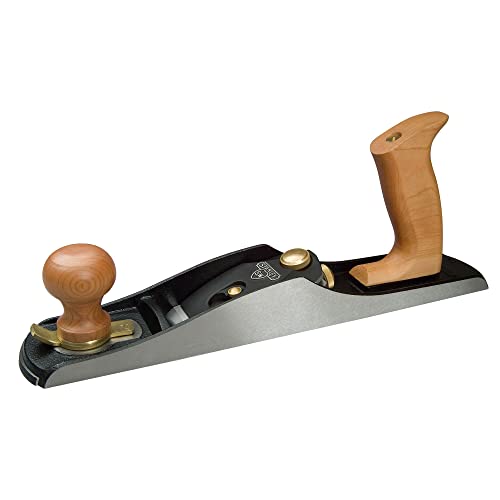


Best choice: a No. 5 jack plane
A jack plane typically has a sole around 14 inches long and an iron close to 2 inches wide. That combination gives it enough length to cut down local high spots without constantly dropping into hollows. It also leaves enough room to adjust the cutting edge for either a fine shaving or a more aggressive first pass.
For a small hardwood panel, look for an iron that is at least about 3 mm thick, a solid frog with no visible rocking, and a sole that is flat enough that it does not visibly twist when placed on a known-flat surface. A plane does not need a mirror-polished sole to work, but deep hollows near the toe or heel can make flattening frustrating.
If you are buying new, compare a No. 5 jack plane with the cost of a used plane plus replacement parts. The cheaper option is fine when the sole is sound, the lever cap clamps firmly, and the iron has enough metal left for sharpening. A rusty body is often recoverable; a cracked casting, stripped adjustment mechanism, or missing frog screws is usually not worth the repair.
Which bench plane fits the job?
| Plane type | Best use on a small panel | Strengths | Limitations |
|---|---|---|---|
| No. 4 smoother | Final cleanup and light flattening | Easy to control; good for fine shavings | Short sole follows hollows; slow for major correction |
| No. 5 jack plane | General flattening and thickness correction | Most versatile size; handles coarse and fine cuts | Needs careful setup to avoid tear-out |
| No. 5 1/2 jack plane | Flattening wider or harder panels | More mass and wider iron; stable cut | Heavier and tiring on a small workpiece |
| No. 6 fore plane | Fast removal on longer stock | Bridges hollows better than a jack plane | Often excessive for panels under 24 inches |
| No. 7 jointer plane | Long-edge jointing and large boards | Excellent reference length | Awkward and unnecessary for most small panels |
Setup matters more than the label
Sharpen the iron before judging the plane. A practical starting point is a 25-degree primary bevel with a small 30-degree secondary bevel. For ordinary hardwood, aim for a polished edge that can take a shaving roughly 0.002 to 0.004 inch thick without crumbling. The exact grit matters less than removing the wire edge and keeping the bevel consistent.
Set the cap iron close to the cutting edge for difficult grain, roughly 0.5 to 1 mm back from the edge. That can reduce tear-out, but it also makes the plane less forgiving if the iron is dull or the cap iron is not seated cleanly. For open-grained woods with cooperative grain, a gap of 1 to 2 mm is easier to use.
Start with the blade projecting only slightly. You should be able to take a continuous shaving without the plane requiring excessive force. For initial flattening, a cambered edge is useful: the center cuts more deeply while the corners stay out of the work. A camber of about 0.5 mm across the cutting edge is enough for a moderate stock-removal setting. For the final pass, reduce the projection and use a nearly straight edge with corners eased by about 0.1 mm.
How to flatten the panel
First, check the panel with a straightedge across its width, length, and diagonals. Mark high areas with a pencil. Also mark one face clearly; switching faces during the job makes it easy to lose track of the reference surface.
Secure the panel on a bench with low-profile stops or clamps. Do not clamp so hard that you bend a thin panel into a temporary flat shape. If the panel is 3/4 inch thick or less, support it well enough that it cannot flex under the plane.
Use the jack plane diagonally across the grain at about 30 to 45 degrees. This cuts high areas quickly and avoids following the board’s existing surface. Take overlapping passes, but stop frequently to check the pencil marks. On a panel less than 24 inches long, a 1 to 2 inch overlap between passes is easy to manage.
Once the high spots are gone, plane along the grain with a lighter cut. Check the surface with a straightedge every few minutes. The goal is not to remove a fixed amount everywhere; it is to create a consistent reference face. If one corner remains low, do not keep planing the entire panel. Work the high area around it and blend the cut outward.
Finish with a smoothing plane or a finely set jack plane. A No. 4 smoothing plane is worthwhile if the panel will receive a clear finish and the grain changes direction. Otherwise, a well-tuned jack plane can leave a clean surface with a fine setting.
Common failure modes
Tear-out is the main problem in figured or reversing grain. Plane in the direction that produces the cleanest shaving, even if that means changing direction across different parts of the panel. A higher cutting angle, tighter cap-iron setting, and thinner shaving all help, but none can eliminate tear-out in every board.
A panel that rocks after planing usually has wind, not just a single high spot. Place winding sticks at both ends and compare their top edges from a low viewing angle. Remove the high corners until the sticks appear parallel. A plane with a very short sole can make this problem worse by following the twist.
If the plane chatters, check the iron’s seating, cap-iron fit, and blade projection before buying a heavier tool. Dull irons and excessive cuts are more common causes than insufficient plane weight. For most small panels, spend money first on a sound No. 5, reliable sharpening equipment, and a straightedge rather than on a large jointer plane.