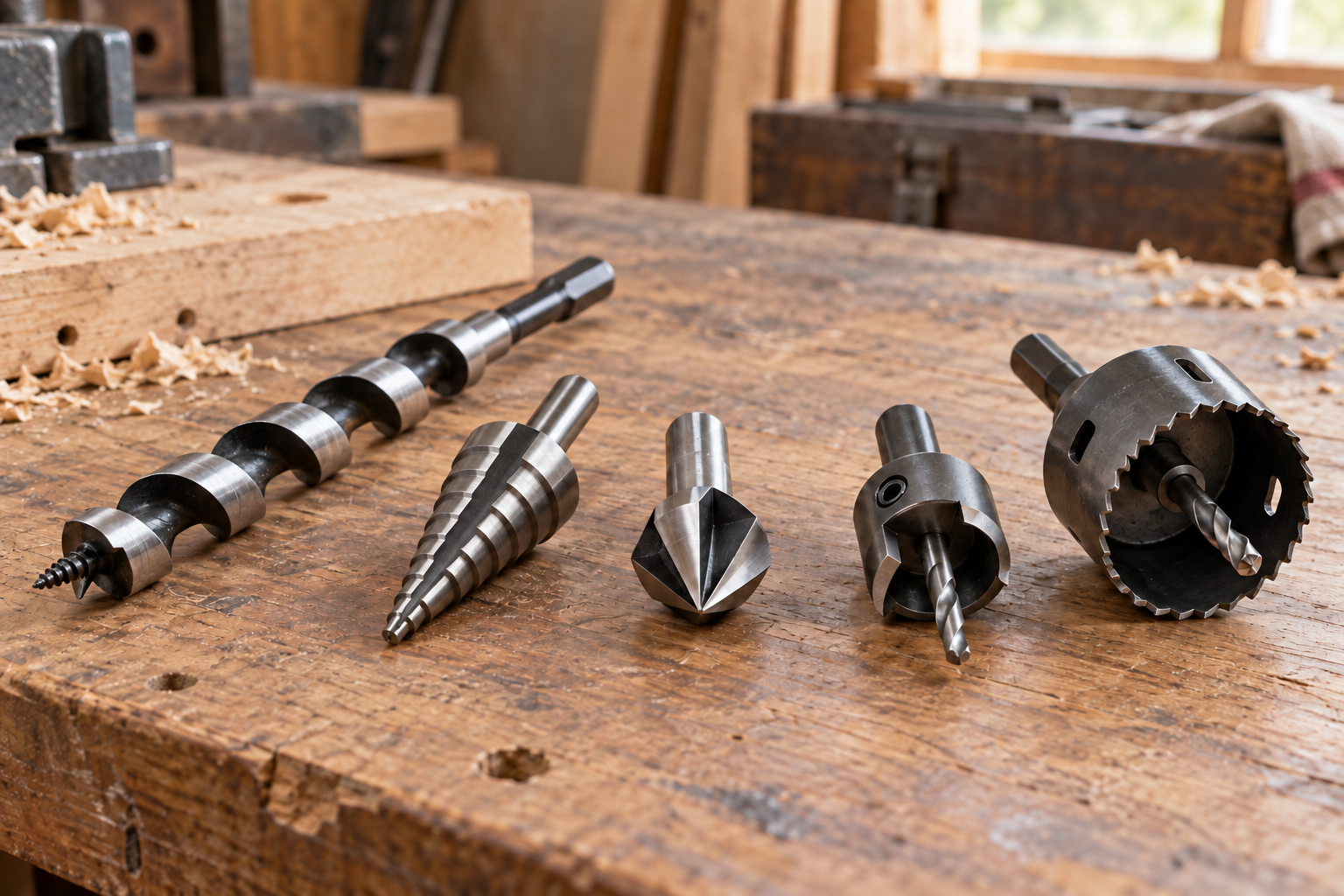
What's inside
As an Amazon Associate I earn from qualifying purchases. This post may contain affiliate links at no extra cost to you.
For deep holes in green timber, a long, self-feeding auger bit is usually the best starting point—but the bit is only half the decision. Hole depth, wood diameter, and the drill’s ability to handle sustained torque matter just as much. A large auger can grab hard enough to twist a drill out of your hands or stall it in wet, stringy wood.
As an Amazon Associate we earn from qualifying purchases at no extra cost to you.
Our Top Picks


What works best in green timber
Choose a wood auger with a screw-point lead and a cutting head designed to clear chips. The lead screw pulls the bit into the timber, while the flutes carry shavings up and out. For deep holes, a bit with long flutes is more useful than simply buying the longest shaft available: once the flutes stop, chips pack into the hole and the bit can bind.
A standard spiral auger is a good choice for straight holes in posts, logs, and framing lumber. A ship auger is another practical option; its cutting geometry is intended for rough work and it often handles embedded dirt or the occasional nail better than a cleaner-cutting bit, though no wood auger should be treated as a metal-cutting tool. For general use, compare long ship auger bits by diameter, usable flute length, and shank—not just overall length.
Match the bit to the hole
Measure the required hole depth before buying. A bit described as 18 inches long may have substantially less than 18 inches of cutting flute. If the hole must be 16 inches deep, that difference can leave the bottom packed with chips. For holes deeper than the fluted section, plan to withdraw the bit repeatedly to clear debris, or choose a bit with enough flute length for the full cut.
Diameter changes the load sharply. A 1-inch bit removes more than twice as much wood per inch of depth as a 5/8-inch bit, so it takes more torque and is more likely to stall. Buy the smallest diameter that meets the job’s structural or hardware requirements. A smaller hole also gives chips more room to escape around the bit.
Auger options compared
| Type | Best use | Trade-off in green timber |
|---|---|---|
| Standard spiral auger | Clean, straight holes in posts and logs | Feeds efficiently, but can bind if the lead pulls too aggressively or chips clog deep flutes |
| Ship auger | Rough construction work and deeper holes | Generally durable and practical; cut quality may be less tidy than a purpose-made clean-cut auger |
| Extension auger | Adding reach to a compatible bit | Convenient, but extra length increases flex and makes a bind harder to control |
| Spade bit with extension | Occasional shallow or moderate holes on a budget | Cheap and easy to find, but clears chips poorly in deep holes and is more prone to overheating or wandering |
A long auger bit or compatible extension makes sense when reach is the limiting factor. Avoid stacking extensions unless the manufacturer permits it: each joint adds wobble, and the extra leverage can damage the bit or drill if the cutter catches.
The drill matters as much as the bit
Use a drill with a side handle and enough torque for the bit diameter. A corded drill or a heavy-duty right-angle drill is often a better fit than a compact cordless driver for repeated large, deep holes. A powerful cordless drill can work, but check its manual for maximum auger-bit size and use the low-speed setting. Do not assume that a high-voltage battery makes a small chuck and short handle safe for a large bit.
Hold the drill with both hands, brace your stance, and keep the side handle installed. If the bit catches, the drill body can rotate suddenly. A clutch may reduce the severity of a bind, but it is not a substitute for a proper handle or controlled feed. If the drill stalls repeatedly, stop rather than leaning harder; that risks overheating the motor, stripping the shank, or injuring your wrist.
How to drill green wood without clogging
Mark the center and start square to the surface. Let the lead screw draw the cutter in; pushing hard can make it bite too fast. Drill a few inches, then back the bit out while it is still turning slowly to clear wet chips. Repeat more often as the hole gets deeper. In stringy green wood, clearing every 2 to 4 inches is a sensible starting point, but back out sooner if the drill slows or the chips stop coming up.
Keep the flutes clean, and do not force a bit that has packed tight. Reverse the drill only if its manual allows it and the bit is not trapped under load. If the hole wanders, correct the angle early; a long bit is difficult to steer once it is deep. For a cleaner entry, a small pilot mark or short starter hole can help, but avoid drilling a pilot so large that the auger’s lead screw loses its grip.
When a cheaper bit is enough
If you need only a few holes under about 6 inches deep, a basic spade bit may be adequate, especially in smaller diameters and with a drill that can clear chips often. It costs less and is easy to replace. It is a poor bargain for repeated deep holes: the broad blade has limited chip evacuation, and packed wet shavings can make it bind or burn the wood.
For frequent work, prioritize a sturdy auger with full-length flutes, a shank that fits your drill securely, and a diameter matched to the job. Sharpening or replacing a dull cutter is safer and faster than trying to compensate with more pressure. Before drilling, check for nails, fencing wire, stones, and other obstructions; green timber does not guarantee a clean path.