Starlock vs Universal Oscillating Tool Accessories: Which Mounting System Is Easier to Use?

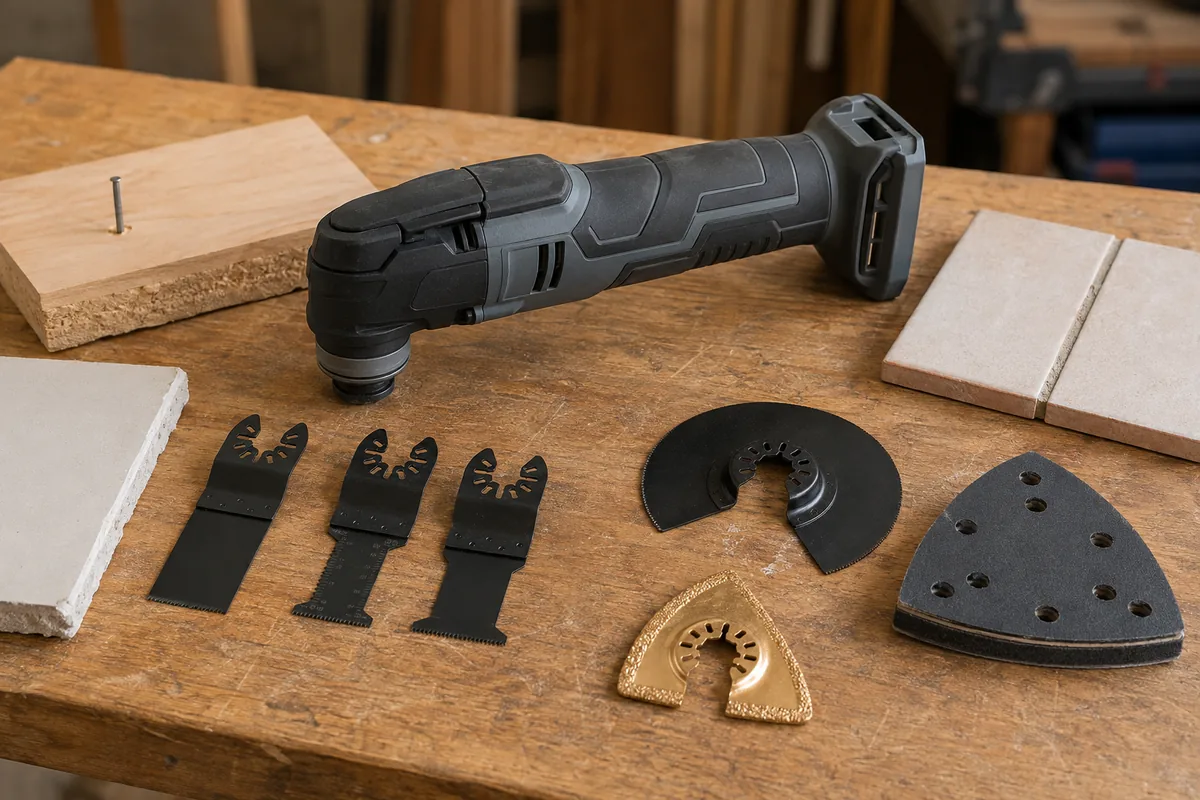
Editorial illustration: oscillating multitool beside cutting blades and a triangular sanding pad.

Starlock and universal-fit accessories can do the same cutting, sanding and scraping jobs, but they attach differently. The practical difference is how quickly and securely you can change a blade—and whether your existing oscillating tool accepts the mount. If you are buying a tool, the mount affects which accessories you can use. If you already … Read more

Milwaukee M18 Fuel Oscillating Tool vs Makita XMT04: Which Has Less Vibration During Detail Work?

Editorial illustration: oscillating multitool beside cutting blades and a triangular sanding pad.

For detail work, vibration is not just a comfort issue. It can make a blade wander, tire out your grip and leave a rougher cut when you’re trimming a jamb or scraping a small patch of adhesive. The Milwaukee M18 FUEL and Makita XMT04 are both cordless oscillating multi-tools with brushless motors and adjustable speed, … Read more

Best Reciprocating Saw Blade for Cutting Nail-Embedded Framing Lumber

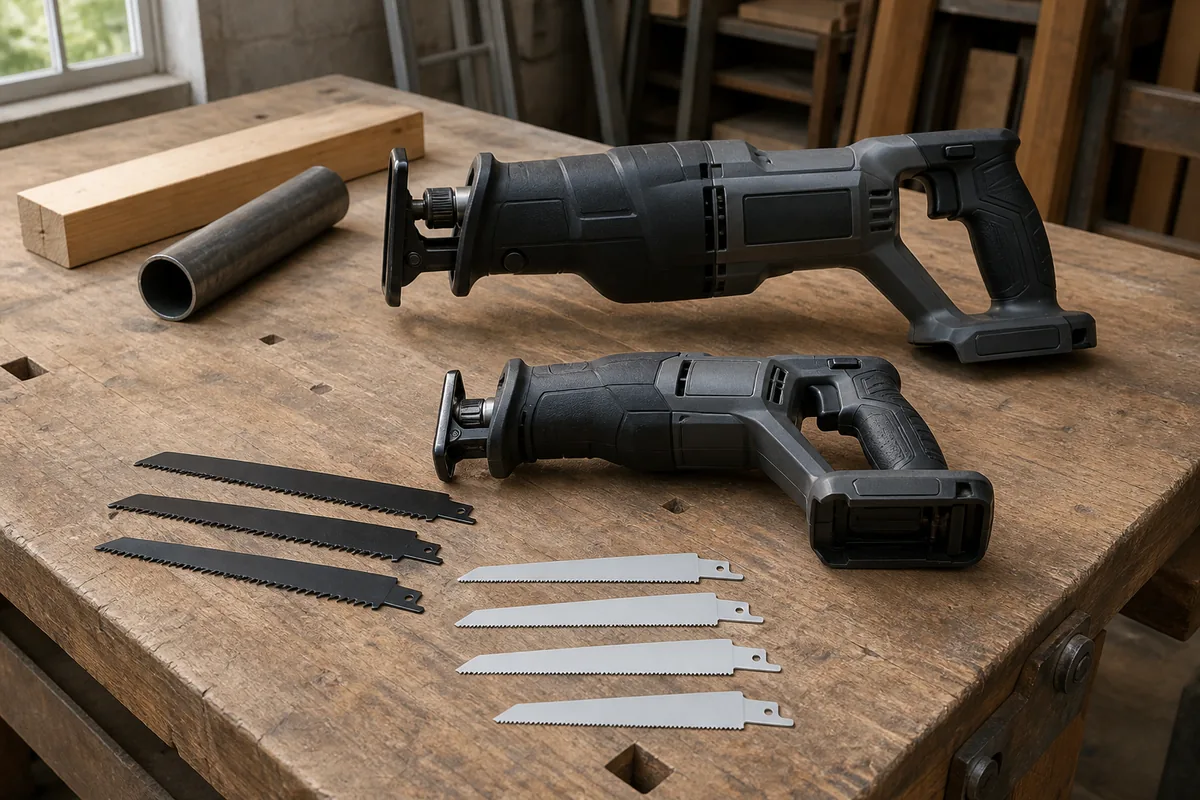
Editorial illustration: reciprocating saws with an assortment of straight blades.

For cutting framing lumber that still contains nails, the best all-around choice is a 6-inch, 6–10 TPI bi-metal reciprocating saw blade. It is long enough for most 2-by framing, flexible enough to tolerate some twisting, and made to cut both wood and embedded steel. For heavy demolition, a 9-inch version reaches farther; for cleaner, faster … Read more

DeWalt DCS386 vs Bosch GSA18V-28: Comparing Recip Saws for Demolition Framing

Editorial illustration: reciprocating saws with an assortment of straight blades.

DeWalt DCS386 vs Bosch GSA18V-28: What Separates Them The DeWalt DCS386 and Bosch GSA18V-28 are both cordless reciprocating saws aimed at framing, remodeling, and demolition work. Both use a 1-1/8-inch stroke and reach about 2,900 strokes per minute, so neither is a slow, light-duty saw on paper. The important difference is size and system design. … Read more

Compact Reciprocating Saw vs Full-Size Recip Saw: Which Fits Better Under Sinks?

Editorial illustration: reciprocating saws with an assortment of straight blades.

The short answer For occasional cuts under a sink, a compact reciprocating saw is usually easier to position and control. Its shorter body and lighter weight matter when you’re working around a cabinet floor, drain trap, shutoff valves, and your own forearm. A full-size recip saw makes more sense if you already own one, need … Read more

Milwaukee M18 Fuel Reciprocating Saw vs Makita XRJ08: Which Cuts Faster Through Cast Iron?

Editorial illustration: reciprocating saws with an assortment of straight blades.

Short answer: the blade matters more than the saw There is no dependable published, apples-to-apples test showing that the Milwaukee M18 FUEL reciprocating saw or Makita XRJ08 cuts cast iron faster. The result depends heavily on the particular saw generation, battery, blade and pipe condition. If you already own either platform, buy a suitable carbide-grit … Read more

Order backlinks