How to Set a Benchtop Planer’s Cutterhead for Consistent Thickness

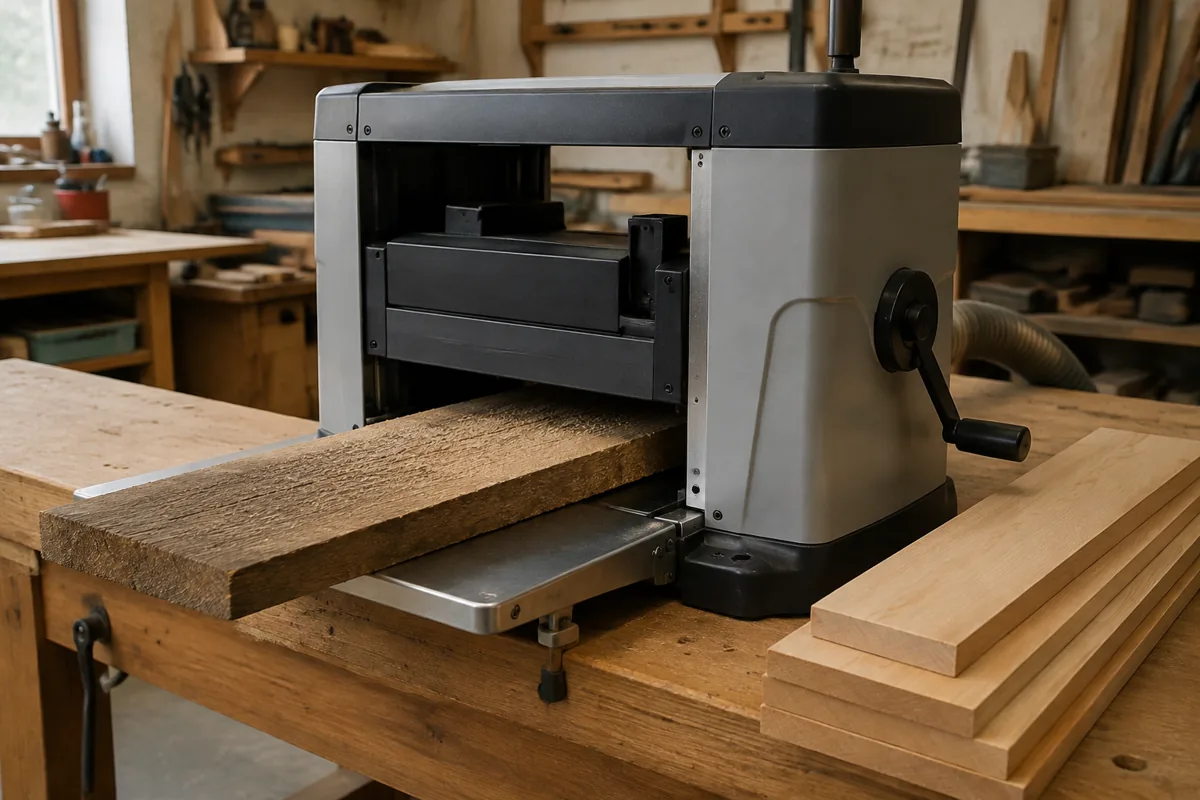
Editorial illustration: benchtop thickness planer with a board at its infeed table.

How to Set a Benchtop Planer’s Cutterhead for Consistent Thickness A benchtop planer produces repeatable thickness only when three things agree: the cutterhead is parallel to the bed, the knives or inserts are set correctly, and the stock enters the machine flat. Most “inconsistent planer” problems are not caused by the motor. They come from … Read more

DeWalt DW735 vs Makita 2012NB: Comparing Knife Changes and Maintenance

Editorial illustration: benchtop thickness planer with a board at its infeed table.

DeWalt DW735 vs Makita 2012NB: Comparing Knife Changes and Maintenance Knife changes are one of the practical differences between the DeWalt DW735 and Makita 2012NB. Both are portable 12-inch-class thickness planers, and both use disposable, reversible knives rather than a conventional permanently sharpened cutterhead. The job is not difficult on either machine, but the DeWalt … Read more

How to Choose Planer Knife Material for Hardwood Milling

Editorial illustration: benchtop thickness planer with a board at its infeed table.

Choosing planer knife material for hardwood milling is mostly a decision about edge life, impact resistance, and replacement cost. The right knife depends on the wood, the amount of material you remove, and whether you want to sharpen knives yourself or swap them when dull. A soft maple hobby project and a production run of … Read more

How to Reduce Snipe When Using a Benchtop Planer

Editorial illustration: benchtop thickness planer with a board at its infeed table.

Snipe is the shallow dip or deeper cut that appears at the beginning or end of a board after it passes through a benchtop planer. It happens when the board is supported by only one feed roller, allowing its weight to lift or drop the end as it enters or exits the cutterhead. Most benchtop … Read more

Order backlinks