What's inside
- Top 3 Picks
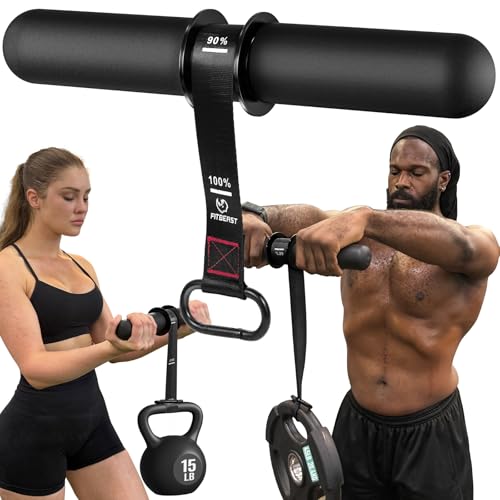
- Quick Comparison
- How We Chose
- 1. FitBeast 9-Pack Grip Strengthener Kit – Best for Complete Starter Coverage
- 2. FitBeast Forearm Strengthener Wrist Roller – Best for Plate-Loaded Forearm Volume
- 3. FitBeast Hand Exerciser Bars – Best for Therapy-Style Graded Squeezing
- 4. AIXPI Grip Strength Trainer – Best for Adjustable Single-Hand Grip Training
- 5. FitBeast Finger Strengthener 4-Pack – Best for Finger Isolation and Dexterity
- 6. Pnrskter Hand Grip Strengthener – Best for a Cheap Everyday Grip Habit
- 7. Sportneer Forearm Strengthener – Best for Self-Contained Adjustable Tension
- 8. Fitarc Wrist Rotation Trainer – Best for Pronation and Supination Training
- 9. Chirp Wrist Roller – Best for Travel and Light Loading
- 10. Beatvive Hand Exercise Web – Best for Finger Spread and Extensor Work
- 11. LIZAAL Forearm Strengthener – Best Premium All-Metal Wrist Roller
- 12. IMENSEAS Grip Strength Trainer 7-Pack – Best Budget Multi-Tool Bundle
- How to Choose
As an Amazon Associate I earn from qualifying purchases. This post may contain affiliate links at no extra cost to you.
The best wrist strengthener and exerciser tools for most people are the FitBeast Hand Grip Strengthener, Finger Exerciser, Forearm Strengthener Kit (9-Pack), because nine pieces spread across hand, finger and forearm work let you train every angle before you commit to a single resistance level. If you would rather own one adjustable device than a kit, the AIXPI Grip Strength Trainer adjusts from 11-132 lbs (5-60 kg) and is the cheapest way to progress in small, honest steps. If your training gap is rotation — pronation and supination, the movement most grip kits ignore — the Fitarc Wrist Rotation Trainer is the premium answer, and the LIZAAL all-metal wrist roller is the heavier-duty alternative. Budget buyers who simply want a dependable everyday gripper should look at the Pnrskter or the IMENSEAS 7-Pack. What actually decides suitability is not the brand badge: it is whether you need adjustable resistance, whether you need finger-level or whole-hand training, and whether your wrist needs rotational range-of-motion work. This guide compares all twelve on resistance, grip style, range of motion, portability, comfort and rehab-versus-sport fit.
Our Top Picks



Top 3 Picks
Best overall: FitBeast Hand Grip Strengthener, Finger Exerciser, Forearm Strengthener Kit (9-Pack). It is the only pick here that covers crush grip, finger isolation and forearm work in a single budget purchase, which makes it the right first buy for anyone who has not yet worked out which grip discipline they enjoy. The trade-off is that no single piece in the set is as refined as a dedicated mid-range tool.
Best budget: Pnrskter Hand Grip Strengthener, Finger Exerciser, Grip Strength Trainer. A cheap, simple, no-thinking gripper-plus-finger-exerciser combination that lives in a desk drawer or gym bag and asks nothing of you. It is the pick when you want to test whether you will actually train grip at all before spending mid-range money.
Best premium: Fitarc Wrist Rotation Trainer. It trains pronation and supination through a controlled arc, which is the movement pattern a gripper physically cannot reach. For climbers, racquet-sport players and anyone whose wrist strength lags their hand strength, it is the upgrade that changes what you can do rather than just how much you can squeeze.
Quick Comparison
| Product | Best for | Key specs | Price tier |
|---|---|---|---|
| FitBeast Hand Grip Strengthener, Finger Exerciser, Forearm Strengthener Kit (9-Pack) | Complete starter coverage in one box | 9 pieces; hand grip, finger and forearm tools; mixed adjustable and fixed resistance; pocket-sized pieces | Budget |
| FitBeast Forearm Strengthener & Forearm Exerciser, Wrist Roller | Plate-loaded forearm volume work | Wrist roller with cord and handle; loads standard weight plates; full flexion-extension range | Mid-range |
| FitBeast Hand Exerciser Bars for Physical Therapy | Therapy-style graded squeezing | Graded squeeze bars; light-to-heavy progression; simple, low-skill movement | Mid-range |
| AIXPI Grip Strength Trainer | One device with wide adjustable resistance | Adjustable 11-132 lbs (5-60 kg); single-hand gripper; dial or screw adjustment | Budget |
| FitBeast Finger Strengthener, Finger Exerciser 4-Pack | Finger isolation and dexterity | 4 finger exercisers; individual-finger spring tension; trains each digit separately | Mid-range |
| Pnrskter Hand Grip Strengthener, Finger Exerciser | Cheap everyday grip habit | Gripper plus finger exerciser; compact; fixed or simple adjustable resistance | Budget |
| Sportneer Forearm Strengthener with Adjustable Tension | Self-contained forearm work, no plates | Adjustable tension mechanism; wrist roller format; no external weights needed | Mid-range |
| Fitarc Wrist Rotation Trainer | Pronation and supination training | Rotation roller on a fixed axis; loadable or tension-based resistance; premium build | Premium |
| Chirp Wrist Roller, 1lb | Travel and light loading | 1 lb roller; cord and handle; packs flat; light enough for a carry-on | Mid-range |
| Beatvive Hand Exercise Web | Finger spread and extensor work | Web format with finger loops; progressive resistance; trains opening, not closing | Mid-range |
| LIZAAL Forearm Strengthener, Adjustable All-Metal Grip Strength Trainer | All-metal durability and heavy use | All-metal adjustable grip trainer plus wrist roller; heavy-duty construction; long service life | Premium |
| IMENSEAS Grip Strength Trainer 7 Pack | Budget variety bundle | 7 pieces; adjustable hand gripper; finger stretcher resistance extensor bands; finger tools | Budget |
How We Chose
Every product here was selected by reading the listings against six criteria, not by handling the items. The first filter was movement coverage: does the tool train crush grip, finger isolation, wrist flexion and extension, or rotation? A product that duplicates a movement already covered by a cheaper option had to justify itself on build or range of motion. The second was resistance adjustability — a device that spans a wide range such as 11-132 lbs (5-60 kg) serves a beginner and a year-two trainee, while a fixed-resistance tool serves only one stage and has to be priced accordingly. Third, grip style: whole-hand, individual-finger, bar, web or roller each load the hand differently, and the set needed to contain at least one of each major style. Fourth, range-of-motion quality — cord length on rollers, arc on rotation trainers, and whether full closure or partial-range work is possible. Fifth, portability and comfort: weight, packed size, handle diameter and whether the surface is bare metal, knurled or foam-wrapped. Sixth, the upgrade path: does the product sit at the bottom of a ladder you can climb, or is it a dead end? We did not test, benchmark or own any of these items; the judgments come from stated specifications, category norms and known brand positioning.
1. FitBeast 9-Pack Grip Strengthener Kit – Best for Complete Starter Coverage
As an Amazon Associate we earn from qualifying purchases at no extra cost to you.

This is the pick for someone starting from zero who does not yet know which half of grip training they will actually stick with. Because the set spreads nine pieces across hand, finger and forearm work, it lets you sample crush grip, individual-finger squeezing and extensor training before you spend mid-range or premium money on a specialised tool. It suits home users building a first routine, climbers establishing a base, and anyone who wants one box that covers an entire session rather than three separate purchases.
Key specs
- Format: multi-piece kit — nine items in the set
- Movement coverage: hand grip (crush), finger strength, forearm and wrist work
- Resistance type: a mix of adjustable and fixed-resistance pieces within the kit
- Grip styles present: whole-hand squeeze, individual-finger squeeze, band or extensor work
- Portability: individual pieces are pocket-sized; the full kit travels in a small pouch or bag
- Skill level: beginner to early intermediate
- Price tier: budget
The real strength of a kit at this price is optionality. A single adjustable gripper locks you into one movement and one grip width; nine pieces let you rotate through crush grip on Monday, finger work on Wednesday and extensor band work on Friday, which matters because the finger flexors recover slowly and benefit from being trained from more than one angle across a week. The variety also solves the most common beginner failure mode: buying a gripper, using it enthusiastically for two weeks, then leaving it in a drawer because there is nothing else to do with it.
Where a kit like this loses ground is refinement. The individual pieces are functional rather than luxurious — expect plastic or light metal handles, basic spring mechanisms, and grips that are comfortable enough for 10-15 reps but not for long, heavy sets. If you already know you want to chase heavy plate-loaded wrist roller work, the FitBeast Forearm Strengthener Wrist Roller below is a better second purchase than a second kit.
Pros
- Covers hand, finger and forearm movements in one budget purchase, so you can find your preferred discipline before specialising
- Nine pieces give genuine session variety, which improves adherence for beginners
- Every piece is small and light, so the kit fits in a desk drawer, gym bag or carry-on
- Low financial risk — the cheapest way to discover whether grip training is something you will keep doing
- Useful as a warm-up station alongside heavier tools later on
Cons
- No piece is as refined or as durable as a dedicated mid-range tool, so the kit is a starting point rather than a destination
- Fixed-resistance pieces cannot be progressed, so they stop being useful as you get stronger
- No rotational training — pronation and supination are not covered
- Cheaper handles can become uncomfortable once you move to higher repetitions or heavier resistance
Against the nearest alternative, the IMENSEAS 7-Pack, this kit wins on breadth and loses slightly on focus. The IMENSEAS bundle leans harder into adjustable gripping and extensor bands, which is better if you already know those are your two priorities; the FitBeast nine-piece spreads wider across movement types, which is better if you do not yet know. Against the Pnrskter set, the FitBeast kit is the larger and more structured purchase, while the Pnrskter is the simpler, cheaper entry point. If you want one box and no further decisions for six months, take this one.
2. FitBeast Forearm Strengthener Wrist Roller – Best for Plate-Loaded Forearm Volume

The wrist roller is the classic forearm builder, and this FitBeast version is the pick for anyone who wants to load real weight rather than squeeze a spring. You attach plates, roll the cord up by flexing and extending the wrists, and repeat. It suits lifters chasing forearm size, climbers who need wrist endurance under load, and anyone whose grip fails before their back does on deadlifts or rows. It is a mid-range purchase aimed at people who already train consistently.
Key specs
- Format: wrist roller — a cylindrical bar with a cord and a loading point for standard weight plates
- Movement coverage: wrist flexion and extension through a full arc, plus isometric grip on the bar
- Resistance type: external — you supply the plates, so resistance is effectively unlimited
- Grip style: straight-bar or handled grip, depending on the handle design
- Range of motion: determined by cord length; longer cords mean more rolling per set
- Portability: compact but heavy once loaded; the roller itself packs small, the plates do not
- Skill level: beginner to advanced
- Price tier: mid-range
What makes plate-loaded rollers worth the extra effort over a spring device is that resistance is honest and continuous. A gripper gives you a resistance curve that peaks at closure; a roller loaded with plates gives you constant tension through the entire roll, in both directions, which is much closer to how the forearm works when you carry, climb or hold something heavy. Because you choose the plates, the same tool works for a beginner with a single 5 lb plate and for a strong trainee rolling a 25 lb plate for time.
The practical friction is setup. You need plates, a place to stand, and enough ceiling clearance to let the roller hang at arm’s length. It is not a device you use while watching television unless you keep a plate handy under the sofa. The other consideration is technique: rolling with the arms locked out and the elbows still is what isolates the forearm; letting the shoulders swing turns it into a much easier exercise with far less benefit.
Pros
- Resistance is limited only by the plates you own, so it never becomes obsolete
- Constant tension through the full range trains both wrist flexion and extension
- Excellent carryover to pulling movements, carrying and climbing
- Simple, robust mechanism with very little to break
- Compact to store compared with most other strength equipment
Cons
- Requires weight plates, which many beginners do not own
- Loading and unloading plates between sets adds friction to short sessions
- No finger isolation and no rotational training
- Standing clearance and a stable stance are needed, so it is not a desk or sofa tool
- Easy to cheat with shoulder movement if you are not careful about form
Compared with the Sportneer Forearm Strengthener, which builds tension into the device itself and needs no plates, this FitBeast roller is the better choice if you already own plates and want unlimited progression; the Sportneer is better if you want to travel light and never think about loading. Compared with the Chirp Wrist Roller, this one is the heavier, more gym-bound tool, while the Chirp is the 1 lb travel companion. If your goal is forearm size and you lift at home with plates nearby, this is the one.
3. FitBeast Hand Exerciser Bars – Best for Therapy-Style Graded Squeezing

Graded squeeze bars are the least intimidating tool in this entire roundup. Each bar is a simple shape you close in your hand, with resistance rising from bar to bar, so you can work at a level that feels manageable on a given day. This set is marketed for physical-therapy-style use and for improving grip strength, and it suits people recovering from a layoff, older users who find spring grippers too aggressive at the start, and anyone who wants a low-skill tool with an obvious progression. Persistent or undiagnosed hand and wrist pain is a matter for a qualified professional, not a piece of equipment.
Key specs
- Format: individual squeeze bars of graded resistance, sold as a set
- Movement coverage: whole-hand crush grip, with some finger involvement depending on hand position
- Resistance type: fixed per bar, with progression achieved by moving up the set
- Grip style: full-hand squeeze, no finger loops or individual-digit loading
- Range of motion: partial to full closure depending on bar stiffness and hand size
- Comfort: smooth, rounded shapes that spread pressure across the palm
- Price tier: mid-range
The advantage of graded bars over an adjustable gripper is psychological and physical simplicity. There is no dial to set, no spring to position, no technique to learn — you pick up a bar and squeeze. For someone returning to activity after a break, that removes a layer of decisions at exactly the moment when decisions feel like obstacles. The graded format also makes progression visible: moving from the lightest bar to the next one is a concrete milestone rather than an abstract number.
The limitation is that graded resistance is coarse. An adjustable gripper lets you move in increments; a bar set moves you in steps, and those steps can be too large once you are in the middle of the range. Bars also cannot be loaded progressively beyond the heaviest one in the set, so they tend to become warm-up tools once you get genuinely strong.
Pros
- Extremely simple to use — no adjustment, no setup, no learning curve
- Graded resistance makes progression obvious and easy to track
- Comfortable, palm-friendly shape suits higher repetitions and sensitive hands
- Good choice for older users or anyone easing back into grip training
- Compact and durable, with essentially no mechanism to fail
Cons
- Resistance steps can be too large once you are mid-range
- No finger isolation, no rotational work and no wrist flexion or extension
- Cannot be progressed beyond the heaviest bar in the set
- Not a tool for heavy loading or forearm size
- Marketed for therapy-adjacent use, but equipment is not a substitute for professional assessment
Against the AIXPI Grip Strength Trainer, the choice is between granularity and simplicity. The AIXPI spans a continuous 11-132 lbs (5-60 kg), which is far more adjustable, but it requires you to set a resistance and monitor it. The bars require nothing. Against the FitBeast 9-Pack, these bars are the more focused purchase — better if squeeze comfort and clear progression are your priorities, worse if you want finger and extensor work in the same box.
4. AIXPI Grip Strength Trainer – Best for Adjustable Single-Hand Grip Training
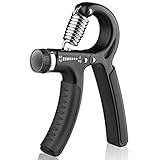
This is the cheapest serious answer to the question “what resistance should I start with?” The AIXPI gripper adjusts from 11-132 lbs (5-60 kg), which means one device can serve a beginner, a returning trainee and a reasonably strong intermediate without ever needing to be replaced. It suits anyone who wants a single, adjustable, pocket-sized gripper and does not care about finger isolation or rotational work. It is a budget purchase with an unusually wide resistance span for the money.
Key specs
- Format: single-hand adjustable gripper
- Resistance range: 11-132 lbs (5-60 kg), adjustable
- Adjustment mechanism: dial or screw-style resistance selector
- Movement coverage: whole-hand crush grip only
- Grip style: full-hand squeeze across a single handle width
- Portability: pocket-sized and light — the most portable pick in this roundup
- Price tier: budget
The 11-132 lbs span deserves a moment of context. Commonly cited grip-strength norms put an average adult man’s dominant-hand grip somewhere in the region of 100 lb (about 45 kg) and an average adult woman’s in the region of 65 lb (about 30 kg), though these figures vary widely with age, body size and training history. That means the AIXPI’s range covers the full span from a light rehabilitation-adjacent load up to a resistance that most recreational trainees will not close comfortably. You are unlikely to outgrow it quickly, which is rare at this price.
Where it falls short is in what it cannot do. A gripper trains one movement — crush — and one grip width. It will not develop finger independence, extensor strength or wrist rotation, and it will not train the forearm through a range of motion. Pairing it with a web or extensor band and a wrist roller is the standard way to build a complete hand and wrist programme around it.
Pros
- Exceptionally wide adjustable range for the price — 11-132 lbs (5-60 kg)
- One device covers beginner through intermediate without replacement
- Highly portable; fits a pocket, glovebox or laptop bag
- Simple to progress in small, measurable increments
- Low cost makes it an easy addition alongside a kit rather than a substitute for one
Cons
- Crush grip only — no finger isolation, extensor or rotational training
- Fixed handle width, which will not suit every hand size equally well
- Budget construction means the adjustment mechanism and spring are the parts to watch over time
- Single-hand use means you train one side at a time, doubling session time
- No range-of-motion work for the wrist itself
Compared with the Pnrskter set, the AIXPI is the more precise tool — a continuous resistance range against a fixed-resistance gripper — while the Pnrskter adds a finger exerciser that the AIXPI lacks. Compared with the FitBeast 9-Pack, the AIXPI is deeper where it plays (adjustable grip) and much narrower overall. If you want one device and a number you can adjust, buy this; if you want breadth, buy the kit.
5. FitBeast Finger Strengthener 4-Pack – Best for Finger Isolation and Dexterity

Most grip tools train the hand as a single unit. This four-pack trains fingers individually, which is exactly what you need if your weak link is a specific digit rather than your whole hand. It suits climbers working on crimp and pocket strength, musicians and anyone whose dexterity matters to their sport or job, and people who have noticed that their ring and little fingers lag behind. It is a mid-range, focused purchase rather than a general-purpose one.
Key specs
- Format: four individual finger exercisers
- Movement coverage: individual-finger flexion, with some grip-style variation between pieces
- Resistance type: spring or tension-based, graded across the four units
- Grip style: per-finger loading via loops, pads or trigger-style levers
- Range of motion: full finger flexion, with extension trained separately if the set allows
- Portability: each unit is palm-sized; the set fits in a small pouch
- Price tier: mid-range
The value of per-finger training is that it exposes asymmetry. Most people have a dominant hand that is meaningfully stronger and a little finger that is noticeably weaker than the index and middle fingers — something a whole-hand gripper will never reveal because the strong fingers carry the load. Working fingers individually corrects that imbalance, and for climbers in particular, finger strength per digit is far more relevant than aggregate squeeze force.
The trade-off is time. Four devices, one finger group at a time, means a session takes longer than three sets on a gripper. The other consideration is that finger tendons adapt more slowly than muscle, so progression should be conservative — small resistance increases, plenty of recovery, and no heroics. Tendon discomfort that persists is a signal to stop and get professional advice rather than push through.
Pros
- Trains fingers individually, exposing and correcting left-right and digit-to-digit imbalances
- Directly relevant for climbers, musicians and anyone needing fine dexterity
- Four units give graded progression without buying anything extra
- Small and light enough to keep in a pocket for micro-sessions
- Complements a gripper rather than duplicating it
Cons
- Sessions take longer because each finger is trained separately
- Narrow focus — it does not build overall grip strength on its own
- Requires more discipline about progression, since finger tendons recover slowly
- Fixed resistance per unit, so each device eventually tops out
- Easy to overdo it early if you treat finger work like a normal strength exercise
Against the FitBeast 9-Pack, this four-pack is the specialist’s purchase: less variety, much more precision. Against the Beatvive Hand Exercise Web, the split is by direction — the web trains the fingers opening outward and the extensors, while these exercisers train the fingers closing. Many people benefit from both, since the finger extensors are the most neglected muscles in the forearm. If you already own a gripper and want the next level of detail, this is the natural step.
6. Pnrskter Hand Grip Strengthener – Best for a Cheap Everyday Grip Habit

The Pnrskter set is the lowest-commitment way to find out whether you will actually train grip. It pairs a hand gripper with a finger exerciser, keeps both small enough for a desk drawer, and costs little enough that abandoning it would not feel like a loss. It suits beginners, casual gym-goers, and anyone who wants a simple tool to squeeze during phone calls or between work tasks.
Key specs
- Format: gripper plus finger exerciser combination
- Movement coverage: whole-hand crush grip and basic finger flexion
- Resistance type: fixed or simply adjustable, depending on the variant
- Grip style: full-hand squeeze, plus individual-finger loading on the exerciser
- Portability: very high — both pieces are pocket-sized
- Comfort: basic grip surfaces, adequate for moderate repetitions
- Price tier: budget
What this set does well is remove every excuse. It is cheap, it is small, it requires no setup and no plates, and it can sit on a desk where you will see it. For building a habit — which is the real bottleneck in grip training for most people — those qualities matter more than peak resistance or build quality. It also gives you two movement types for the price of one, which is more than a single fixed gripper offers.
The honest limitations are durability and ceiling. At this price, the spring and the grip material are the parts that wear first: springs lose tension with heavy use, and foam or plastic handles compress and eventually split. The resistance range is also narrow compared with an adjustable gripper, so a committed trainee will outgrow it within a year. Think of it as a starter tool with a clear expiry date rather than a lifelong piece of equipment.
Pros
- Very low cost makes it an easy first purchase or a gift
- Two movement types — grip and finger flexion — in one small set
- Highly portable and always within reach, which supports habit building
- No setup, no plates and no learning curve
- Fine as a warm-up tool even after you upgrade to better equipment
Cons
- Narrow resistance range, so progression stalls quickly
- Budget springs and grip surfaces are the first things to wear out
- No rotational or wrist range-of-motion training
- Basic comfort — not ideal for high-volume or heavy work
- Adjustability, where present, is coarse compared with a dial-style gripper
Against the AIXPI Grip Strength Trainer, the Pnrskter wins on breadth and loses on precision: you get a finger exerciser too, but the gripper resistance is far less adjustable than 11-132 lbs (5-60 kg). Against the IMENSEAS 7-Pack, the Pnrskter is the leaner buy — fewer pieces, less to lose — while the IMENSEAS gives more variety for a similar outlay. If you want the cheapest possible honest start, take the Pnrskter.
7. Sportneer Forearm Strengthener – Best for Self-Contained Adjustable Tension
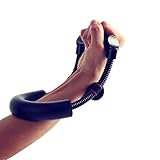
This is the wrist roller for people who do not own weight plates. Instead of loading external weight, the Sportneer device builds resistance into the mechanism and lets you adjust it, so the whole tool is self-contained. It suits apartment dwellers, travellers, and anyone who wants forearm flexion and extension work without buying a set of plates or finding ceiling clearance for a hanging load.
Key specs
- Format: wrist roller with an integrated adjustable tension mechanism
- Movement coverage: wrist flexion and extension through a rolling arc
- Resistance type: self-contained and adjustable — no external plates required
- Grip style: handle grip with the wrists driving the roll
- Range of motion: full roll in both directions, set by cord or strap length
- Portability: moderate — larger than a gripper, but no plates to carry
- Price tier: mid-range
The advantage over a plate-loaded roller is friction-free setup. There is nothing to load, nothing to unload, and no need for a plate tree nearby, which means the tool actually gets used in short windows. Adjustable tension also means you can dial the resistance down for higher-repetition endurance work or up for short, hard sets, all on the same device — something a fixed plate cannot do without physically changing the weight.
The trade-off is that a tension mechanism has a resistance curve, and that curve is not identical to a hanging plate. Some users find the resistance builds as the roll progresses rather than staying constant. That is not a flaw so much as a characteristic: it makes the tool better for endurance and control work and slightly less pure for maximal loading. The mechanism is also the part that wears, unlike a simple roller with a cord.
Pros
- No weight plates needed — genuinely self-contained
- Adjustable tension covers both endurance and heavier work on one device
- Fast setup, so it fits short training windows
- Compact and easy to store compared with a loaded barbell or plate stack
- Good for travellers who still want forearm work in a hotel room
Cons
- Resistance curve is not identical to a hanging plate load
- The tension mechanism is the wear point and cannot be repaired as easily as a cord
- Maximum resistance is capped by the mechanism, unlike a plate-loaded roller
- No finger isolation or rotational training
- Bulkier than a gripper, so it is not a pocket tool
Against the FitBeast Forearm Strengthener Wrist Roller, the Sportneer is the better buy if you do not own plates and want zero setup; the FitBeast is better if you do own plates and want unlimited, honest loading. Against the Chirp Wrist Roller, the Sportneer is the more capable training tool, while the Chirp is the lighter and more portable one. If you train at home in a small space, this is arguably the most practical forearm tool in the list.
8. Fitarc Wrist Rotation Trainer – Best for Pronation and Supination Training

Pronation and supination — turning your palm down and palm up against resistance — is the one movement pattern almost every other product in this roundup ignores. The Fitarc rotation trainer exists specifically for it, using a handle that rotates on a fixed axis so the forearm does the turning rather than the shoulder. It suits climbers, racquet-sport players, throwers, and anyone whose wrist rotation feels weak or uncontrolled. It is a premium purchase aimed at people who already train and have identified this as a gap.
Key specs
- Format: wrist rotation trainer with a handle on a fixed rotational axis
- Movement coverage: pronation and supination through a controlled arc
- Resistance type: loadable or tension-based, depending on configuration
- Grip style: handle grip with the forearm rotating around a stable axis
- Range of motion: designed to train the full rotation arc rather than a partial one
- Build: premium construction intended for repeated use
- Price tier: premium
Why this matters: the forearm contains two distinct functional groups — the flexors and extensors that drive the wrist, and the pronators and supinators that rotate it. Grippers and wrist rollers train the first group hard and the second group barely at all. Adding rotation work fills that hole, and for sports where you twist a handle, throw an object or set a hold at an angle, rotational strength is often the limiting factor rather than raw squeeze force. Training it deliberately, with controlled tempo and full range, is very different from hoping it develops on its own.
The cost of entry is the main objection. A rotation trainer is a specialist tool at a premium price, and it does not replace a gripper or a roller — it sits alongside them. That means it is the right buy for someone who has already covered the basics and wants the missing movement, and the wrong buy as a first purchase. As with any wrist work, sharp pain during rotation is a reason to stop and consult a professional rather than train through it.
Pros
- Trains pronation and supination, a movement pattern no gripper or roller can replicate
- Fixed axis encourages proper form and keeps the shoulder out of the movement
- Premium build intended to withstand years of regular use
- Highly relevant for climbers, racquet sports and throwing athletes
- Fills the most commonly neglected gap in hand and wrist programmes
Cons
- Premium price for a tool that does one thing
- No grip or finger strengthening — it is a complement, not a replacement
- Requires some coaching or care to use correctly, since rotation is easy to fake with the shoulder
- Less useful for pure grip-strength goals
- Heavier and less portable than a gripper
Against the LIZAAL Forearm Strengthener, which combines an all-metal adjustable grip trainer with a wrist roller, the Fitarc is the narrower but more specialised tool: it wins decisively on rotation and loses on breadth. Against the FitBeast Wrist Roller, the Fitarc adds a movement the roller cannot reach, but the roller adds loading the Fitarc cannot match. If you want one premium upgrade and rotation is your weakness, this is the pick.
9. Chirp Wrist Roller – Best for Travel and Light Loading

At 1 lb, the Chirp Wrist Roller is the lightest and most portable roller here. It is built for people who want forearm work wherever they happen to be — a hotel room, a small apartment, a shared office — and who value a tool that packs flat and weighs almost nothing. It suits frequent travellers, beginners easing into roller work, and anyone who wants a low-load option for higher repetitions and endurance.
Key specs
- Format: lightweight wrist roller with cord and handle
- Weight: 1 lb for the roller itself
- Movement coverage: wrist flexion and extension through a rolling arc
- Resistance type: light — suitable for higher-repetition endurance work, loadable if the design allows
- Portability: excellent; packs flat and adds negligible weight to a bag
- Grip style: handle grip, wrists driving the roll
- Price tier: mid-range
The case for a 1 lb roller is that most people train their forearms far too heavy and far too infrequently. Light resistance for high repetitions, done often, builds the endurance that actually shows up in climbing, carrying and long gripping tasks, and it does so with much less joint stress than heavy rolling. A roller light enough to travel also means the tool is present on the days you would otherwise do nothing, which is worth more than a heavier tool that stays at home.
The obvious limitation is ceiling. If your goal is maximum forearm size, 1 lb of resistance is a starting point, not a destination — you will need to add weight or move to a plate-loaded roller. It is also less stable under heavy loads than a metal roller, by design. Treat it as the endurance and consistency tool in a collection rather than the strength tool.
Pros
- At 1 lb it is genuinely travel-friendly and packs flat
- Ideal for high-repetition endurance work with low joint stress
- Light weight makes it easy to use for longer sets without grip fatigue ending the set early
- Simple construction with very little to go wrong
- Good entry point for anyone intimidated by loaded rolling
Cons
- Light resistance means limited value for maximum strength or size goals
- Less stable than a metal roller under heavier loads
- No finger isolation or rotational training
- Progressing beyond endurance work requires adding weight or buying a second tool
- Premium-adjacent price for a very light implement
Against the FitBeast Forearm Strengthener Wrist Roller, the split is purpose: the FitBeast is the gym tool for serious loading, the Chirp is the travel tool for volume and consistency. Against the Sportneer Forearm Strengthener, the Chirp is lighter and simpler but lacks adjustable tension. If you travel more than you train at home, the Chirp is the roller that will actually get used.
10. Beatvive Hand Exercise Web – Best for Finger Spread and Extensor Work

The web format trains the opposite direction from every gripper in this list. Instead of closing your hand, you push your fingers outward against resistance, which loads the finger extensors and the muscles that spread the fingers apart. That makes it the natural partner to a gripper, and it suits anyone who has built grip strength but neglected the other side of the joint — which is most people. It is a mid-range, specialised tool for a genuinely under-trained movement.
Key specs
- Format: web with individual finger loops or pockets
- Movement coverage: finger extension and abduction (spreading), plus some flexion depending on use
- Resistance type: progressive, graded across loops or bands
- Grip style: per-finger, with each digit seated in its own loop
- Range of motion: full finger extension and spread
- Portability: very high — flat, light and pocketable
- Price tier: mid-range
Extensor training is the most neglected corner of hand strength. The flexors get worked by every gripper, every carry and every pull; the extensors get worked by almost nothing in daily life. Training them improves balance across the joint, and many people find that finger spread and extension work changes how their hands feel during long gripping tasks. The web format also allows each finger to work independently, so a weak ring or little finger cannot hide behind a strong index finger.
It is not a grip-strength tool in the conventional sense — you will not build crushing power with it. It is a balance tool, and its value depends on whether you already train the closing side. Someone with no gripper will find the web alone unsatisfying; someone who has been squeezing for a year and has never opened their hand against resistance will find it unexpectedly humbling.
Pros
- Trains finger extension and abduction — the most neglected hand movements
- Balances a programme dominated by gripping and squeezing
- Each finger works independently, exposing specific weaknesses
- Flat, light and extremely portable
- Progressive resistance in a very small package
Cons
- Does not build crush grip — it is a complement, not a substitute
- Resistance ceiling is low compared with a gripper
- Requires you to already train the closing side to be worthwhile
- Loops can feel tight or loose depending on finger size
- Easy to underestimate; overdoing extension work can leave fingers sore for days
Against the FitBeast Finger Strengthener 4-Pack, the web and the exercisers are opposites that pair well: the four-pack trains fingers closing, the web trains them opening. Against the FitBeast 9-Pack, which includes extensor-style work as part of a broader kit, the Beatvive web is the more focused and probably more comfortable version of the same idea. If you own one gripper and nothing else, this is the best second purchase you can make.
11. LIZAAL Forearm Strengthener – Best Premium All-Metal Wrist Roller

The LIZAAL unit combines an adjustable all-metal grip trainer with a wrist roller, which makes it the closest thing here to a two-in-one premium tool. Metal construction matters because the parts that fail on cheaper equipment are almost always plastic: handles crack, adjustment dials strip, and grip surfaces compress. An all-metal build is the durability answer, and it suits heavy users, small gyms and anyone who would rather buy once than replace a budget tool every year.
Key specs
- Format: combination device — adjustable grip trainer plus wrist roller
- Construction: all-metal, with adjustable resistance on the grip portion
- Movement coverage: crush grip and wrist flexion/extension
- Resistance type: adjustable, plus loading or tension for the roller function
- Grip style: whole-hand squeeze and handle grip
- Durability: designed for repeated heavy use rather than occasional sessions
- Price tier: premium
The economics of premium metal equipment are straightforward if you use it. A budget gripper that loses spring tension after a year of hard use costs less up front but gets replaced; an all-metal adjustable tool with no plastic wear points can plausibly last many times longer. For someone training grip three or four times a week, the cost per session over several years is comparable, and the metal tool spends none of that time being a disappointment. There is also a comfort argument: metal handles with a proper grip surface do not deform under load the way foam does.
The drawbacks are weight, price and the absence of rotation. It is heavier than any pocket gripper, it costs premium money, and it still does not train pronation and supination — for that you need the Fitarc trainer. It is also worth noting that metal handles demand slightly more attention to hand position, since there is less padding to forgive a poor grip.
Pros
- All-metal construction removes the plastic wear points that end the life of cheaper tools
- Combines two movement types — grip and wrist rolling — in one purchase
- Adjustable resistance serves a wide range of strength levels
- Comfortable and stable under heavier loads than foam-handled equivalents
- Long service life makes the premium price defensible for regular users
Cons
- Premium price, and heavier than a pocket gripper
- No rotational training — pronation and supination still need a separate tool
- Metal handles offer less padding, so hand position matters more
- Overkill for someone who trains grip once a week
- Two functions in one device means neither may be as specialised as a dedicated tool
Against the Fitarc Wrist Rotation Trainer, the LIZAAL is broader but shallower: two common movements done well, against one rare movement done specifically. Against the FitBeast Wrist Roller, the LIZAAL adds adjustable grip and metal construction but costs considerably more. If you want a single durable tool that covers grip and rolling, and you will use it several times a week, this is the buy-once option.
12. IMENSEAS Grip Strength Trainer 7-Pack – Best Budget Multi-Tool Bundle
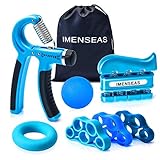
The IMENSEAS bundle takes a different approach to the budget problem: rather than one tool, it gives you seven, centred on an adjustable hand gripper plus finger stretcher resistance extensor bands and finger tools. It suits buyers who already know that adjustable gripping and extensor work are their priorities, and anyone who wants maximum variety per pound spent without committing to a mid-range purchase.
Key specs
- Format: seven-piece bundle
- Core pieces: adjustable hand gripper plus finger stretcher resistance extensor bands
- Movement coverage: crush grip, finger flexion and finger extension
- Resistance type: adjustable on the gripper; graded on the bands
- Grip style: whole-hand squeeze, per-finger loading, and extensor spread
- Portability: high — all pieces are small and light
- Price tier: budget
What makes this bundle interesting is that it covers both directions of finger movement — closing with the gripper and opening with the extensor bands — which is more balanced than most budget sets. Extensor bands are also unusually good value as a training tool: they are light, they last reasonably well if stored away from heat and sunlight, and they train a movement most people never touch. Adding an adjustable gripper on top means you get progression and balance in the same box.
The usual budget caveats apply. Band resistance degrades over time, especially with heavy use and poor storage; the adjustable gripper mechanism is the part most likely to develop play; and seven pieces means several will go unused. That last point is not really a fault — it is the nature of a bundle — but it is worth being honest that most buyers will settle on two or three favourites.
Pros
- Covers both grip closing and finger extension, which is more balanced than most budget sets
- Seven pieces for a budget price, so the cost per tool is very low
- Adjustable gripper provides real progression rather than fixed resistance
- Extensor bands train a movement most people neglect entirely
- All pieces are small and easy to store or carry
Cons
- Band resistance degrades over time, particularly with heat and sunlight exposure
- Budget gripper mechanism is the likely first failure point
- Seven pieces means several will rarely be used
- No wrist roller, no rotation training, no plate loading
- Build quality is functional rather than refined
Against the FitBeast 9-Pack, the IMENSEAS is the more focused bundle — heavier on adjustable grip and extensor work, lighter on overall variety — while the FitBeast spreads wider across movement types. Against the Pnrskter set, the IMENSEAS gives noticeably more for a similar outlay, at the cost of a slightly larger footprint. If your two priorities are adjustable grip and extensor balance, this is the best budget bundle in the list.
How to Choose
Choosing a wrist strengthener is easier once you accept a simple fact: no single tool trains the whole hand and wrist. Grip strength breaks down into several distinct movements, and the right purchase depends on which of them you are currently missing. Work through the categories below in order, and the product choice usually makes itself.
Start with the movement, not the product
There are five movement patterns worth separating. Crush grip is closing the hand against resistance — grippers, squeeze bars, hand exercisers. Pinch grip is holding something between the thumb and fingers, which most tools here do not train directly. Finger flexion and extension is closing and opening individual digits — finger exercisers and exercise webs. Wrist flexion and extension is curling and uncurling the wrist through a range — wrist rollers. Pronation and supination is rotating the forearm palm-down and palm-up — rotation trainers only.
If you own nothing, cover crush grip and wrist flexion first, because those two carry over to the widest range of daily and sporting tasks. If you already own a gripper, your gap is almost certainly extension and rotation, which means an exercise web or extensor bands plus a rotation trainer. Buying a second gripper when your fingers cannot open against resistance is the most common wasted purchase in this category.
Resistance: what the numbers actually mean
Commonly cited grip-strength norms put an average adult man’s dominant-hand grip in the region of 100 lb (about 45 kg) and an average adult woman’s in the region of 65 lb (about 30 kg), with wide variation by age, size and training history. Those figures describe a maximal squeeze, not a training load. For repetition work you want something you can close for 10-15 controlled repetitions, which usually means starting well below your maximum.
This is why an adjustable gripper spanning a wide range — the AIXPI’s 11-132 lbs (5-60 kg) is the broadest here — is so useful. You can start