What's inside
- Best microphone boom arms for desk setups at a glance
- Elgato Wave Mic Arm LP: best for a clear, low-profile desk
- RØDE PSA1+: best all-rounder for reach and movement
- Samson MBA38: best reach on a budget
- Heil Sound PL-2T: best for broadcast microphones and hidden cabling
- How to choose by desk, microphone, and working habits
- Check the fit before ordering
- Cable management and stability details that listings omit
- Ownership and maintenance
- Final recommendation
As an Amazon Associate I earn from qualifying purchases. This post may contain affiliate links at no extra cost to you.
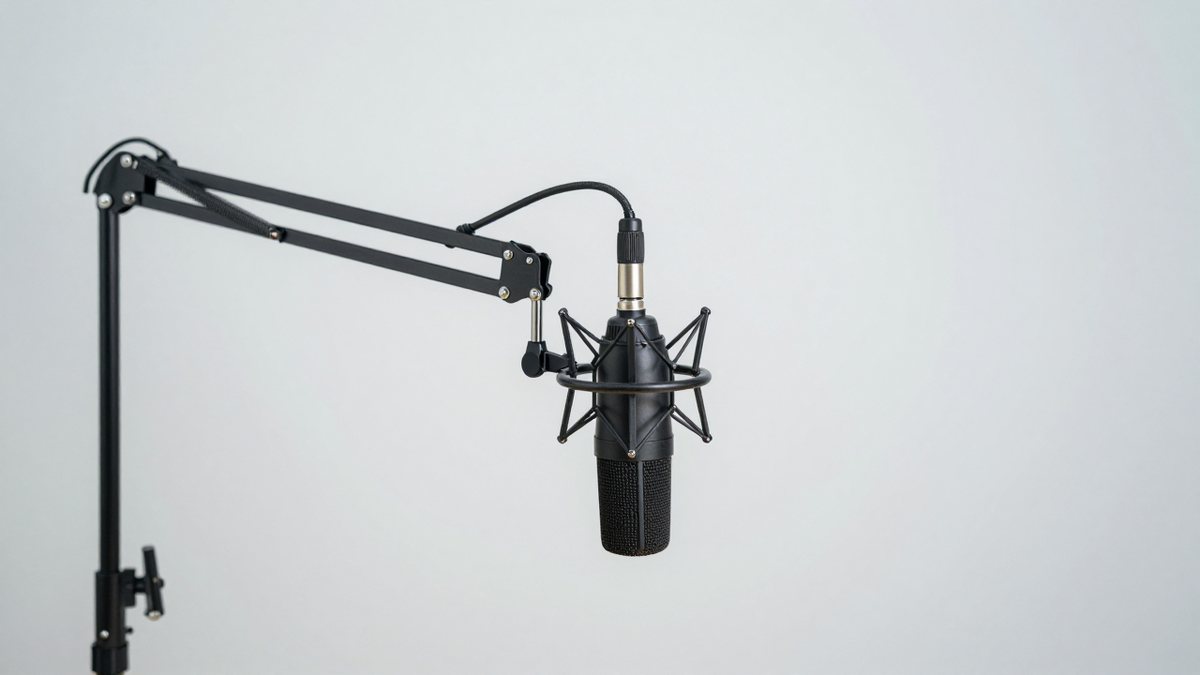
The best microphone boom arm for a desk is the Elgato Wave Mic Arm LP for low-profile setups, the RØDE PSA1+ for general-purpose recording, and the Samson MBA38 when you need the longest reach for the least money.
The right choice depends less on the microphone brand than on five physical questions: will the clamp fit your desktop, can the arm reach your mouth without crossing your monitor, can it carry the microphone and shock mount, will it stay put during adjustment, and can its cable path remain tidy?
As an Amazon Associate we earn from qualifying purchases at no extra cost to you.

Our Top Picks


Best microphone boom arms for desk setups at a glance
| Arm | Approx. reach | Published load range or capacity | Desk-clamp fit | Best for |
|---|---|---|---|---|
| Elgato Wave Mic Arm LP | Up to about 740 mm horizontal reach | Up to about 2 kg | Desks up to about 60 mm thick | Low-profile gaming, streaming, and compact desks |
| RØDE PSA1+ | Up to about 940 mm horizontal reach | Approximately 94 g to 1.2 kg | Desks up to about 70 mm thick | Balanced reach, smooth movement, and conventional microphones |
| Samson MBA38 | Up to about 950 mm horizontal reach | Up to about 2.1 kg | Clamps to surfaces up to about 57 mm thick | Large desks and budget-conscious buyers |
| Heil Sound PL-2T | About 880 mm horizontal reach | Up to about 1.8 kg | Approximately 57 mm maximum thickness | Broadcast microphones and a concealed cable route |
Dimensions and capacities can vary slightly by revision or included hardware, so check the current manufacturer specification before drilling or ordering. A microphone’s actual working load also includes its shock mount, XLR or USB cable, and any adapter.
Elgato Wave Mic Arm LP: best for a clear, low-profile desk
The Wave Mic Arm LP is the easiest recommendation when the microphone needs to sit below a monitor or in front of a laptop without creating a tall vertical structure. Its horizontal, low-profile design keeps the microphone out of the upper part of the screen and leaves more room above the desk for lighting or shelving.
The arm is rated for microphones up to roughly 2 kg, which covers most USB microphones, broadcast-style dynamic microphones, and many condenser microphones with their mounts. The useful limitation is not capacity but reach: approximately 740 mm is ample for a normal 600- to 800-mm-deep workstation, but it may be short if the clamp must sit behind a deep rear shelf.
Its clamp is intended for desktops up to around 60 mm thick. On a thin 18- to 25-mm desktop, the fit is usually uncomplicated. On a thick butcher-block top, measure the underside clearance as well as the top thickness; a rear apron, cable tray, or drawer rail can prevent the clamp from opening fully.
Choose it if
- Your microphone must stay below the monitor sightline.
- You use a USB microphone or a broadcast microphone with a normal shock mount.
- You want a relatively clean cable path and frequent repositioning.
- Your desk is no thicker than the arm’s stated clamp limit and has unobstructed rear access.
RØDE PSA1+: best all-rounder for reach and movement
The RØDE PSA1+ is the strongest general recommendation for a desk that needs flexible placement. Its reach is roughly 940 mm, giving it more room to swing from a rear corner to the front edge of the desk. That matters when the same workspace is used for typing, gaming, woodworking plans, video calls, and recording.
Its published working range is approximately 94 g to 1.2 kg. This lower limit is worth noticing: an unusually small microphone or lightweight capsule may not balance correctly, while a heavy microphone combined with a substantial shock mount can approach the upper limit. A Shure SM7B-class microphone with an appropriate mount is within the type of load this arm is designed to handle, but accessories should still be included in the calculation.
The PSA1+ supports desks up to roughly 70 mm thick, making it a better candidate for thick solid-wood tops than many compact arms. The clamp’s contact area is still important. On a soft pine or veneered worktop, place a hardwood or metal reinforcement plate beneath the clamp to distribute pressure and reduce denting.
Movement and stability
The PSA1+ uses internal springs and friction adjustments rather than requiring you to lock every joint after moving the microphone. That is convenient for voice work, but any spring arm can drift if it is loaded near its limit or extended far from the clamp. Keep the heaviest section of the microphone close to the arm’s end joint when possible, and tighten the adjustment gradually rather than forcing it.
Samson MBA38: best reach on a budget
The Samson MBA38 is a practical choice when reach matters more than a refined low-profile appearance. Its approximately 950-mm span can place a microphone beside a large monitor or over a wide desk without mounting the clamp directly in front of you.
The arm is rated for roughly 2.1 kg and clamps to desks up to about 57 mm thick. That capacity makes it suitable for heavier dynamic microphones and large shock mounts, provided the clamp and desktop are rigid enough. A lightweight desk with a thin particleboard top may flex before the arm itself reaches its rated limit.
The main compromise is movement feel. Budget spring arms can require more frequent joint adjustment, and their exposed springs or cable clips may look less finished than those on premium arms. It is a good fit for occasional recording, a home office, or a first microphone arm; frequent podcasters may value the smoother adjustment of the RØDE or Elgato instead.
Heil Sound PL-2T: best for broadcast microphones and hidden cabling
The Heil Sound PL-2T is a professional-style boom arm with a roughly 880-mm reach and an approximately 1.8-kg capacity. Its enclosed design hides the springs and provides a cleaner appearance than many exposed-arm models. Internal cable routing is particularly useful for XLR microphones, where a loose cable can catch on a monitor stand or desk edge.
It is a sensible match for broadcast microphones used in a fixed recording position. The arm is less compelling when you move the microphone several times per hour or need the smallest possible footprint. Its clamp generally suits desks up to around 57 mm thick, so measure carefully on unusually thick worktops.
How to choose by desk, microphone, and working habits
| Your situation | What matters most | Recommended direction |
|---|---|---|
| 18–25 mm office desk, occasional calls | Simple clamp, modest cost, compact storage | Budget spring arm or Samson MBA38 |
| 50–70 mm solid-wood desktop | Maximum clamp opening and underside clearance | RØDE PSA1+ or a heavy-duty arm rated for the measured thickness |
| Monitor directly in front of the microphone position | Low vertical profile and short swing path | Elgato Wave Mic Arm LP |
| Heavy dynamic microphone plus shock mount | Combined load, not microphone weight alone | Arm rated above the calculated assembly weight |
| Daily podcast or streaming use | Stable joints, quiet repositioning, replaceable or protected cable | RØDE PSA1+ or Heil Sound PL-2T |
Check the fit before ordering
Measure four things: desktop thickness, clear clamp depth, distance from the clamp to your mouth, and the space available behind or beside the desk. Do not measure only the tabletop. A rear apron, under-desk drawer, keyboard tray, or cable-management basket can reduce the usable clamp opening.
For reach, measure from the proposed clamp center to the microphone position, then add at least 100 mm of spare travel. If the microphone needs to move from a speaking position to a storage position, measure both endpoints. An arm that barely reaches one position will usually be inconvenient in daily use.
For load, add the microphone, shock mount, pop filter, cable, and adapter. For example, a 750-g microphone plus a 220-g mount, 80-g pop filter, and 50-g adapter totals 1,100 g. An arm with a 1.2-kg maximum rating technically covers it, but with only 100 g of margin. A 2-kg arm would provide a more stable working reserve.
Cable management and stability details that listings omit
Leave a small service loop near the microphone so the connector is not pulled whenever the arm moves. Route the cable along the arm’s neutral side, and secure it loosely enough that the joints can travel without tugging. USB cables with stiff braided jackets can pull a light microphone out of position; a flexible cable often improves stability more than tightening every knob.
Clamp stability depends on the desktop as much as the arm. Place the clamp over a solid section, not above a hollow cable channel or a desk edge with a thin unsupported lip. On a soft wood surface, use a protective pad or reinforcement plate. Tighten until the arm no longer shifts; excessive force can crush veneer, dent softwood, or distort a metal desktop.
Ownership and maintenance
The parts that usually wear first are clamp pads, cable clips, joint bushings, and the cable itself near the microphone connector. Inspect the arm every few months for creeping joints, loosened fasteners, cracked clips, or a clamp pad that has hardened and lost grip. Wipe dust and wood chips from the joints with a dry or slightly damp cloth; avoid spraying lubricant onto friction surfaces unless the manufacturer specifically permits it.
Common mistakes include exceeding the stated load with a shock mount attached, clamping to a hollow desk edge, routing the cable tightly across a moving joint, and placing a pop filter so far forward that it changes the arm’s balance. If the microphone slowly rises or falls, rebalance the arm and reduce the load before increasing tension. If the entire desk moves, a stronger boom arm will not solve the underlying problem.
Final recommendation
Choose the Elgato Wave Mic Arm LP for the cleanest low-profile setup, the RØDE PSA1+ for the broadest combination of reach, thick-desk compatibility, and daily usability, the Samson MBA38 for long reach at a lower general market price, and the Heil Sound PL-2T for a heavier broadcast-oriented installation with concealed cabling. Measure the desk and the complete microphone assembly first; those two measurements matter more than the arm’s appearance or headline load rating.