What's inside
As an Amazon Associate I earn from qualifying purchases. This post may contain affiliate links at no extra cost to you.
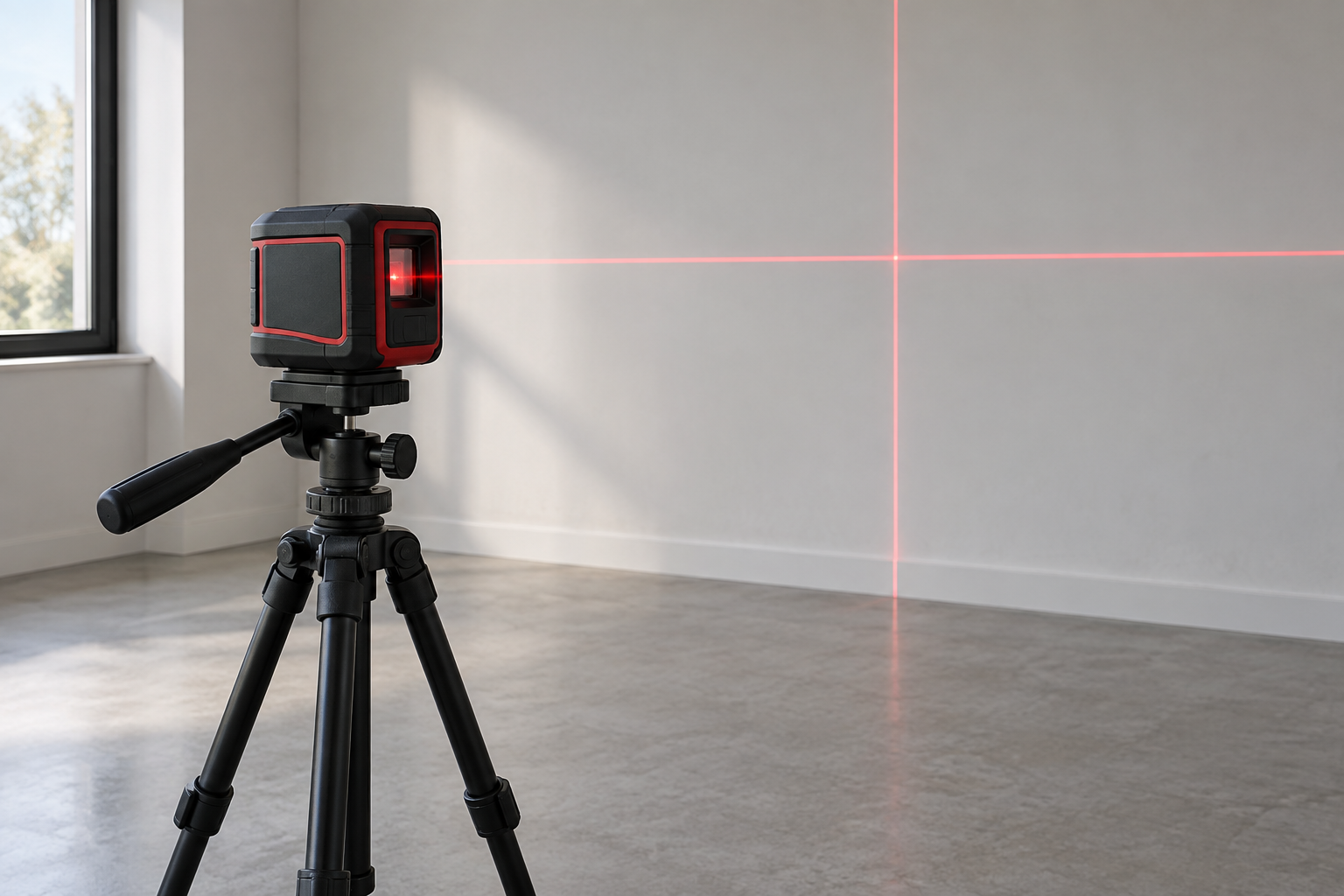
For outdoor foundation layout in bright sunlight, the best laser level detector is a dedicated receiver made for a rotary laser. A line laser can be excellent indoors and nearly useless across a sunlit slab or open excavation. Even a green beam that looks bright in a shaded room can disappear at 30 feet in direct sun. A receiver solves that problem by detecting the beam electronically and reporting its position with a display, tones, or both.
For most foundation work, buy a rotary laser receiver detector that matches your laser’s wavelength and operating mode. If you do not already own a compatible laser, a rotary laser and receiver kit is usually the more reliable purchase than trying to make a small cross-line laser work outside.
As an Amazon Associate we earn from qualifying purchases at no extra cost to you.


Our Top Picks



Why a Detector Matters in Sunlight
A laser detector does not make the beam brighter. It senses the rapidly pulsed beam and indicates whether the receiver is above, below, or directly on the laser’s reference plane. That lets you set forms, batter boards, anchor bolts, and excavation elevations when your eyes cannot see the line.
Detection range depends on the laser, receiver, beam mode, and site conditions. A practical outdoor setup often works from 100 to 1,000 feet in diameter, but advertised maximum range is not a guarantee of useful accuracy. Trees, dust, vibration, reflective surfaces, and an obstructed beam path can all cause intermittent readings. At foundation scale, a receiver with a dependable 500- to 800-foot diameter range gives useful working room without paying primarily for survey-grade capability.
What to Look For
Compatibility comes first. Receivers are not universally interchangeable. Many are designed for red or green line lasers, pulsed line lasers, or rotating red beams. Some rotary lasers use proprietary communication or require a receiver from the same manufacturer. Check the laser manual for supported receivers before buying. A receiver that physically clips to the rod may still fail to detect the beam.
Accuracy settings are important. A typical detector offers a coarse setting around 1/8 inch and a fine setting around 1/16 inch. Some offer a tighter setting near 1/32 inch. Fine mode is useful for transferring footing and anchor-bolt elevations, but it reacts more slowly and makes setup harder in wind. Coarse mode is faster when grading or roughing in forms. A receiver with selectable accuracy is more useful than one locked into a single setting.
Look for a large detection window. A receiver with a window around 2 to 3 inches tall is easier to catch when working from a ladder or moving a grade rod. Narrow windows can be precise, but they require more careful positioning. Dual-sided displays are also worthwhile: you can read the elevation from either side of the rod instead of repeatedly walking around it.
Use sound as a second indication. Loud, adjustable tones are easier to hear over a plate compactor, generator, or concrete truck than small arrows on a screen. A mute button matters when several crews are working nearby. Some detectors use a pitch that changes as you approach the beam and becomes steady when centered.
Detector Types Compared
| Detector type | Best use | Typical strengths | Main drawbacks |
|---|---|---|---|
| Rotary laser receiver | Foundation layout, grading, excavation | Long range, works in direct sun, rod clamp, fine/coarse modes | Only works with compatible rotary laser beam |
| Line laser receiver | Exterior walls, short layout runs | Works with pulsed line lasers; compact and often less expensive | Shorter range and less useful for large sites |
| Visual laser glasses | Shade, interior, short distances | Cheap and quick; no batteries in a receiver | Do not provide reliable electronic detection in bright sun |
| Survey-grade machine receiver | Excavator or dozer machine control | Very long range and rugged construction | Expensive and unnecessary for normal residential layout |
Best Choice for Foundation Layout
For a typical residential foundation, choose a rotary laser receiver with a rod clamp, two-sided display, audible guidance, adjustable accuracy, and at least IP54 weather resistance. IP54 means protection from limited dust ingress and water splashes; it is not permission to leave the receiver in heavy rain or drop it in a footing trench. A rubber overmold and a clamp with a positive locking screw are more valuable in practice than a long list of digital features.
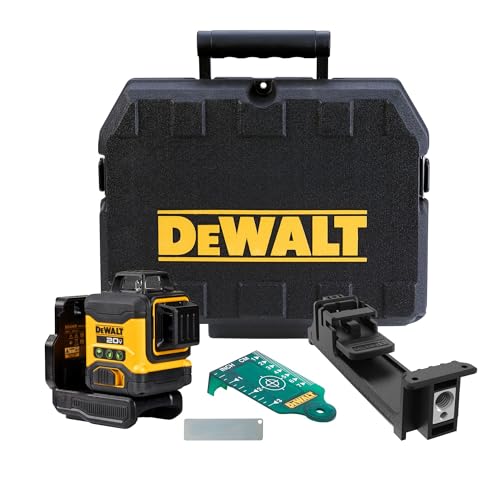
A rotary laser level with receiver kit is the simplest route if you are starting from scratch. Kits normally include the laser, receiver, rod clamp, and sometimes a tripod and grade rod. Verify that the kit includes the receiver; “outdoor laser” listings sometimes include only the laser and tripod.
If you already own a line laser, a compatible green line laser receiver detector can be a sensible lower-cost upgrade. It is fine for checking wall lines, deck footings, or short runs. It is less suitable when you need to establish one elevation across a large, uneven site. A line receiver also generally requires the laser’s pulse or outdoor receiver mode to be enabled.
How to Use the Detector Accurately
Set the rotary laser on a stable tripod well away from excavation traffic. Let it spin and settle for several minutes, especially if the tripod is on soft soil. Establish a benchmark on something that will not move, such as a stake outside the excavation. Mark the receiver’s centered reading on the rod, then transfer that elevation to batter boards or formwork.
Keep the receiver square to the rod. Tilting it can shift the apparent center and introduce errors. Move the receiver slowly through the beam, first using the coarse setting, then switch to fine mode for the final mark. Take a second reading from the opposite direction or repeat the check after moving the tripod. If the result changes, suspect tripod movement, an unstable benchmark, or a receiver mounted crooked—not automatically a bad laser.
At 100 feet, a 1/16-inch detector setting is more precise than most residential formwork can realistically maintain. Soil movement, lumber variation, and rod handling often create larger errors. Use the fine setting for final elevation checks, but do not mistake a precise display for a perfectly stable jobsite.
Common Failure Modes
Weak or random readings usually come from compatibility, not sunlight. Confirm the laser is in receiver mode, the receiver is set for the correct beam color, and the batteries are fresh. Keep the receiver’s sensing window clean; concrete dust can block or scatter the beam. If the receiver works only at short range, check for a low battery, a partially blocked line of sight, or a laser that is not rotating correctly.
Do not use a receiver as a substitute for checking the laser’s calibration. Before layout, compare the laser against a fixed benchmark by rotating the laser 180 degrees. If the elevation changes, stop and calibrate or replace it. For most homeowners and small crews, the cheaper compatible receiver is fine when the work is within 100 to 200 feet and the required tolerance is roughly 1/8 inch. Spend more for longer range, better weather protection, clearer displays, and a stronger clamp—not simply because the receiver has more buttons.