What's inside
As an Amazon Associate I earn from qualifying purchases. This post may contain affiliate links at no extra cost to you.
Our Top Picks
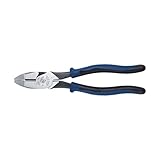
 Klein Tools D213-9NE High Leverage Side Cutting Pliers9-Inch12 x 4 x 0.75 inches1.1 PoundsCheck on Amazon

The short version
The Klein D213-9NE and Channellock 369 are both 9-inch lineman’s pliers built for gripping, twisting and cutting wire. The practical differences are in their cutting features and handle design, not in some dramatic difference in what jobs they can do. For routine electrical work, either can serve well; choose based on the wire you cut most often, how the handles feel in your hand, and the price you find.
Neither tool makes it safe to work on energized wiring. De-energize the circuit, verify it with an appropriate tester and follow applicable electrical safety procedures. Pliers with insulated-looking grips are not a substitute for voltage-rated insulated tools.
As an Amazon Associate we earn from qualifying purchases at no extra cost to you.


At a glance
| Feature | Klein D213-9NE | Channellock 369 |
|---|---|---|
| Length | 9 inches | 9 inches |
| Type | Lineman’s pliers | Lineman’s pliers |
| Typical work | Gripping, twisting and cutting electrical wire | Gripping, twisting and cutting electrical wire |
| Notable distinction | High-leverage design and integrated fish-tape puller | Channellock’s cutting-edge design and blue comfort grips |
| Best fit | Users who value the fish-tape feature and familiar Klein format | Users who prefer the grip and cutting feel of the Channellock |
Check the current product specifications before ordering: manufacturers can change details, and sellers sometimes mix listings for similar versions. In particular, confirm the exact cutting capacity and whether the listing describes the standard model or a different variant.
Grip and twisting
Both tools have broad jaws suited to holding conductors while making splices and twisting wire together. Their 9-inch length gives more leverage than compact linesman’s pliers, but it also takes up more room in a pouch and can feel unwieldy in a crowded box. For everyday residential work, that extra reach and leverage are useful when a splice is stiff; for delicate work in tight spaces, a smaller pair may be easier to control.
The handle choice is personal. Comfort grips can reduce pressure on the hand during repeated cuts, but they do not make a tool safe for live work unless it is specifically rated and marked for that use. If possible, handle both before buying. A grip that is comfortable in a store can still feel bulky when you are reaching into a panel or wearing gloves.
Cutting performance and wear
Either pair can handle ordinary copper building wire within its stated capacity. Do not assume that a lineman’s plier is suitable for every hard or thick material just because it will close around it. Cutting steel tie wire, hardened wire or cable beyond the maker’s rating can nick or chip the edges, spread the jaws, or leave a cut that requires a second tool to finish. A damaged edge often shows up first as a flattened conductor or a cut that takes noticeably more force.
For clean, repeatable cuts, match the tool to the conductor and keep the blades clean. Avoid using the cutting edges to shear screws, nails or other hardened stock. If you routinely work with large conductors or tough fence wire, check the manufacturer’s published capacity rather than relying on a general “heavy-duty” label. A dedicated cable cutter or suitable high-leverage cutter is the better choice when the material exceeds these pliers’ limits.
Features and job fit
The D213-9NE’s integrated fish-tape puller is useful when pulling tape through conduit is part of the day’s work. It can save a tool change, but it is not a reason on its own to buy the Klein if you rarely pull tape. The Channellock 369 is a straightforward alternative for the same basic gripping and cutting tasks. The choice between them is less about a broad capability gap than whether one’s grip, balance and cutting action suits you better.
For a first pair, a 9-inch tool is a sensible general-purpose size for many electrical jobs. If you already own another pair, consider what it does poorly: cramped access may call for a compact model, while frequent heavy cuts may call for a tool designed for that specific material. For browsing current options, compare Klein D213-9NE listings and Channellock 369 listings, checking that the listing and product photos match the intended model.
Which one should you buy?
Choose the Klein if its fish-tape puller is useful in your work, or if you already know you like Klein’s handle shape. Choose the Channellock if its grip feels better to you or it is meaningfully cheaper from a reputable seller. If you are buying for occasional home repairs and the two are close in price, either is adequate for normal copper-wire tasks when used within its rated capacity.
Price should not be the only measure of value, but there is no need to pay extra for a feature you will not use. A cheaper Channellock is a reasonable buy if the jaws meet evenly, the pivot moves smoothly and the cutters make a clean cut on suitable wire. Conversely, a low price is no bargain if the tool arrives with rough alignment or a loose joint. Inspect it before putting it to work, and return it if the cutting edges do not meet properly.
Using and maintaining them
Cut wire squarely near the cutting edge rather than crushing it with the tip of the jaws. Keep fingers clear of the joint, especially when twisting stiff conductors, and do not use the handles as a hammer. After work, wipe off moisture and debris; a small amount of light oil at the pivot can help prevent corrosion. Store the pliers dry, and replace or retire them if the handles crack, the joint develops excessive play, or the cutting edges chip.
For work on electrical installations, select the pliers for the task—not as a substitute for safe isolation, testing and proper protective equipment. If your work requires cutting wire beyond either tool’s published limits, step up to a cutter rated for it instead of forcing the handles and risking damaged jaws or an incomplete cut.