What's inside
As an Amazon Associate I earn from qualifying purchases. This post may contain affiliate links at no extra cost to you.
Our Top Picks
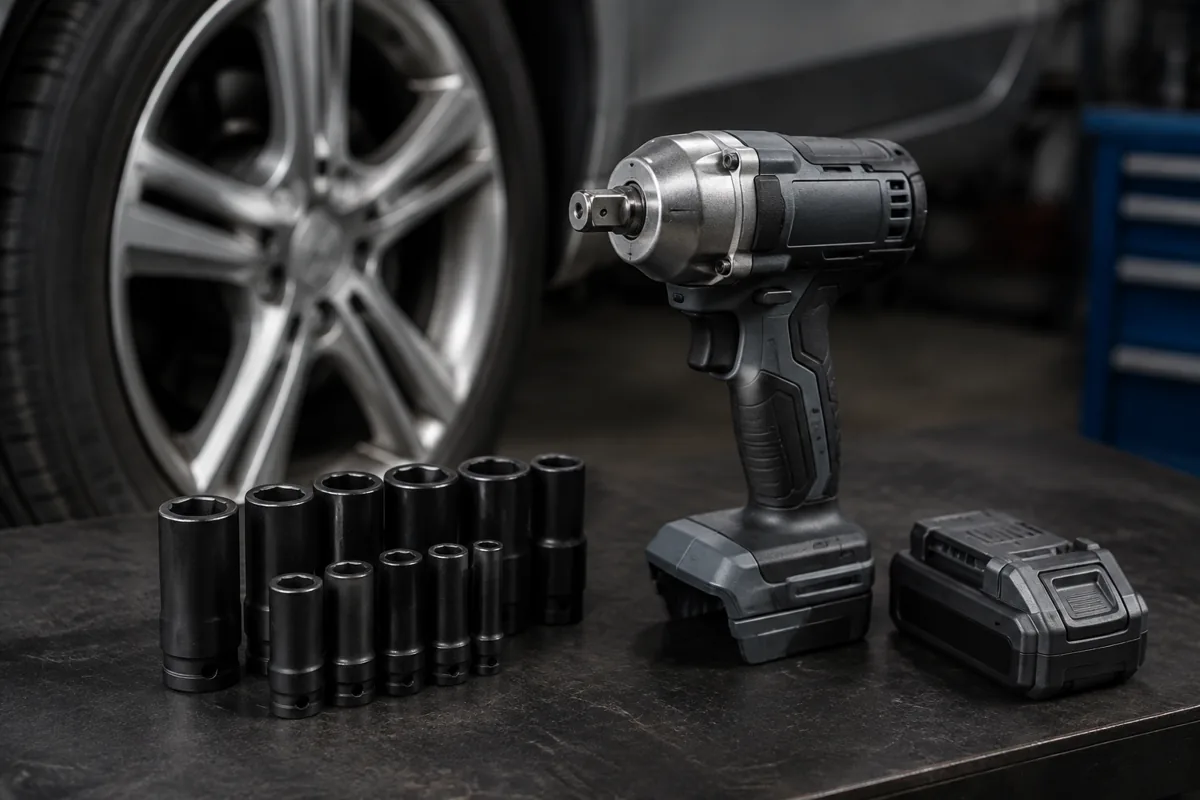
 DEWALT ATOMIC 20V MAX* 1/2 in. Cordless ImpactOne Size9.2 x 1 x 3.3 Inches2.76 poundsCheck on Amazon


Short answer
For a small auto shop, a cordless impact wrench usually makes more sense as the first or only wrench: it needs no compressor, moves easily around a vehicle, and is ready wherever the job is. Pneumatic is the better fit when the shop already has a properly sized air system, runs impacts for long stretches, and values a lighter tool over the cost and hassle of hoses.
Neither type replaces a torque wrench. Use an impact to remove fasteners and run them down carefully; tighten wheel nuts to the vehicle maker’s specification with a calibrated torque wrench.
As an Amazon Associate we earn from qualifying purchases at no extra cost to you.


At a glance
| Factor | Cordless | Pneumatic |
|---|---|---|
| Setup | Battery and charger; no air lines | Compressor, regulator, hose, fittings, and adequate airflow |
| Mobility | Good around the bay and outside | Limited by hose length and routing |
| Long, repeated use | May need spare batteries and charging | Can run continuously if the air system keeps up |
| Tool weight | Usually heavier, especially with a large battery | Usually lighter in the hand |
| Upfront cost | Higher if batteries and charger are not already owned | Low for the wrench alone; potentially high for the air system |
| Common limit | Battery runtime, heat, and reduced output as the pack empties | Insufficient airflow, pressure drop, leaks, and water in the line |
The compressor is part of the pneumatic wrench
A pneumatic tool’s performance depends on the whole air path, not just the pressure shown on the compressor gauge. Check the wrench’s specified air consumption and inlet pressure, then compare those requirements with the compressor’s delivered CFM at working pressure. Tank size alone is not a useful measure of whether a compressor can keep up during repeated use.
Many impact wrenches are rated around 90 psi at the tool inlet, but that does not mean any compressor set to 90 psi will deliver the needed airflow. A narrow, long hose, restrictive couplers, a dirty filter, or leaks can pull pressure down while the trigger is held. The wrench then feels weak or works intermittently. A 1/4-inch hose may be a bottleneck for a demanding 1/2-inch impact; follow the tool maker’s hose and fitting guidance rather than guessing.
If the shop already owns an adequately sized compressor for other work, a 1/2-inch pneumatic impact wrench can be a cost-effective addition. If the compressor must be bought just for the impact, include its electrical supply, noise, drain and maintenance needs, hose, and fittings in the comparison. The wrench may be cheap; a suitable air setup often is not.
Why cordless suits a mixed-work shop
A cordless impact is simpler to deploy: put in a charged battery and work without dragging a hose across a lift or around a vehicle. That matters when a shop also handles roadside calls, moves between bays, or has no existing compressed-air infrastructure. There is no compressor noise during the job, though the tool itself is not quiet.
For regular use, budget for at least one spare battery so a flat pack does not stop the work while it charges. Runtime varies substantially with battery capacity, fastener condition, and how much the tool is used; there is no reliable universal number of lug nuts per charge. Repeated high-load work can heat both the tool and battery, and a hot pack may need to cool before charging. Choose a wrench with the drive size and access profile suited to the jobs, and check the battery cost as well as the tool price. A 1/2-inch cordless impact wrench kit is a sensible starting point if you do not already own compatible batteries.
Do not treat a high advertised breakaway-torque figure as a promise that the wrench will remove every stuck fastener. Rust, overtightening, damaged threads, and poor socket fit all matter. Use a six-point impact-rated socket, keep it square on the fastener, and stop if the tool is hammering without movement. A longer-rated tool may still be bulky for tight wheel wells, so compare head length and weight with the battery attached.
Cost, upkeep, and failure modes
Pneumatic wrenches are mechanically straightforward, but they need clean, dry air and appropriate lubrication if the tool’s instructions call for it. Water carried through the line can cause corrosion and poor operation; neglecting lubrication can wear internal parts. Drain the compressor tank and maintain filters and separators as their manufacturers specify. Hoses and couplers are wear items, and a leak wastes compressor capacity.
Cordless tools avoid those air-system chores but add battery management. Store packs as directed, keep contacts clean, and retire damaged or swollen batteries. A battery that no longer holds charge can make an otherwise sound wrench unusable, and replacement packs are a real ownership cost. For either type, check the tool’s warranty and availability of service parts before buying.
If the wrench will be used only occasionally for seasonal tire changes, neither a shop-grade compressor nor a premium cordless kit is automatically justified. A basic cordless tool may be enough when fasteners are in good condition and the operator finishes every wheel with a torque wrench. For one-off or infrequent work, borrowing a tool or paying a tire shop can cost less than buying equipment that sits unused.
Which should you buy?
Choose pneumatic if the shop already has sufficient delivered airflow at the work area, the hose route is manageable, and the wrench will see extended daily use. Its lighter feel can matter when an employee handles fasteners repeatedly, and there is no battery to wait on during a busy run. Before buying, test an impact on the actual line; a pressure reading at the compressor does not prove the tool receives enough air under load.
Choose cordless if you are building a small shop from scratch, need to work across bays or outside, or want to avoid installing and maintaining an air system. Keep a charged spare pack on hand and accept the added battery cost and tool weight. For most small shops without existing compressed air, that trade is simpler than buying a compressor solely to power one wrench.
Whichever you choose, use impact-rated sockets, avoid using the wrench to final-tighten wheel nuts, and verify torque with the correct wrench and vehicle specification. Those steps matter more to a safe wheel installation than a bigger torque number on the impact’s box.