What's inside
As an Amazon Associate I earn from qualifying purchases. This post may contain affiliate links at no extra cost to you.
Our Top Picks


Best Heated Towel Racks for Every Bathroom
The best heated towel racks are wall-mounted models for bathrooms where floor space is tight, and freestanding models for renters or anyone who wants heat without drilling; choose capacity by the number of towels you need to warm at once, and check the rack’s warm-up time and electrical requirements before buying.
Wall-mounted or freestanding?
These styles solve different problems. A wall-mounted rack keeps the floor clear and gives towels a fixed drying spot, but requires secure mounting and a suitable electrical connection. A freestanding rack needs no permanent installation and can be moved, but occupies floor space and may hold fewer full-size towels without draping them over one another.
As an Amazon Associate we earn from qualifying purchases at no extra cost to you.


Heated rails are intended to warm and help dry towels, not to heat a whole bathroom. Manufacturers’ warm-up times and towel capacity vary by model; the figures below are practical comparison ranges for common household designs, not specifications for every product. Verify the exact dimensions and instructions before purchase.
| Design | Typical capacity | Approximate warm-up time | Space and installation | Best fit |
|---|---|---|---|---|
| Compact wall-mounted ladder, about 20–24 in. wide | 1–2 bath towels | 20–40 minutes | Uses wall space; usually needs brackets and a nearby suitable outlet or hardwiring | Small bathrooms, ensuites, and single users |
| Wide wall-mounted ladder, about 24–30 in. wide | 2–4 bath towels | 20–45 minutes | Needs a clear wall section; mounting must suit the wall and the rack’s weight | Shared bathrooms with regular daily use |
| Freestanding floor rack, about 18–24 in. wide | 1–2 bath towels | 20–45 minutes | Typically plug-in; allow floor and tip-clearance around the base | Renters, flexible layouts, or occasional use |
| Freestanding multi-rail rack, about 20–28 in. wide | 2–4 towels, depending on rail spacing | 25–60 minutes | More floor area; may fold for storage, but still needs a safe parking spot | Households that want portability and higher capacity |
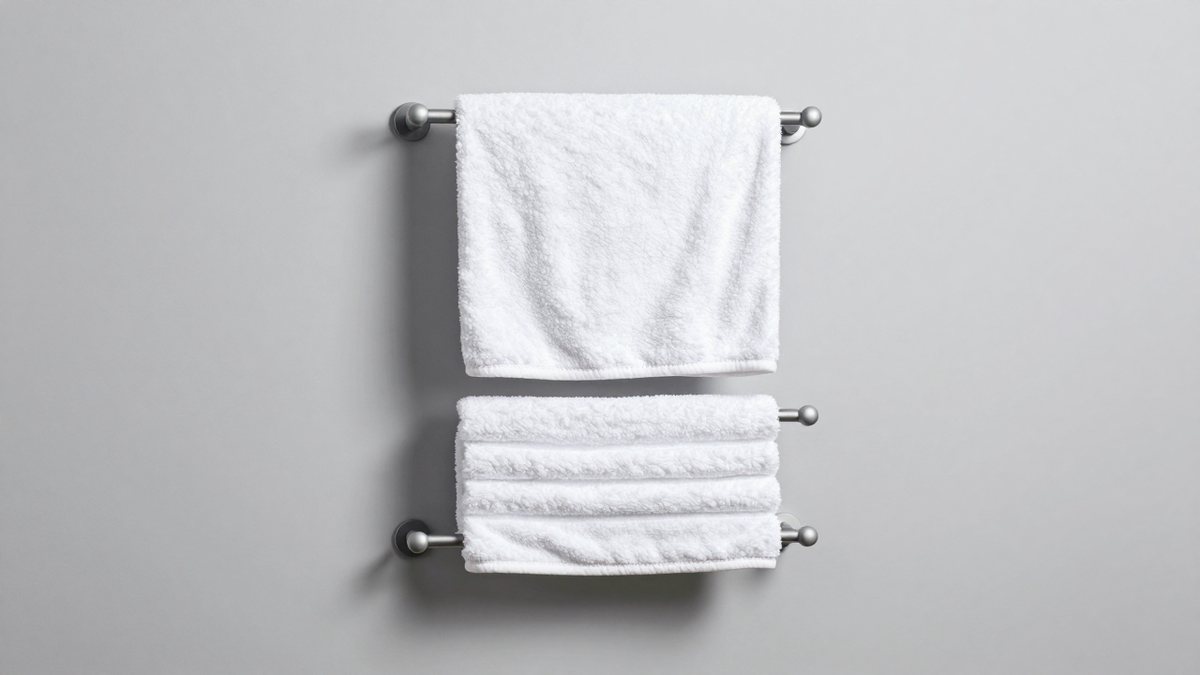
Capacity depends on towel size and how it is draped. A rack advertised for several towels may warm them unevenly if thick towels overlap or cover multiple rails. A single towel spread across separate rails usually heats more consistently than several bunched-up towels.
Choose by bathroom and routine
| Your situation | Better starting choice | Why | Check before buying |
|---|---|---|---|
| Small bathroom with little free floor area | Compact wall-mounted rack | Leaves circulation space and avoids a freestanding obstruction | Wall width, door swing, towel length, and the approved electrical arrangement |
| Rental or no permission to alter the wall | Freestanding plug-in rack | No permanent brackets or wiring are normally needed | Stable base, cord reach, and a dry, safe outlet location |
| Two or more people use towels every day | Wide wall-mounted or multi-rail freestanding rack | More usable rails reduce crowding during routine use | Actual towel capacity, not just the number of bars |
| Occasional use or a limited budget | Basic plug-in freestanding rack | Usually avoids installation costs and is easy to relocate | Timer or thermostat, warranty, and whether it folds for storage |
What to look for in the best heated towel racks
Capacity that matches real towels
Measure a towel you actually use, then compare its length and width with the rack’s usable rail area. For a household of two, a rack that can spread two bath towels without overlap is more useful than a higher advertised capacity achieved by stacking. If you also want to warm hand towels, check whether the design has a separate lower rail or enough spacing for them.
Warm-up time and controls
Warm-up time is not the same as drying time. A rail can feel warm before a damp, folded towel has warmed through. Timers are useful when you want the rack to run before a shower and switch off afterward; thermostats can maintain a set temperature. A simple on/off model may cost less, but requires you to remember to turn it off. Follow the maker’s directions on when to switch it on and how long to run it.
Power and bathroom safety
Some racks plug into a standard outlet; others are designed for hardwiring. The permitted setup depends on the product and local electrical rules, especially in bathrooms. Do not use an extension cord as a workaround or place a plug, switch, or cord where it could be splashed. If the installation involves new wiring, a bathroom zone restriction, or uncertainty about grounding or protection, consult a qualified electrician and follow local code.
Materials and finish
Stainless steel and plated or painted metals are common. A finish that resists corrosion matters in a humid room, but it does not make a rack maintenance-free: wipe off standing water and cleaning residue, and avoid abrasive pads or harsh chemicals unless the manufacturer approves them. Check whether the rails are heated evenly; some designs warm only selected bars, which affects how you should hang towels.
Installation and ownership: what changes the decision
For a wall-mounted model, first confirm the rack’s overall width and height against the available wall, including clearance from doors, shower screens, and cabinetry. Locate suitable fixing points and use the supplied hardware only where it matches the wall type. Drywall alone may not provide adequate support; use appropriate backing or anchors as directed. Hardwired units should be installed by a qualified professional where required.
For a freestanding model, measure the base footprint, not just the rail width. Leave space for the rack to stand level and for towels to hang without touching the floor or a wet surface. Keep the power cord out of walking paths and away from water. A movable rack is convenient, but frequent dragging can loosen joints or scratch flooring, so lift it when repositioning if the instructions advise doing so.
With either design, the first things to watch over time are the finish, mounting points or frame joints, controls, and cord. Stop using the rack if you notice damaged wiring, unusual smells, loose electrical parts, or corrosion that affects its structure. Unplug it before cleaning, let it cool, and use a soft cloth. Avoid covering the rack with more towels than the manual allows; overcrowding slows warming and can interfere with safe operation.
Price and value
Basic plug-in freestanding racks generally sit in the lower-to-middle price range, while larger models with timers, thermostats, or more substantial finishes tend to cost more. Wall-mounted models vary widely: a simple plug-in unit may be comparable to a freestanding rack, while a hardwired installation adds labor and potentially electrical work. Treat purchase price and installation cost as separate parts of the budget.
For a simple running-cost estimate, use the rack’s wattage and your electricity rate. For example, a 100-watt rack used for two hours a day consumes 0.2 kWh per day (100 W × 2 hours ÷ 1,000). At an illustrative rate of $0.20 per kWh, that is about $0.04 per day, or roughly $15 over a year of daily use. Actual consumption depends on the model, controls, run time, and local electricity price.
Bottom line
Choose a wall-mounted rack if floor space is precious and you have an appropriate wall and installation option. Choose a freestanding rack if portability, rental-friendly setup, or low installation effort matters more. In either case, prioritize usable towel capacity and safe placement over a headline number of rails: a rack that fits your towels and your bathroom will be more useful than a larger model that crowds the room or leaves towels overlapped.