What's inside
- For regular batches of kale and wheatgrass, the best all-around choice is the Omega NC900HDC: its wide adjustable feed opening, strong leafy-green performance and manageable cleanup make it a better fit than a narrow-chute budget juicer. Choose the Tribest Greenstar Elite for maximum extraction, or the Hurom H400 if fewer parts to wash matter more than price.
- Greens-focused comparison
- What to choose for your situation
- How to compare yield fairly at home
- Cleaning and wear: what owners should expect
As an Amazon Associate I earn from qualifying purchases. This post may contain affiliate links at no extra cost to you.
Our Top Picks
 LAUDLIFE Cold Press Juicer Machines5.4" Feed Chute8.18 x 9.55 x 17.5 Inches6.56 poundsCheck on Amazon

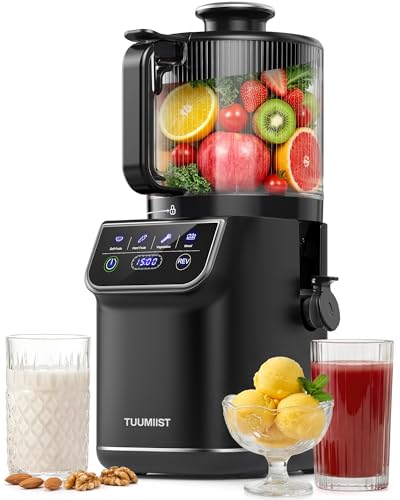

For regular batches of kale and wheatgrass, the best all-around choice is the Omega NC900HDC: its wide adjustable feed opening, strong leafy-green performance and manageable cleanup make it a better fit than a narrow-chute budget juicer. Choose the Tribest Greenstar Elite for maximum extraction, or the Hurom H400 if fewer parts to wash matter more than price.
The rankings below weigh three practical factors: estimated juice yield from a pound of kale and a pound of wheatgrass, feed-chute width, and the number of removable parts that typically need washing after use. Manufacturers do not use a shared yield-testing method, so the ranges are planning estimates—not lab results. Produce freshness, leaf moisture, feeding pace and how tightly greens are packed can change the amount in the glass.
Greens-focused comparison
| Rank and juicer | Estimated juice per pound of kale | Estimated juice per pound of wheatgrass | Feed opening | Removable parts to rinse or scrub | Best fit |
|---|---|---|---|---|---|
| 1. Omega NC900HDC | About 8–12 fl oz | About 10–14 fl oz | About 1.5 in | About 6 | Frequent leafy-green juicing and a useful balance of yield and cleanup |
| 2. Tribest Greenstar Elite | About 10–14 fl oz | About 12–16 fl oz | About 1.5 in | About 7 | People prioritizing extraction over quick assembly and washing |
| 3. Hurom H400 | About 7–11 fl oz | About 9–13 fl oz | About 3 in | About 5 | Less chopping and fewer separate pieces to clean |
| 4. Kuvings REVO830 | About 7–11 fl oz | About 9–13 fl oz | About 3.5 in main chute; narrower secondary opening for long ingredients | About 6 | Mixed produce batches and convenience, with a large counter footprint |
Yield estimates assume fresh produce, steady feeding and juice measured after ordinary straining through the juicer’s screen. Part counts include the main food-contact pieces that usually need washing; exact counts vary with accessories and how each owner handles the pulp container, juice cup and cleaning brush. Verify current model specifications before buying, since product revisions and regional versions can differ.
As an Amazon Associate we earn from qualifying purchases at no extra cost to you.


What to choose for your situation
Best balance for greens: Omega NC900HDC
The horizontal, single-auger NC900HDC is the most sensible starting point for someone who juices leafy greens several times a week. Its adjustable end cap lets you change pressure on the pulp, which can help with fibrous ingredients such as kale and wheatgrass. The opening is not wide enough to drop in whole bunches, so expect to feed leaves in smaller amounts. In return, the layout is relatively simple to disassemble and the machine is less bulky than many vertical models.
Choose it if you want a greens-capable machine without paying extra for a twin-gear system. It is less appealing if a fast, near-whole-fruit workflow is the priority.
Best for maximum extraction: Tribest Greenstar Elite
The Greenstar Elite uses twin gears rather than a single auger. That mechanism can squeeze leafy material effectively, especially when it is fed slowly and consistently. Its trade-off is ownership friction: the gears and surrounding parts take longer to assemble, and their grooves need careful brushing. It is a strong choice for experienced users who juice greens often and do not mind a more involved cleanup.
Do not treat its higher estimated yield as guaranteed savings. A small difference in produce freshness or how thoroughly pulp is pressed can outweigh a modest model-to-model yield gap.
Best for fewer cleanup pieces: Hurom H400
The H400’s large hopper reduces chopping and makes loading a mixed batch easier. Its relatively small set of washable components is attractive for daily use, when the chore of cleanup matters as much as extraction. However, a wide hopper does not make every leafy green effortless: long stems and loose leaves still benefit from being cut into manageable pieces and alternated with firmer produce.
Pick it for convenience and a simpler wash routine, not as the automatic winner for wheatgrass yield.
Best for mixed batches: Kuvings REVO830
The REVO830 pairs a broad main chute with a separate, narrower opening intended for long ingredients. That combination is useful if you switch between greens, fruit and vegetables. It takes up substantial counter space, and its larger assembly is not the easiest option to store between uses. Choose it when feed convenience matters and you have room to leave the juicer set up.
How to compare yield fairly at home
Because advertised yield figures are rarely based on a common protocol, use a repeatable kitchen test before deciding that one machine is more efficient:
- Weigh exactly 1 pound of kale and 1 pound of wheatgrass separately. Use produce that is similarly fresh and rinsed, and dry wet leaves so extra rinse water does not inflate the result.
- Cut both samples to lengths that fit the chute. Feed them at a steady pace; forcing a large wad can produce a wetter pulp and make comparisons misleading.
- Collect each juice batch separately in the same measuring vessel. Note the pulp’s dampness as well as the volume—volume alone does not capture every difference in texture.
- Repeat the test on another day with a fresh batch. A single pound is too small a sample to distinguish a consistent advantage from normal produce variation.
For a simple buying calculation, suppose one model gives 2 fl oz more juice from each pound of greens. If you juice 2 pounds weekly, that is 4 fl oz a week, or about 208 fl oz over a year. Whether that offsets a higher purchase price depends on your produce cost and how much value you place on the extra juice; it is not enough, by itself, to establish a clear winner.
Cleaning and wear: what owners should expect
Count parts, but also consider their shape. A smooth hopper or pulp container usually rinses faster than a fine screen, a grooved gear or a narrow outlet packed with fibers. Rinse components promptly after juicing: dried kale fibers and wheatgrass residue are harder to remove later. Use the supplied brush where the manual allows it, and avoid abrasive tools that could damage a screen or finish.
With repeated use, screens, seals and plastic components are the parts to inspect for wear, while gears and augers should be checked for cracks or damage. Do not run fibrous greens faster than the machine can clear them, force the pusher, or leave a jam to build. If the motor slows, stop and follow the manufacturer’s instructions for clearing the feed path rather than pushing harder.
For a small kitchen or occasional juicing, prioritize easy cleanup and a footprint you can live with. For several green-juice batches each week, the Omega is the balanced pick; for yield-focused, experienced users, consider the Greenstar Elite. If daily convenience wins, the Hurom’s larger opening and fewer washable parts may be worth more than a small estimated difference in juice output.