What's inside
As an Amazon Associate I earn from qualifying purchases. This post may contain affiliate links at no extra cost to you.
Irwin locking pliers—widely recognized under the iconic Vise-Grip brand name—remain a staple in modern woodworking shops, metal fabrication facilities, and home garages. Their ability to serve as a portable vise, temporary clamp, pipe wrench, and wire cutter makes them one of the most versatile hand tools in existence. Whether you are holding joint assemblies tight while glue dries, securing metal stock for drilling, or removing a stubborn, stripped fastener, choosing the right pair ensures maximal holding power without damaging your workpiece.
Navigating the extensive Irwin catalog in 2026 can be surprisingly complex due to the variety of jaw configurations, sizing options, and release mechanisms available. Choosing the wrong jaw shape or size often leads to slipping jaws, damaged materials, or hand fatigue during repetitive tasks. This guide cuts through marketing jargon to focus on the technical features that actually impact performance, helping you build an efficient set tailored to your workshop needs.
As an Amazon Associate we earn from qualifying purchases at no extra cost to you. Product prices and availability are accurate as of the date shown and are subject to change.
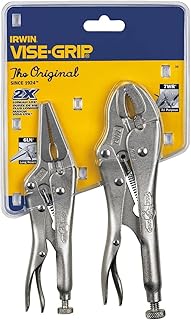
Jaw Profiles: Curved, Straight, and C-Clamp Designs
The jaw shape of a locking plier dictates how pressure is distributed across the contact area. Choosing a jaw design that matches your primary workpiece geometry is the single most important factor in securing a reliable grip.
- Curved Jaws (CR / WR): Designed specifically to grip rounded surfaces such as pipes, tubing, and hex fasteners. The curved profile contacts round objects at multiple points, providing maximum torque without slipping or marring the circumference. Models with integrated wire cutters add versatility for electrical or fencing tasks.
- Straight Jaws (FR): Engineered for flat stock, square bar, and sheet material. Straight jaws maximize surface contact across flat edges, preventing the tipping or skewing that occurs when using curved jaws on flat metal or wood.
- C-Clamp Jaws (11R / 6R): Featuring deep throat depths, locking C-clamps reach around flanges, lip moldings, and structural angles. Standard steel tips provide concentrated holding force, while swivel pads distribute clamping pressure across wider surface areas to protect delicate wood surfaces.
- Long Nose Jaws (LN): Built with narrow, tapered tips to reach into tight spaces or hold smaller fasteners and delicate wire work where standard jaws cannot fit.
Fast Release vs. Original Trigger Mechanisms
Irwin offers two distinct handle release systems across their locking plier lineup: the traditional Original trigger and the modern Fast Release mechanism. Understanding the functional differences between them will help you select the best option for your workflow.
The Original design features a distinct internal trigger lever nested inside the lower handle. Opening the tool requires pushing this lever outward, which unlocks the toggle mechanism. This system provides a firm, deliberate tactile snap when locked and prevents accidental opening, making it ideal for heavy-duty metal fabrication and high-vibration applications.
The Fast Release mechanism eliminates the inner lever entirely. Instead, squeezing or pulling the main lower handle releases the tool in a single, one-handed operation. This design requires up to two times less effort to open, making it considerably easier to operate when wearing thick work gloves or performing repetitive clamping operations during assembly work.
Sizing Strategy: Matching Tool Length to Task
Locking pliers are sized by their overall nominal length, typically ranging from 4 inches up to 24 inches for specialized locking clamps. The tool length directly affects both jaw capacity and physical leverage.
Compact 5-inch and 6-inch models excel in confined quarters, engine bays, or delicate woodworking jig setups where tool weight and footprint must be minimized. They provide sufficient clamping force for small stock, but offer lower leverage for breaking seized bolts.
Standard 7-inch and 10-inch models serve as the workhorses of most shops. A 10-inch locking plier provides optimum leverage for heavy clamping, high-torque turning, and holding structural timber or thick steel plate. For C-clamp variants, 11-inch models offer the ideal balance between deep throat reach and manageable weight for single-handed positioning.
Key Technical Features That Actually Matter
Beyond jaw shape and length, several construction details determine how well a locking plier performs under heavy load over years of use.
Hex Key Adjustment Screw: Modern Irwin locking pliers include a hex socket embedded within the base adjustment screw. While the knurled knob allows quick hand adjustments, inserting an Allen wrench into the hex slot enables fine-tuned tension adjustments before locking or extra torque to pull stubborn materials together flush.
Tooth Geometry and Hardening: High-grade alloy steel construction with induction-hardened teeth ensures the tool bites securely into hard metals without dulling or rounding over time. Check that the tooth pattern provides multi-directional grip for maximum holding power.
Alignment and Rivet Quality: Lower-quality knockoffs suffer from jaw deflection under maximum force. Precision-riveted pivot points in genuine Irwin models keep the upper and lower jaws aligned, preventing twisting under lateral loads.
Common Buying Mistakes to Avoid
Avoid these common pitfalls when selecting locking pliers for your shop setup:
- Using Curved Jaws on Flat Stock: Curved jaws contact flat stock at only two narrow points, drastically reducing holding power and potentially denting the material. Always match straight jaws to flat surfaces.
- Over-Torquing the Hex Screw: Using a long Allen key to force the adjustment screw beyond reasonable limits can strain internal toggle linkages, bend the handle frames, or strip thread pitch. Use manual pressure first.
- Neglecting Swivel Pads for Woodwork: Buying bare-tip C-clamps for woodworking often crushes wood fibers. Swivel pad models distribute load evenly and keep face-frame joints flush without marring softwood surfaces.
When to Spend More for Specialty Locking Tools
While a basic two-piece plier set handles everyday tasks, specialized projects justify investing in task-specific locking designs.
Locking welding clamps feature wide U-shaped jaws that allow full visibility and pass-through access for welding torches or drill bits right along joint seams. Sheet metal locking tools incorporate broad, flat bill-shaped jaws that clamp wide seams evenly for bending HVAC ductwork or forming metal flashing. Investing in these specialty formats yields cleaner work outcomes and drastically reduces layout time during fabrication.
Related Guides
To see how specific models perform in hands-on shop testing, explore our top-rated Irwin locking pliers recommendations. If you want to compare additional locking configurations, check out our extended guide to Irwin locking pliers. For craftsmen evaluating alternative brand ecosystems, read our detailed guide to Channellock pliers to compare durability and grip ergonomics.
FAQ
What is the difference between Irwin VISE-GRIP Original and Fast Release?
Fast Release models lack the traditional inner release lever, allowing you to open the pliers one-handed by simply pulling the lower handle. Original models use the classic trigger mechanism, which offers a familiar lock feel but generally requires two hands or extra thumb pressure to trigger. Both provide equivalent clamping pressure when adjusted correctly.
Can I use the hex key adjustment slot to apply unlimited clamping force?
The hex slot in the adjustment screw is designed to pull materials together or apply precise clamping tension before locking. However, applying excessive torque with a long hex key can bend the internal linkage or strip the adjustment threads. Always hand-tighten until snug, using an Allen wrench only for minor final tensioning or tight clearance adjustments.
Are swivel pad C-clamp locking pliers safe for woodworking projects?
Yes, swivel pad models distribute pressure over a wider surface area, preventing deep indentations on softwoods and finished hardwoods. For delicate surfaces, you can add thin scrap wood or rubber covers over the steel pads to eliminate marring entirely. They are especially useful for pocket-hole joinery and face-frame assembly.
How do I prevent rust and sticky mechanisms on locking pliers?
Periodically wipe down the tool body with light machine oil or corrosion inhibitor, paying close attention to the pivot pins and internal spring. Clean sawdust, metal filings, and debris out of the release spring housing using compressed air or a stiff brush. Storing the pliers in an unclosed, low-tension position also helps preserve internal spring tension over time.