Key takeaways
- Flush cuts, sanding, scraping, grout removal — we compare oscillating tools on versatility and value.
What's inside
As an Amazon Associate I earn from qualifying purchases. This post may contain affiliate links at no extra cost to you.
The oscillating multi-tool is the Swiss Army knife of the shop — it cuts flush, sands corners, scrapes, and removes grout. But models vary a lot in power and blade change speed. We compared the field.
What makes this category awkward to shop for is that the spec sheet describes the wrong things. Two tools can print the same oscillations per minute and the same amperage and still feel like completely different machines, because the things that decide whether you enjoy owning one are the blade clamp, the vibration, the thickness of the head and the price of accessories. This oscillating multi-tool comparison is therefore a buying framework rather than a spec race: what to verify before you pay, what separates a good tool from a bad one in each price band, and which jobs actually justify the purchase.
As an Amazon Associate we earn from qualifying purchases at no extra cost to you. Product prices and availability are accurate as of the date shown and are subject to change.

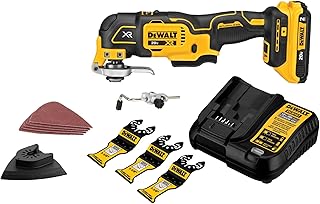


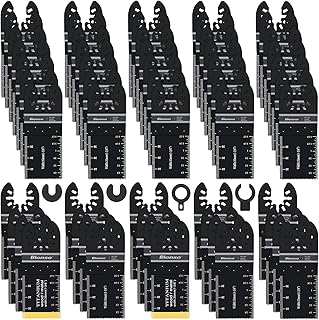

It also helps to be honest about what the tool is for. A multi-tool is not the fastest way to do anything. A reciprocating saw cuts faster, a jigsaw cuts cleaner curves, a random orbit sander sands flatter, and a grinder removes material more aggressively. What the multi-tool owns is access: the cut a round blade cannot reach, the trim you must sever flush against a finished floor, the inside corner no disc will fit into. You buy it for the ten awkward jobs, not the ten easy ones, and that is precisely why it earns permanent space in the case.
How To Judge A Multi-Tool Before You Buy
The blade interface comes first, because it sets your accessory cost for as long as you own the tool. There are two broad families. Open, universal-style hubs accept the widely available generic blades, which keeps consumables cheap and easy to find anywhere. Enclosed interfaces grip the accessory in three dimensions, hold it tighter and pass less vibration into the handle, but they narrow your choice and cost more per blade. Neither approach is wrong. What is wrong is discovering after purchase that only one company’s accessories will mount on your tool.
Oscillation angle is the total sweep of the head, usually somewhere between roughly one and a half and four degrees depending on the model. A wider angle removes material faster and shakes more; a narrower angle is easier to control on delicate, visible cuts. Some tools let you select between the two. If most of your work is flush trimming on finished surfaces, weight control higher. If you are opening subfloor and drywall, weight sweep.
Variable speed you can reach without stopping is a genuine requirement, not a luxury feature. Low speed keeps heat down in plastics and softened adhesive so material gums instead of melting; high speed is for wood and metal. A dial or slider you can move with the hand already holding the tool gets used, and a switch buried under the body does not. Single-speed tools belong only at the very bottom of the market.
Vibration, grip and head profile decide how long you can keep working, and they rarely appear on the box. Heavier tools with proper rubber over-molding and internal counterweighting buzz noticeably less than light plastic-shelled ones, so the extra mass is usually a feature. Head geometry matters just as much in practice: a slim nose fits between joists, under a toe kick and hard against a wall, while a bulky one forces you to angle the blade and ruins the cut you bought the tool to make.
Corded versus cordless comes down to duty cycle. Long grinding sessions such as raking out grout or removing thinset favor a cord, because they are sustained loads that flatten batteries. Most multi-tool work is short, awkward and interruption-heavy, which is exactly what cordless is good at. If you already own a battery platform, buy the bare tool on that platform; a multi-tool is a poor reason to start a second battery family. A dust extraction port is worth having for indoor masonry and grout work, and worth ignoring for everything else.
Tool-Free Blade Changes Matter More Than Motor Specs
The single biggest usability difference is how you change blades. Tool-free systems let you swap accessories in seconds; older screw-mount designs make you hunt for an allen key mid-job. Get tool-free.
The reason it matters more than it sounds is that a multi-tool job is almost never one cut. It is a sequence: score the drywall with a wood blade, switch to bimetal for the nail you just found, switch to a rigid scraper for the adhesive underneath, finish with a sanding pad. Every one of those swaps behind a screw-mount clamp costs you a hunt for the wrench, so you stop swapping and start doing the whole job with the wrong accessory, which burns blades and leaves worse cuts. A good tool-free clamp does three things: it opens with a lever you can flip wearing gloves, it seats the accessory without wobble, and it holds torque under load. Blade slip is the failure mode that ends tools, because an accessory creeping in the clamp rounds the hub and then nothing grips properly again.
Before you pay, confirm all of the following:
- The clamp lever locks positively, not just under spring pressure.
- Common blades for the interface are stocked and cheap.
- Speed control is reachable one-handed.
- The head is slim enough for the tight spots you actually have.
- The battery fits a platform you already own, or you accept the new one.
Oscillating Multi-Tool (Tool-Free)
Tool-free blade changes, variable speed, and enough power for flush cuts through nails. The one tool that does the ten awkward jobs no other tool can. Endlessly useful once you own one.
- ✔ Does a dozen jobs
- ✔ Tool-free blade swaps
- ✔ Variable speed
- ✔ Reaches tight spots
- ✘ Blades wear fast
- ✘ Loud & buzzy
What Good Looks Like At Each Price Band
Entry band. This is corded units and bare-tool consumer cordless, and there are usable tools here. A good one still has a tool-free clamp, accepts universal accessories and offers at least some speed control. The disqualifiers are a screw-mount head, a single fixed speed, or a proprietary hub with a thin and expensive accessory range. Expect more vibration and a chunkier head, which means slower work in tight spaces rather than impossible work. Right for a homeowner with one renovation in front of them.
Mid band. This is where most buyers should land. You are paying for a firmer clamp, a real speed dial, a slimmer head, meaningfully less vibration and often a brushless motor inside a battery family you already use. The tool stops fighting you, which changes how often you reach for it. Diminishing returns begin at the top of this band, so spend the remainder on accessories instead of the next tier.
Premium band. What you buy up here is not cutting speed. It is the lowest vibration, the most secure accessory grip, the tightest tolerances, the thinnest nose, and the service and parts support that keeps a tool alive for years. That is worth real money if the tool runs weekly or pays for itself on a job site. For someone who uses it a handful of times a year, the same money spent on quality blades produces a bigger improvement.
Who It Suits, And Who Should Skip It
Buy one without hesitation if you renovate rather than build: opening walls and floors, undercutting door jambs and baseboards for flooring, cutting boxes into drywall or plaster, trimming pipe and fasteners flush in a cabinet, removing grout and hardened caulk in a bathroom. Repair work is full of cuts that are geometrically impossible for every other saw you own, and this is the tool that makes them ordinary.
Deprioritize it if you are buying your first three tools. A drill/driver and a saw that crosscuts come first; the multi-tool is realistically the fourth or fifth purchase, not the first. Skip it for bulk demolition, where a reciprocating saw is faster and cheaper to feed, for clean curves, which belong to a jigsaw or bandsaw, and for flat sanding, which a random orbit sander does far better. If you build furniture from clean stock in a clean shop, you will still want one eventually, just at the entry or mid band rather than the top.
Mistakes That Ruin The Experience
- Pushing harder to cut faster. Force stops the head oscillating and turns cutting into heat, which glazes the teeth. Guide it, let the blade work, and it cuts faster with less pressure.
- Running everything at full speed. High speed melts plastic, gums adhesive and cooks blades in metal. Drop the speed for soft materials and scraping.
- Buying the giant cheap variety pack. Most of those blades are thin carbon steel that dies on the first nail. A few good bimetal and carbide accessories outlast a whole bargain assortment.
- Using a wood blade where fasteners hide. Nail-embedded cuts need bimetal or carbide; a wood blade will lose teeth on the first screw.
- Wearing out one spot on the blade. Shift the accessory in the clamp to bring fresh teeth into the cut instead of grinding away the same half inch.
- Cutting grout and mortar without dust control. That dust arrives at head height and coats a house. Extraction and a respirator are not optional indoors.
FAQ
Are universal-fit blades good enough, or should I buy the tool brand’s own?
Good third-party blades are absolutely usable, and for wood and drywall they are the sensible choice. The difference shows up in metal and abrasive work, where better steel and better carbide simply last longer. Buy generic for volume tasks and premium for the cuts you cannot afford to redo.
Do I need cordless, or is corded fine?
Corded makes sense if your work is sustained grinding and scraping, or if you want the cheapest capable tool. Cordless wins for the short, awkward, ladder-and-crawlspace cuts that make up most multi-tool use. Platform compatibility matters more than either answer.
Why do my blades wear out so fast?
Usually too much pressure, too much speed, or the wrong blade for hidden fasteners. Blades are a consumable here regardless, so budget for them, but technique changes their life dramatically.
Can it replace my sander, jigsaw or reciprocating saw?
No, and buying it with that expectation is the fastest route to disappointment. It replaces those tools only where they physically cannot reach, which is exactly where it becomes irreplaceable.
Verdict
Judged against the criteria above, the winner in this category is rarely the tool with the biggest number on the box. It is the one with a clamp that holds, a speed dial you can reach, a slim head, tolerable vibration and cheap accessories on the shelf. Get those five right in the mid band and the tool will quietly handle jobs you currently solve with a chisel, a hacksaw blade and bad language.
For versatility per dollar, a tool-free oscillating multi-tool is one of the best buys in the shop. Stock up on quality blades — they’re the consumable that makes or breaks the experience. Compare with our drill matchup when building a kit.