What's inside
As an Amazon Associate I earn from qualifying purchases. This post may contain affiliate links at no extra cost to you.
Choosing drill torque and speed for self-tapping metal screws is less about finding one perfect setting than controlling two competing risks: stalling before the screw seats, and driving hard enough to strip the threads or snap the screw. The right setup depends on sheet thickness, screw size, and whether the screw has to cut its own hole or only form threads in a predrilled one.
Know what the screw is cutting
A self-tapping screw forms threads in a prepared hole; a self-drilling screw has a drill-point tip that makes its own hole. The terms are often used loosely, so check the screw package and point shape. A sharp, fluted drill point indicates a self-drilling screw. A pointed screw without cutting flutes generally needs a pilot hole in metal.
Thin sheet metal offers little thread depth. A screw that is too large, too long, or driven too forcefully can strip the hole, leaving the fastener spinning without tightening. In thicker steel, a self-drilling point may take longer to cut and can overheat if you press too hard or turn too slowly. Match the screw’s stated drilling capacity to the combined material thickness; do not assume that a longer screw can drill thicker steel.
Choose a drill or impact driver
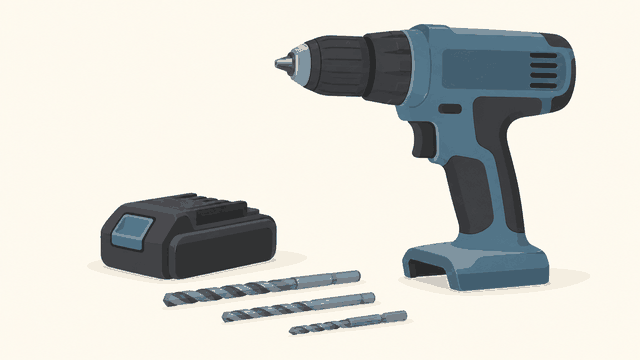
A variable-speed drill/driver is the safer general choice for sheet metal because its adjustable clutch can stop driving once the screw seats. Start with a cordless drill/driver with an adjustable clutch if you are buying one tool for mixed fastening and drilling jobs.
An impact driver can be useful for repeated screws or tougher material, but its rapid hammering makes it easier to strip thin metal or damage a screw head. It has no conventional drill clutch on most models, so release the trigger promptly and use a compatible hex-shank bit. For a handful of screws in thin sheet, a basic drill/driver is usually easier to control. The cheaper tool is fine if it runs smoothly at low speed and has a clutch; brushless motors and high torque ratings are not necessary for a small fastening job.
Starting speed and torque settings
Begin in the drill’s low gear for larger screws, thicker material, or any setup where the screw is likely to bind. Use the faster gear for small screws in thin sheet once you have confirmed the screw cuts cleanly. Gear ranges vary by drill, but a practical starting target is roughly 500–1,000 rpm for larger self-drilling screws and 1,000–2,000 rpm for small screws in thin sheet. These are trial ranges, not universal specifications: the screw maker’s instructions take priority, especially for self-drilling points.
Set the clutch low, then increase it one step at a time until the screw seats. Clutch numbers are not standardized between drills, so a setting of 8 on one model may not match 8 on another. Stop when the head contacts the work and the washer compresses enough to seal, if there is one. Do not keep driving just because the drill can turn further. On an impact driver, start with a low-speed mode if available and use short trigger pulses for the final seating.
| Job | Starting approach | Main risk to watch |
|---|---|---|
| Small screw in thin sheet | Drill/driver, faster gear, low clutch setting | Stripping the hole or dimpling the sheet |
| Self-drilling screw in thicker steel within its rated capacity | Low gear initially; steady pressure and moderate speed | Overheating the point or stalling before it cuts through |
| Many screws in repetitive work | Drill/driver with a depth-sensitive setting, or a controlled impact driver | Overdriving a screw after the head seats |
| Stainless or hardened material | Verify screw and bit suitability; follow the fastener maker’s guidance | Work hardening, broken tips, or damaged screw heads |
Control pressure and seating
Use a sharp, correctly sized driver bit and keep it square to the screw. A Phillips bit that is slightly wrong, or a worn bit of any type, can cam out and chew up the head before the screw is tight. If you are driving a large number of screws, a magnetic nut setter matched to the screw head can hold hex-head fasteners more securely than a loose bit.
Apply firm, straight pressure while the cutting point works, but do not lean your full weight on the drill. If the screw spins without advancing, the hole may be stripped, the pilot hole may be too large, or the point may not be suited to the material. Stop rather than continuing to tighten; the screw will not regain its grip by turning longer. If it stalls, check that the screw is rated for the thickness, the battery is charged, and the tip is cutting. A dull or overheated self-drilling point may need replacement.
For self-tapping screws that require a pilot hole, follow the fastener maker’s recommended hole size. If no guidance is available, test on scrap of the same material rather than guessing on the finished piece. Too-small holes raise driving torque and can snap screws; too-large holes weaken the thread grip. A drill press or a center punch can help keep a pilot hole from wandering, especially on smooth sheet.
Test before committing
Drive one screw into an offcut or an inconspicuous spot. If it cuts steadily and seats without deforming the sheet, repeat the setup. If the drill struggles, move to low gear, check the point and material rating, or use the specified pilot hole. If the screw seats but keeps turning, reduce clutch torque and inspect the hole for stripped threads. If you need to compare tools for a larger job, look for a drill/driver with a low-speed gear and adjustable clutch; those controls matter more here than a headline maximum-torque figure.
Use eye protection, and clamp loose sheet metal so it cannot spin or vibrate into your hand. Metal edges are sharp, and a snagged screw can suddenly pull the workpiece toward the tool. Adjust speed, clutch, and technique from the test fastener—not from the drill’s maximum rating.