What's inside
As an Amazon Associate I earn from qualifying purchases. This post may contain affiliate links at no extra cost to you.
Our Top Picks
 FLAMMA FV04 Vocal Harmony Pedal Vocal Effects Processor3.4 x 2.4 x 4.9 inches0.8 PoundsCheck on Amazon
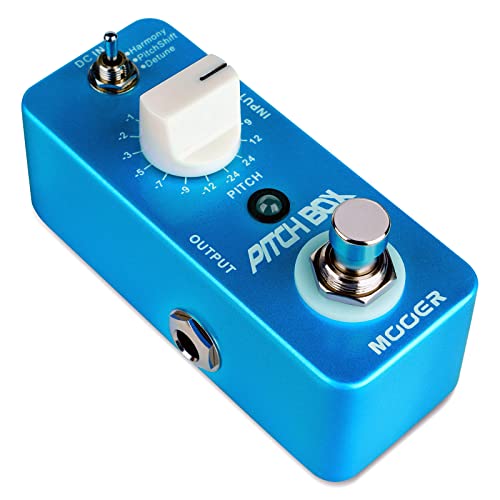
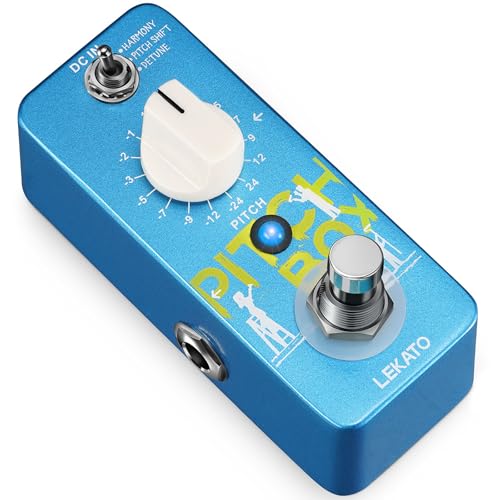
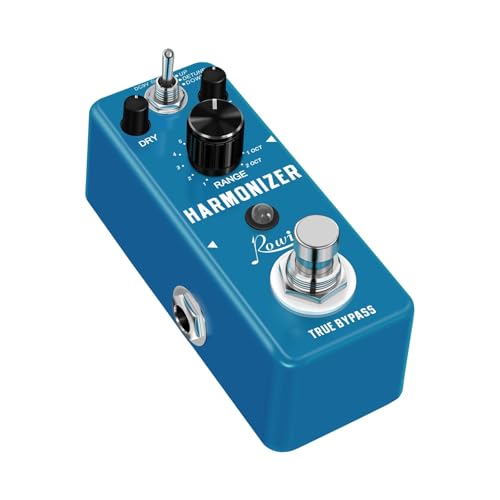
Best Harmonizer Pedals for Guitarists: Quick Picks
The best harmonizer pedal for most guitarists is the DigiTech Whammy DT if you want reliable pitch tracking plus useful drop-tuning and whammy functions; for a compact, straightforward harmony pedal, choose the TC Electronic Quintessence; and for deep control over multiple voices, consider the Boss PS-6 Harmonist.
The right choice depends less on how many harmony options a pedal advertises than on how you play. Single-note melodies are easier to harmonize cleanly than dense chords, and a pedal that needs the correct key and scale can sound wrong if those settings do not match the song. The comparison below focuses on harmony voices, tracking, controls, and the space each unit takes up.
As an Amazon Associate we earn from qualifying purchases at no extra cost to you.
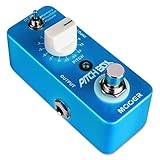

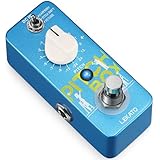
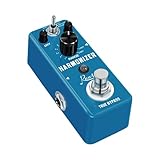
Compare the Shortlist
Dimensions and weights are approximate; check the current manufacturer specifications before buying, since revisions and regional models can differ.
| Pedal | Harmony approach | Tracking and setup | Approx. footprint and weight | Best fit |
|---|---|---|---|---|
| TC Electronic Quintessence | Two harmony voices, with harmony intervals and tone controls | Set the key and scale; supports an external footswitch for key changes | About 74 × 50 × 122 mm; 0.3 kg | Compact, dedicated diatonic harmony |
| Boss PS-6 Harmonist | Harmony modes alongside pitch-shift and detune effects | Choose a mode, key, and harmony interval; more options mean more setup | About 73 × 129 × 59 mm; 0.4 kg | Players who want several pitch effects in one pedal |
| DigiTech Whammy DT | Whammy pitch shifting, harmonies, and drop-tuning functions | Foot-controlled pitch changes; harmony quality depends on the selected setting and the part played | About 196 × 170 × 63 mm; 1.6 kg | Players who also need dramatic pitch bends or virtual tuning changes |
| Electro-Harmonix Pitch Fork | Single pitch-shift interval, with optional additional voice via an external setup | Select the interval and direction; not a key-aware, multi-note diatonic harmonizer | About 70 × 115 × 54 mm; 0.3 kg | Compact fixed-interval effects and pitch-shift sounds |
These pedals are not interchangeable. The Pitch Fork is included as a useful comparison point, but it shifts pitch rather than automatically building key-aware harmonies. If you need a third or fourth independent harmony voice, check the exact model’s voice limit and operating modes before purchasing; a feature described as “harmony” does not necessarily mean several separately adjustable voices.
Choose by How You Play
| Your situation | A sensible starting point | Why |
|---|---|---|
| You play single-note leads and can set the song key | TC Electronic Quintessence | Purpose-built harmony controls in a relatively small enclosure |
| You want harmony plus pitch effects and room to explore | Boss PS-6 Harmonist | Offers several pitch-processing modes beyond a basic harmony setting |
| You regularly change tuning or use foot-controlled pitch bends | DigiTech Whammy DT | Its larger footprint buys functions a dedicated compact harmonizer may not provide |
| You mainly want a simple fixed interval or octave effect | Electro-Harmonix Pitch Fork | A practical choice when key-tracking harmony is not the priority |
What Matters Most in a Harmonizer
Harmony voices and musical control
A harmony voice is a pitch added above or below your guitar. A diatonic harmonizer uses the selected key and scale to choose notes that fit the harmony, so a “third above” can be a major or minor third as the melody moves. That tends to sound more like a composed guitar part than a fixed pitch shift.
More voices can create a fuller sound, but they also make the result harder to place in a mix. For a clear lead, begin with one voice at a modest level. Add another only if the part still has room. Check whether the pedal lets you control voice level and interval separately; that flexibility matters more than a large list of presets if you need to shape the sound for different songs.
Key and scale tracking
Key-aware harmony is only as accurate as its musical instructions. Set the root note and the correct scale, then test the pedal with a melody that includes notes outside the scale. A song may change key, use a borrowed chord, or switch between major and minor; a pedal that stays on one setting will not automatically understand every chord change.
If your set list moves between keys, consider how quickly you can change settings on stage. An external footswitch can help, but it takes extra board space and another cable. If songs change harmony from chord to chord, a fixed key setting may not be enough: you may need to change the setting during the song or use a different arrangement.
Polyphonic performance and tracking
“Polyphonic” means the pedal can process more than one note at a time. That does not guarantee equally convincing results with every chord. Low notes, close intervals, heavy distortion, and ringing open strings can make pitch detection less stable or produce a crowded harmony. Single-note lines are usually the safest starting point; simple two-note shapes are a useful next test.
Before committing, try the pedal with your actual guitar, tuning, and signal chain if possible. Play clean, deliberate notes first, then test the chords you intend to use. Muting unused strings and avoiding excessive gain before the harmonizer can reduce false or muddy tracking.
Footprint, Power, and Ownership
Measure the usable space on your board, not just the pedal enclosure. Leave room for the footswitch, side-mounted jacks, power plug, and cables; the Whammy DT’s larger format may displace two or more compact pedals once connected. A smaller pedal is easier to fit, but its controls may be more crowded, and an external switch can reduce the space advantage.
Most pedals in this category use an external DC power supply rather than batteries. Confirm the required voltage, polarity, current, and connector against the manual before connecting a supply. Do not assume a shared daisy chain will be quiet: digital pitch processors can add noise or behave unreliably if the supply is unsuitable. An isolated output is often the safer board-planning choice.
There are few consumables to replace, but connectors, footswitches, and cables take the most routine abuse. Keep plugs from being bumped sideways, avoid pulling the pedal by its cables, and wipe off sweat or dust with a dry, soft cloth. Use hook-and-loop fastener without covering vents or access panels, and leave enough slack that cables do not tug on the jacks when the board is moved.
Price and Final Choice
As a broad market guide, compact pitch and harmony pedals commonly fall around $100–$250, while larger units with additional functions can cost roughly $200–$400 or more. Prices vary by retailer, region, and whether a pedal is new or used. Compare the total setup cost too: a required power supply, external footswitch, or extra patch cables can narrow the apparent price gap.
For a compact, key-based harmony sound, start with the Quintessence. Choose the PS-6 if you want a wider range of pitch effects in one enclosure. Pick the Whammy DT when its tuning and expression functions justify the board space. Choose the Pitch Fork when you want straightforward interval shifting rather than automatic scale-aware harmonies. Whichever pedal you consider, the best practical test is whether it tracks your real playing cleanly and can be set for your songs without slowing you down.