What's inside
As an Amazon Associate I earn from qualifying purchases. This post may contain affiliate links at no extra cost to you.
A thumb drive is a small, portable flash memory device that plugs into a USB port to move files between computers, back up documents, or boot operating systems. If you have ever needed to carry a project file to a print shop, hand off a presentation at a meeting, or archive photos away from a failing laptop, you already understand the problem these devices solve. What separates a good thumb drive from a mediocre one is rarely the headline capacity. It is the combination of sustained transfer speed, connector durability, physical design, and the price you pay per gigabyte.
Across this roundup, we compared published specifications, listed prices, and aggregated owner feedback on eight models ranging from budget 8GB packs to premium dual-connector drives at 128GB. The concrete question each buyer faces is whether they need fast write performance for large files, a compact form factor that survives being tossed in a bag, or simply the cheapest way to distribute data to a group. The right answer differs sharply depending on whether you are moving raw camera files or printing a resume at a copy shop.
As an Amazon Associate we earn from qualifying purchases at no extra cost to you. Product prices and availability are accurate as of the date shown and are subject to change.






Quick Picks
| Product | Best for | Price |
|---|---|---|
| Lexar D40E 128GB Dual Type-C | Users switching between laptops and phones | $29.99 |
| SANDISK 128GB Ultra Flair | Fast large-file transfers from a USB-A port | $25.95 |
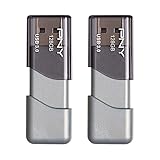
| PNY 128GB Turbo Attaché 3 (2-Pack) | Redundant backup on a budget | $27.99 |
| 2 Pack 64GB Fold Swivel | Students or office use needing a spare | $18.99 |
| SIMMAX 32GB Swivel (Purple) | Color-coded personal organization | $9.99 |
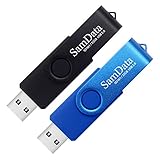
| SamData 32GB 2-Pack with LED | Easy spotting in dark bags | $16.99 |
| IMEASON 16GB Swivel with Keychain | Everyday carry for documents and media | $8.99 |
| MAKACTUA 8GB 5-Pack | Distributing files to a group | $20.99 |
How We Picked
We narrowed the field using four criteria: connector generation (USB 3.2 Gen 1 and USB 3.0 drives write large files noticeably faster than USB 2.0 models), price per gigabyte for the capacity tier you actually need, physical form factor durability (swivel caps resist losing more than removable caps, and fold designs protect the connector inside a pocket), and pack quantity when distributing files to teams or classrooms matters more than single-drive performance.
The 8 Best What Is A Thumb Drive in 2026
Lexar D40E 128GB Dual USB 3.2 Gen 1 Type-C
The D40E targets people who work between a modern USB-C laptop and a phone or tablet. Having both Type-A and Type-C connectors on one body eliminates the adapter problem that trips up most dual-use workflows. At 128GB it sits at the same capacity tier as the SanDisk and PNY drives, so it competes well on price per gigabyte for the dual-connector segment.
- Two connectors on one drive cover older and newer hardware without dongles
- USB 3.2 Gen 1 interface keeps sustained write times short for large transfers
- Champagne silver finish shows fingerprints and scratches more visibly than matte black options
Skip this one if your workflow is entirely USB-A and you would rather pay less for identical capacity.
SANDISK 128GB Ultra Flair USB 3.0
The Ultra Flair is a no-nonsense metal-bodied drive designed for people who move large video or dataset files between a desktop and a laptop. Its USB 3.0 interface is a generation behind the Lexar but still writes far faster than any USB 2.0 model in this list. The metal housing provides a reassuring heft and dissipates heat during long transfers better than the all-plastic options here.
- Metal casing feels durable and resists cracking in a bag
- Consistently strong sustained write speeds for the price tier
- No integrated cap, so the connector is exposed and can collect lint in pockets
Pass on it if you need a USB-C connector or prefer a swivel design that protects the plug.
PNY 128GB Turbo Attaché 3 (2-Pack)
Buying two 128GB drives at once makes sense for anyone who maintains an offline backup discipline: one drive stays in a drawer, the other travels. The USB 3.0 interface handles document and photo libraries without bottlenecking, and the per-drive cost comes out lower than most single-pack equivalents in this comparison. Owner feedback highlights the compact metal swivel body as a durability plus.
- Two drives for under thirty dollars covers both daily carry and cold storage
- USB 3.0 speed is a clear step up from any 2.0 option here
- Neither drive includes a lanyard hole or keychain loop
Choose a single-drive model if you only ever plug in one stick at a time.
2 Pack 64GB USB 2.0 Fold Swivel
At 64GB each for under nineteen dollars total, this pair is the practical choice for office or classroom distribution where speed is secondary to convenience. The fold design retracts the connector into the body, shielding it from dust and impacts. USB 2.0 caps throughput, so expect slower writes on multi-gigabyte transfers.
- Fold mechanism protects the connector without a separate cap to lose
- Two drives at a low combined price for sharing tasks
- USB 2.0 interface lags well behind 3.0 drives on large files
Skip it if you routinely move files over a few gigabytes; the interface will frustrate you.
SIMMAX 32GB Swivel (Purple)
The SIMMAX is a budget pick for personal file handoffs: a quick document transfer, a single video clip, a set of slides. At under ten dollars it is the cheapest single-drive option in this group. The swivel body keeps the connector safe, and the purple color makes it easy to identify in a drawer of similar sticks.
- Lowest price per drive among single-unit options listed
- Swivel cap protects the USB plug from damage in a pocket
- 32GB capacity fills quickly if you store media files
Move up in capacity if you need to carry a full presentation with embedded video.
SamData 32GB 2-Pack with LED
SamData includes a small activity LED that glows during read and write cycles, a detail that makes it easy to confirm the drive is working before you pull it out. The two-pack format suits households or small teams, and the black-blue color split helps distinguish whose drive is whose. USB 2.0 keeps cost low but limits speed.
- LED indicator removes ambiguity about transfer status
- Two distinct colors in one pack simplify shared use
- USB 2.0 throughput is noticeably slower for large file batches
Bypass this if write speed matters more than the convenience light.
IMEASON 16GB Swivel with Keychain
At less than nine dollars, the IMEASON is the most compact option here. Sixteen gigabytes is tight for media but sufficient for documents, spreadsheets, and a handful of photos. The integrated keychain ring means it attaches to a bag or car keys so it stays with you. Pre-formatted FAT32 ensures broad compatibility with Windows, Mac, and many car audio systems.
- Keychain ring keeps the drive physically attached to your daily carry
- FAT32 format works out of the box with the widest range of devices
- 16GB fills fast if you store anything beyond basic documents
Skip it if you need more than casual document storage.
MAKACTUA 8GB 5-Pack
Five drives at eight dollars per unit is the classic play for a teacher, event organizer, or small business handing out a presentation file to a group. Eight gigabytes per stick holds a PDF deck or a short video clip comfortably. The multicolor assortment lets each recipient identify their own drive. USB 2.0 is fine for single small-file transfers.
- Five drives at a low per-unit cost for group distribution
- Multiple colors reduce confusion when drives look alike
- Only 8GB per drive, so larger files or multiple media items will not fit
Choose a higher-capacity model if your group needs to carry anything beyond a single document set.
Buying Guide
USB Generation and Real-World Speed
USB 2.0 tops out at a theoretical 480 Mbps, while USB 3.0 and USB 3.2 Gen 1 reach 5 Gbps. In practice the gap means a multi-gigabyte video file might take under a minute on a 3.0 drive but several minutes on a 2.0 drive. If your transfers are occasional single documents, USB 2.0 is adequate. For photo libraries, raw footage, or database backups, the interface generation is the single most decisive spec.
Capacity Planning and Price Per Gigabyte
The drives in this roundup span 8GB to 128GB. Eight to sixteen gigabytes suits handouts and quick document swaps. Thirty-two gigabytes holds a full work-in-progress project with images. Sixty-four to 128GB is where you move a laptop backup or a media collection. When comparing prices, divide the sticker cost by capacity: a two-pack often yields a lower per-gigabyte figure than a single drive of the same total capacity.
Form Factor and Connector Protection
Swivel and fold designs eliminate the loose cap problem entirely, which matters if the drive lives in a pocket or bag. Drives with an integrated keychain ring or lanyard hole stay attached to your other essentials. Metal bodies add durability and minor heat dissipation during sustained writes but add weight. Match the physical design to how and where you store the drive between uses.
Our Verdict
Top pick: the Sandisk Ultra Flair 128GB. It balances the fastest USB 3.0 write performance at the lowest single-drive price in the 128GB tier, with a metal body that survives daily abuse.
Budget pick: the IMEASON 16GB with keychain at under nine dollars gives you a functional, pocket-safe drive that works with virtually any USB port.
If you work across both USB-C phones and USB-A laptops, the Lexar D40E wins regardless of its slightly higher price because the dual-connector design replaces an adapter you would otherwise carry.
FAQ
What is a thumb drive and how does it differ from a portable SSD?
A thumb drive is a flash memory device with a built-in USB connector and no cable, typically under five grams. A portable SSD adds a controller, NAND or NVMe storage, and a cable, offering higher sustained speeds and larger capacities at a higher price.
Why are USB 2.0 drives still sold when 3.0 is so cheap?
USB 2.0 controllers and NAND packages cost less, keeping the retail price under ten dollars per unit. For bulk distribution or light document tasks the speed penalty is invisible, so manufacturers continue to offer them at a price point 3.0 drives cannot match.
Do I need to format a new thumb drive before first use?
Most drives arrive pre-formatted in FAT32 or exFAT and work immediately on Windows and macOS. If you need to store a single file larger than four gigabytes on a FAT32 drive, reformat to exFAT or NTFS first.
How long do thumb drives last with regular use?
Flash memory cells have a finite write cycle count, typically thousands to tens of thousands. For normal document and photo use, a quality drive lasts several years without concern. Heavy daily re-writes on a 2.0 drive may shorten lifespan noticeably compared to a 3.0 model with a more robust controller.