What's inside
- X01 TIG Welder: Features, Compatibility, and Buying Advice
- What to verify before choosing the X01
- Match the machine to your material and work
- Decision matrix: when the X01 is worth pursuing
- Check the electrical fit before ordering
- Torch and accessory compatibility
- Ownership costs and common wear points
- Buying verdict
As an Amazon Associate I earn from qualifying purchases. This post may contain affiliate links at no extra cost to you.
Our Top Picks




X01 TIG Welder: Features, Compatibility, and Buying Advice
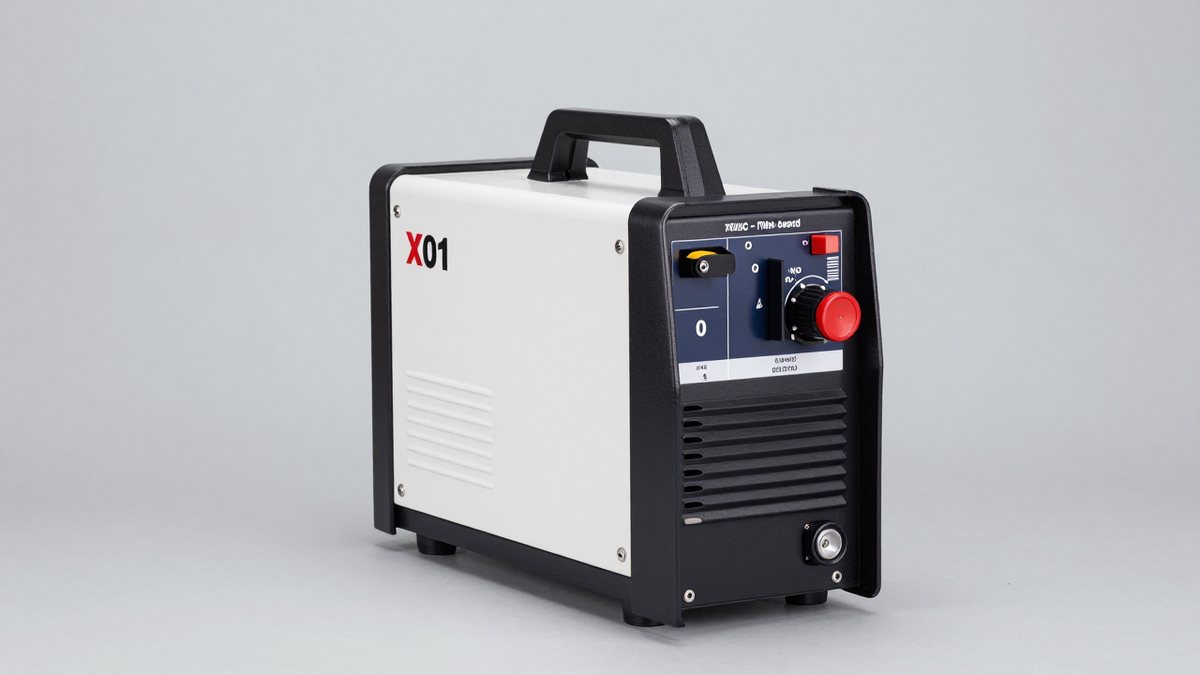
The X01 TIG welder is a suitable purchase only if its verified output, input power, controls, and torch connection match your intended work; the model name alone does not establish those details. Before buying, get the manufacturer’s manual or a complete specification sheet for the exact X01 unit, then compare it with the requirements below. If the seller cannot confirm basic electrical and compatibility details, treat the welder as an unknown-spec machine rather than assuming it will handle a particular material or job.
What to verify before choosing the X01
“TIG welder” describes a welding process, not a complete capability set. A machine may support DC TIG, AC/DC TIG, or TIG only as an added mode on a multiprocess unit. Those distinctions determine which metals it can weld and how it behaves. Listings also sometimes use a model name without identifying the revision, included torch, or regional power version.
As an Amazon Associate we earn from qualifying purchases at no extra cost to you.



| Check | What to confirm for the X01 | Why it changes the buying decision |
|---|---|---|
| Output range | Minimum and maximum TIG amperage, and whether the figures are specified for AC, DC, or both | Low minimum output helps with thin stock; maximum output alone does not prove the machine can weld thick material continuously. |
| Duty cycle | Amperage, duty-cycle percentage, and test interval—for example, 60% at a stated current over a 10-minute cycle | A 60% duty cycle means up to six minutes of arc time in that interval, followed by cooling time. The rating is meaningful only alongside its current. |
| Input power | Rated voltage, phase, frequency, maximum input current, and recommended circuit protection | A plug that fits an outlet does not establish that the circuit can safely supply the welder at full output. |
| Process and polarity | DC TIG, AC TIG, AC/DC TIG, and any separate stick-welding mode | DC TIG is commonly used for steel and stainless steel. Aluminum TIG generally requires AC; a DC-only machine is not a substitute. |
| Controls and starting | HF or lift start, pedal support, torch switch support, and adjustable pre-flow, post-flow, and downslope | These affect arc starting, control at the weld, shielding-gas coverage, and crater finishing. Confirm which controls are built in and which accessories are needed. |
| Torch connection | Connector type, gas routing, current rating, and whether the torch is included | Torch plugs and lead arrangements vary. A visually similar connector is not proof of electrical or gas compatibility. |
Match the machine to your material and work
For steel or stainless steel
A DC TIG configuration can suit steel and stainless steel, provided the X01’s current range includes your work and the machine has a compatible torch and gas connection. Thin sheet makes the minimum current and pedal control especially important: a high maximum amperage is of little help if the machine cannot make a stable, controllable arc at the low end. For repeated production or longer welds, compare the rated duty cycle at the current you expect to use—not just the headline maximum.
For aluminum
Confirm that the exact X01 version supports AC TIG before considering it for aluminum. AC is used to help break up the oxide layer during TIG welding; a machine that offers only DC TIG should not be bought on the assumption that a different torch or electrode will add AC capability. Also check whether the unit provides useful AC balance or frequency adjustment, if those controls matter for your work.
For occasional repairs versus regular shop use
Occasional short welds put less emphasis on duty cycle than daily fabrication, but input requirements and parts availability still matter. For frequent use, check the service documentation, warranty terms, cooling and ventilation requirements, and availability of consumables or replacement parts. A compact unit can save bench space, but its size does not tell you how it performs under sustained load.
Decision matrix: when the X01 is worth pursuing
| Your situation | What the X01 needs to document | Buying direction |
|---|---|---|
| Beginner, occasional steel repairs | Clear setup instructions, usable low-current control, and a supported starting method | Consider it if the manual explains the controls and the supplied or specified torch is readily replaceable. |
| Thin sheet or small precision work | Low minimum amperage, stable arc control, and pedal or torch-current control if needed | Do not choose by maximum amperage; compare the lower end and control options first. |
| Aluminum work | Confirmed AC TIG mode and documented AC controls | Pass if the seller cannot verify AC TIG for the exact model and revision. |
| Long welds or frequent fabrication | Duty cycle at relevant current, suitable input circuit, and service support | Compare with machines that publish complete duty-cycle and input specifications; avoid relying on a peak-output claim. |
| Limited workshop power | Input voltage and current, plus any derating on a lower-voltage supply | Confirm circuit suitability with a qualified electrician if there is any doubt; do not infer it from the plug shape. |
Check the electrical fit before ordering
Use the nameplate and manual, not a generic product title, to assess the supply. As a quick screening calculation, apparent input power is approximately voltage multiplied by input current. For example, a machine drawing 30 A at 230 V has an apparent input of about 6,900 VA (6.9 kVA). This is not a circuit-sizing instruction: welding machines have power-factor behavior, inrush, and manufacturer-specific protection requirements. Follow the manual’s recommended breaker, wiring, and extension-lead guidance, and have a qualified electrician assess a circuit that is not clearly suitable.
Also check whether the stated output is available on your local supply. Some welders deliver less output at lower input voltage, while others require a particular voltage or phase. Verify the exact regional model rather than relying on a photo of a plug or a seller’s broad compatibility claim.
Torch and accessory compatibility
Ask for the torch model or connector standard and a clear connection diagram. TIG torches may differ in how they carry welding current, shielding gas, and switch or pedal signals. Before ordering a replacement torch, compare the connector, gas route, lead rating, and control wiring with the X01 documentation. Do not force an adapter or assume that a common-looking plug makes an accessory compatible.
Confirm what is included: torch, work clamp, regulator, gas hose, pedal, and consumables may be listed separately or omitted. TIG welding also requires a suitable shielding-gas supply and compatible regulator; the machine itself does not provide shielding gas. For initial setup, use the manual’s gas type and flow guidance, check hoses and fittings for leaks, and keep the torch cup and gas lens clean. Excessive gas flow can create turbulence and draw air into the shielding zone rather than improving coverage.
Ownership costs and common wear points
Even when the welder is the largest purchase, the usable setup includes consumables: tungsten electrodes, ceramic cups, collets, collet bodies or gas lenses, filler rods, and shielding gas. Cups can crack, collets wear, and tungsten can become contaminated by touching the work or filler metal. Keep consumables clean and matched to the torch; a dirty or damaged gas path can cause poor shielding that may be mistaken for a machine fault.
Budget for suitable electrical installation if your workshop circuit is inadequate, along with replacement torch parts and gas. The exact cost varies by region, gas supplier, and how often you weld, so compare complete setup costs rather than the bare machine price. A lower-cost unit with an undocumented torch interface or unavailable replacement parts can become expensive when a routine repair is needed.
Buying verdict
The X01 TIG welder is worth considering when the seller can document its output range, duty cycle, input requirements, process modes, controls, and torch connection for the exact version being offered. It may fit occasional DC work if those specifications suit your material and circuit. For aluminum, sustained fabrication, or a workshop with limited electrical capacity, require explicit confirmation of AC capability, duty-cycle performance, and supply requirements before buying. If those details are missing, the safest choice is to wait for documentation or select a machine with a complete, verifiable specification sheet.