What's inside
As an Amazon Associate I earn from qualifying purchases. This post may contain affiliate links at no extra cost to you.
A dewalt pressure washer sits at an awkward intersection in the cleaning-tool market. Homeowners want enough power to strip grime off siding, driveways, and patio furniture without dragging a garden hose around for hours, but most do not need the 4000-PSI commercial units that contractors haul to job sites. The real buyer question is whether a DeWalt-branded machine—either made by DeWalt or engineered to pair with DeWalt 20V battery platforms—delivers enough cleaning force for weekend projects while staying under a budget and noise threshold that keeps neighbors happy.
What separates a worthwhile pick from a disappointing one is straightforward once you compare published specs and sort through owner feedback. Gas models at 3300 PSI or higher handle flat surfaces and mildew-covered fencing in a single pass; corded electric units hit a practical ceiling around 2400 PSI; and handheld 20V add-ons are accessories for spot-cleaning, not whole-house jobs. Below, eight options are ranked by how well they match a specific use case to a price point.
As an Amazon Associate we earn from qualifying purchases at no extra cost to you. Product prices and availability are accurate as of the date shown and are subject to change.






Quick Picks
| Product | Best for | Price |
|---|---|---|
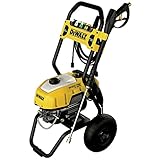
| DeWalt 3300 PSI Gas (DXPW3300-S) | Medium-lot homeowners | $359 |
| Cordless Portable 1100 PSI Handheld | Car wash and quick touch-ups | $99.99 |
| DeWalt DWPW2400 Electric | Apartment and small-yard cleaning | $174.99 |
| DeWalt PressuReady 3400 PSI Gas | Large driveways and multi-acre properties | $729 |
| Cordless 1000 PSI Brushless 6-in-1 | Multi-surface spot cleaning | $75.99 |
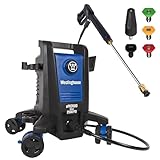
| Westinghouse ePX3500 Electric | Best value in a full electric unit | $169 |
| Cordless Portable for Dewalt 20V Battery | Minimalist battery-platform add-on | $69.99 |
| Cordless Handheld GlowYellow-Black | Light-duty cleaning on a budget | $79.97 |
How We Picked
Four criteria drove these rankings. First, pressure output relative to price: a machine must justify its cost tier with measurable PSI and GPM figures. Second, power-source practicality: gas suits large areas but demands storage of fuel and more maintenance, while electric and battery units trade raw power for convenience. Third, platform compatibility for the cordless entries—specifically whether they work with widely owned DeWalt 20V batteries. Fourth, owner-reported durability after one or more seasons, since build quality on sub-$100 handheld units varies more than any spec sheet suggests.
The 8 Best Dewalt Pressure Washer in 2026
DeWalt 3300 PSI Gas Pressure Washer (DXPW3300-S)
This is the right choice for homeowners with a mid-size yard, a two-car driveway, and occasional fence or deck projects who want a single machine that handles everything without a cord. The 2.4 GPM flow rate clears standing dirt faster than lower-flow units, and the residential frame keeps it light enough for one person to wheel across pavement. Owners praise the Honda-engine-style reliability and the intuitive trigger-gun operation.
- Pro: 3300 PSI is enough for stripped paint prep and mildew removal in one pass
- Pro: Established DeWalt service network for parts and warranty claims
- Con: No onboard chemical-injection tank; soap must be applied separately
Skip it if your cleaning area is under 500 square feet or if you live in a noise-restricted community where a gas engine on a Saturday morning will draw complaints.
Cordless Portable Washer for Dewalt 20V Battery, 1100 PSI Handheld
Think of this as a motorized spray bottle for your car, patio furniture, or the muddy section of a trailhead. At 1100 PSI it will not strip paint or dig grease out of a concrete slab, but it rinses soap suds and light dust far more evenly than a garden sprayer. It attaches to any DeWalt 20V Max battery, so if you already own a drill or impact driver from that platform, no extra charger or battery purchase is needed.
- Pro: True portability—no hose, no cord, no engine noise
- Pro: Uses the same 20V battery ecosystem as hundreds of existing DeWalt tools
- Con: 1100 PSI is borderline for anything beyond rinse-level cleaning
Skip it if you expect to clean driveways, siding, or any surface where you need more than a cosmetic rinse.
DEWALT Electric Pressure Washer, 2400 PSI, 1.1 GPM (DWPW2400)
The DWPW2400 fills a gap between battery-powered toys and full gas units. At 2400 PSI with 1.1 GPM it can handle a small deck, a vinyl fence, or the lower panels of a house, all while drawing power from a standard outlet. Cold-water-only operation keeps the pump simple and reduces maintenance compared to gas models with heating options.
- Pro: Quieter and lower-maintenance than any gas unit under $500
- Pro: 2400 PSI is a genuine threshold for effective cleaning without being overkill
- Con: 1.1 GPM means slower coverage on large flat surfaces; expect multiple passes on a driveway
Skip it if you need to clean more than about 400 square feet per session, or if your outlet is more than 50 feet from the work area and extension-cord voltage drop concerns you.
DeWalt PressuReady 3400 PSI Gas Pressure Washer, 2.5 GPM
This is the step-up for people whose cleaning list includes a half-acre of pavers, a long privacy fence, and a barn exterior. The 25-foot hose is a genuine convenience that saves repositioning the machine, and the PressuReady designation signals faster setup than older DeWalt gas models that required manual oil filling. At 3400 PSI and 2.5 GPM it moves roughly 150 gallons per hour, enough to knock down caked-on dirt in minutes.
- Pro: 2.5 GPM is noticeably faster than 2.4 GPM models on long runs of concrete
- Pro: 25-foot hose reduces the number of times you must relocate the unit
- Con: The $729 price is more than double the 3300 PSI model for a marginal PSI gain
Skip it unless you regularly clean more than 1,000 square feet of hard surface or operate a small business that depends on cleaning turnaround speed.
Cordless 1000 PSI Brushless 6-in-1 Nozzle Washer for Dewalt 20V Battery
The brushless motor sets this apart from cheaper brushed alternatives in the same price bracket—it generates less friction, runs cooler under continuous use, and typically extends runtime by a meaningful margin on a given battery. The 6-in-1 nozzle system covers fan-spray, jet, and detergent settings, making it a reasonable do-everything accessory for a car, a mailbox post, or a section of gutter.
- Pro: Brushless motor delivers better efficiency and longer runtime than brushed competitors at this price
- Pro: 6-in-1 nozzle plus 3-level adjustment covers most light-duty cleaning scenarios
- Con: Battery not included adds $70-$130 to the real cost if you lack a 20V platform
Skip it if you do not already own a DeWalt 20V battery and would need to buy one just to use this attachment.
Westinghouse ePX3500 Electric Pressure Washer, 2500 PSI, 1.76 GPM
Although not a DeWalt-branded product, it earns its slot here because many buyers cross-shop electric units in this price range and will encounter the ePX3500 as a direct rival to the DWPW2400. Its 2500 PSI and 1.76 GPM figures exceed the DeWalt electric option on both axes while costing five dollars less. The anti-tipping technology, onboard soap tank, and pro-style steel wand add practical features that owners specifically highlight in reviews.
- Pro: Higher PSI and GPM than similarly priced DeWalt electric units
- Pro: Includes an onboard soap tank and 5-nozzle set without a separate accessory purchase
- Con: Westinghouse does not share the DeWalt battery or tool ecosystem; it is a standalone unit
Skip it if you want one brand across all your power tools or if DeWalt-specific warranty registration matters to your workflow.
Cordless Portable Washer for Dewalt 20V Battery (Battery Not Included)
At $69.99 this is the entry point for anyone who already owns a DeWalt 20V battery and wants a rinse tool for outdoor furniture, a grill, or the salt buildup on a boat hull. It is the most stripped-down option in this group—no brushless motor, no multi-nozzle kit, and likely no detergent injection beyond a basic siphon tube.
- Pro: Lowest real cost to get a cordless washer if you already own a compatible battery
- Pro: Ultra-lightweight and easy to store in a toolbox or truck bed
- Con: Single fixed nozzle limits versatility; you cannot adjust spray pattern without buying add-on tips
Skip it if you need variable spray patterns or plan to use it more than a few times per season, since the lower build quality will show.
Cordless Pressure Washer Battery Powered, Handheld (GlowYellow-Black)
This unit targets buyers who want a handheld washer but are not locked into the DeWalt battery platform. The GlowYellow-Black color scheme and generic battery interface mean it may accept non-DeWalt packs or ship with its own proprietary cell. Its niche is light-duty cleaning for renters, campers, or anyone with a single outdoor task per week.
- Pro: Does not require a specific brand battery, broadening compatibility options
- Pro: Competitive price for a handheld that at least reaches 1000-plus PSI territory
- Con: Brand and build quality are less verifiable than DeWalt-branded alternatives; owner feedback is sparser
Skip it if you value a known warranty network or already own DeWalt 20V batteries that would pair with a purpose-built attachment.
Buying Guide
Match PSI to the Surface, Not the Claim
Around 1100 PSI you get a rinse. At 2400-2500 PSI you can lift ground-in dirt from vinyl siding or a sealed deck. At 3300-3400 PSI you are removing mildew, stripping old paint from metal railings, or blasting a gravel-embedded driveway. The mistake to avoid is buying 3400 PSI for a patio table; excess pressure damages soft surfaces and wastes fuel. Buy the lowest tier that clears your worst-case job.
GPM Determines How Long You Stand There
PSI governs how hard water hits the surface; GPM governs how fast you cover it. A 3400 PSI unit at 1.0 GPM takes nearly three times longer to clean a 400-square-foot driveway than the same PSI at 2.5 GPM. When comparing gas models, a jump from 2.4 to 2.5 GPM sounds marginal but saves minutes per panel, which compounds over a full job.
Battery-Platform Add-ons Are Accessories, Not Primary Washers
Handheld 1000-1100 PSI units are best understood as motorized spray bottles. They excel at rinsing a soaped-up car, blasting mud off wheel wells, or cleaning a grill grate. They cannot strip a fence or push standing water off a patio. Buy one if you already own the battery platform and want a zero-maintenance, zero-cord convenience tool; do not buy one as your sole pressure washer.
Our Verdict
The DeWalt 3300 PSI Gas (DXPW3300-S) is the top pick for most homeowners because it balances raw cleaning power, known serviceability, and a price that leaves budget for detergents and surface-safe tips. The budget pick is the Westinghouse ePX3500 at $169, which outperforms similarly priced electric DeWalt units on both PSI and GPM while including a soap tank and five nozzles. However, if your primary need is a car wash and you already own a DeWalt 20V Max battery, the 1100 PSI handheld at $99.99 is the smarter spend—zero maintenance, zero setup, and you will actually use it weekly.
FAQ
Is a gas DeWalt pressure washer worth it over electric?
Only if your cleaning area exceeds roughly 800 square feet or you need 2.5 GPM-plus flow to cover it in a reasonable time. Electric units with a grounded outlet are quieter, require no oil changes, and start instantly every time.
Can I use any DeWalt 20V battery in these handheld washers?
Most models labeled “for Dewalt 20V Battery” accept any DeWalt 20V Max or PowerStack pack. Runtime scales with amp-hour rating, so a 4.0 Ah battery lasts roughly twice as long as a 2.0 Ah unit under identical load.
Do I need a pressure washer with an onboard detergent tank?
For car washing and patio furniture, a soap tank saves a separate sprayer pass. For heavy-duty jobs like mildew or paint stripping, a downstream chemical injector (available as an accessory for gas models) is safer because it introduces soap after the pump rather than diluting it upstream.
What is the realistic lifespan of a sub-$100 handheld washer?
Owner feedback on models under $80 consistently notes that the pump seals and nozzle gaskets degrade within two to three seasons of occasional use. If you expect weekly or daily use, the brushless-motor variant at $75.99 offers a better long-term value than the fixed-nozzle $69.99 unit.